Category Archives: Safety

Retrofitting suburbia —Ellen Dunham-Jones

There are many jobs in this.
The

Five Points redevelopment

is an example of what she’s talking about.
It’s a lot better than building more sprawl:
safer, less expensive, more jobs, less energy cost, more energy independence,
better health, and more community.

Georgia Tech Professor Ellen Dunham-Jones spole January 2010 at TEDxAtlanta,

Retrofitting suburbia


In the last 50 years, we’ve been building the suburbs with a lot of
unintended consequences. And I’m going to talk about some of those
consequences and just present a whole bunch of really interesting projects
that I think give us tremendous reasons to be really optimistic that
the big design and development project of the next 50 years is going
to be retrofitting suburbia. So whether it’s redeveloping dying malls
or re-inhabiting dead big-box stores or reconstructing wetlands out
of parking lots, I think the fact is, the growing number of empty and
under-performing, especially, retail sites throughout suburbia gives
us actually a tremendous opportunity to take our least-sustainable
landscapes right now and convert them into more sustainable places. And
in the process, what that allows us to do is to redirect a lot more of
our growth back into existing communities that could use a boost, and
have the infrastructure in place, instead of continuing to tear down
trees and to tear up the green space out at the edges.

Here’s
the video:

Continue reading

Do we need more of the same unsafe roads?

Many T-SPLOST projects submitted by Lowndes County would make traffic safety
worse.

More from Professor Ellen Dunham-Jones of Georgia Tech:


Even Buford Highway, she says, could be transformed with medians,
trees and buildings set closer to the road. Changes that are known
to slow traffic. But outside of the ivory tower, change does not come
easily. Or quickly.

Last year Georgia spent more than two billion dollars on transportation,
but only a tiny fraction, less than 1 percent, went specifically to
pedestrian safety.

And what Lowndes County has sent in for T-SPLOST funding includes:

Do we need more of the same unsafe roads?

-jsq

Why should traffic safety not be a pertinent fact?

We’ve seen that
traffic safety is a big problem in Atlanta
and elsewhere,
and

Virginia is leading the way in traffic redesigns to fix such problems.

Meanwhile,

Lowndes County

doesn’t consider it even pertinent:


Traffic on Old Pine will be regulated by the amount of people who
use the highway;
traffic on Bemiss since you and I moved out there forty years ago.


I’m not going to argue Bemiss Highway, it’s not a pertinent fact.

That’s right, traffic and traffic safety are considered not pertinent
to building subdivisions, according to the Chairman of the Lowndes County
Commission, and the actions of the Commissioners and staff.
The developer gets to consider only their one property and
the neighbors get to deal with all the effects on all the related roads.
Privatization of profits and socialization of problems
such as traffic accidents.
Does that seem right to you?

If not, it’s going to go on until more people argue and
debate.
In fact, many of Lowndes County’s T-SPLOST tax request would make the problem worse.
See
next post.

-jsq

Suburbia dangerous for pedestrians

Maybe people are starting to notice that far more people die in traffic
accidents in the U.S.A. than in foreign wars.
The projects submitted by Lowndes County for
TSPLOST funding
would make this problem even worse,
except the bus system, which wouldn’t require road widening.

John Larson and others, PBS, 22 July 2010,

Profiles from the Recession: [VIDEO] Dangerous Crossing: A new suburbia as economy changes
:


In recent years a little noticed shift has been transforming suburbia:
the home of the middle class has become the home of the working poor. As
a result, roadways that were built for the car are now used by a growing
population that can’t afford to drive. The consequences can be deadly.

Watch the full episode. See more Need To Know.

According to a recent report, by two national transportation groups,
about 43 thousand pedestrians were killed in the U.S. in the last decade;
“the equivalent of a jumbo jet going down roughly every month.”

Of course, the problem didn’t start with an increase in pedestrians.

Continue reading

ALEC crafts state laws, including for private prisons and big oil

ALEC writes laws for big oil and for private prison companies.
In the

first LAKE post about the proposed private prison in Lowndes County,

I pointed out that ALEC helped CCA lobby for that Arizona “anti-immigration”
law that actually is stuffed with new jail, misdemeanor, and felony penalties that
bring more “customers” to CCA private prisons.
Georgia was just the first of
24 states lobbied by ALEC to pass such bogus bills for CCA’s private profit.

Since then other people have dug into ALEC, the American Legislative Exchange Council, and found its tentacles everywhere, promoting profits
for big business at taxpayer expense.

Alison Fitzgerald wrote for Bloomberg 21 July 2011,

Koch, Exxon Mobil Among Corporations Helping Write State Laws
:


Koch Industries Inc. and Exxon Mobil Corp. (XOM) are among companies
that would benefit from almost identical energy legislation introduced
in state capitals from Oregon to New Mexico to New Hampshire — and
that’s by design.

The energy companies helped write the legislation at a meeting organized
by a group they finance, the American Legislative Exchange Council,
a Washington-based policy institute known as ALEC.

The corporations, both ALEC members, took a seat at the legislative
drafting table beside elected officials and policy analysts by paying
a fee between $3,000 and $10,000, according to documents obtained by
Bloomberg News.

The opportunity for corporations to become co-authors of state laws
legally

Continue reading

Dancing Around the Issue —Dr. Noll

Received this morning on

Biomass plant land offer
.
-jsq


It is unbelievable that despite all the concerns in our community about
biomass, the Industrial authority is still considering to sell the
land to a company like

Wiregrass Power LLC.

This is the same company
the Industrial Authority once stated


it had no faith in anymore.

This is the same company

that just missed another deadline as stipulated by
their contract.
And this is the same company that apparently does not
have the best interest of our community in mind.

Continue reading

Lowndes County could stop biomass plant

VDT is not quite right when it says Only city can stop biomass. The Lowndes County Commission could do it.

According to Ashley Paulk, a few months ago VLCIA approached the Lowndes County government, asking them to ask VLCIA not to extend Sterling Planet’s contract for the biomass plant. Chairman Paulk refused to accept that hot potato and instead laudably told the community what was going on. Yet there was a bit of a good idea in what VLCIA was asking. Lowndes County could pass an ordinance such as VDT is suggesting banning the incineration of human feces.

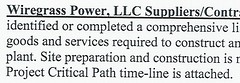
Remember, Lowndes County rezoned the land for the plant. It’s time to review that rezoning to see if in light of new information it should be rescinded. According to the VDT, Wiregrass Power LLC supplied a fake timeline, so it wuld not be interesting to know what else they said wasn’t true?

For that matter, wasn’t the rezoning to build a certain biomass plant according to a certain plan which has no expired? Maybe the rezoning is already null and void and the Commission just needs to declare it so.

Short of that, the Lowndes County Commission could demand transparency from VLCIA:

Continue reading

Solar: jobs, leadership, grid, independence, and health

Peak power when you need it: solar.
Somebody has been studying it, and addressing problems
local decisionmakers right here in south Georgia have been raising.


Solar Power Generation in the US:
Too expensive, or a bargain?

by
Richard Perez, ASRC, University at Albany,
Ken Zweibel, GW Solar Institute, George Washington University,
Thomas E. Hoff, Clean Power Research.
That’s Albany, New York, but it applies even more to Albany, Georgia
and Lowndes County, Georgia, since we’re so much farther south,
with much more sun.

Let’s cut to the chase:


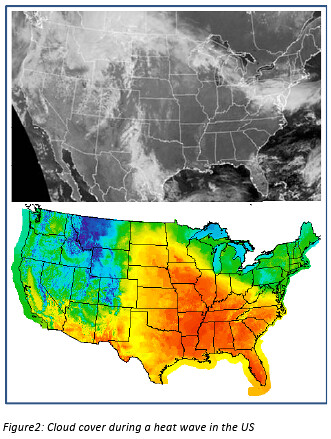
The fuel of heat waves is the sun; a heat wave cannot take place without a
massive local solar energy influx. The bottom part of Figure 2 illustrates
an example of a heat wave in the southeastern US in the spring of 2010
and the top part of the figure shows the cloud cover at the same time:
the qualitative agreement between solar availability and the regional
heat wave is striking. Quantitative evidence has also shown that the
mean availability of solar generation during the largest heat wave
driven rolling blackouts in the US was nearly 90% ideal (Letendre et
al. 2006). One of the most convincing examples, however, is the August
2003 Northeast blackout that lasted several days and cost nearly $8
billion region wide (Perez et al., 2004). The blackout was indirectly
caused by high demand, fueled by a regional heat wave3. As little as 500
MW of distributed PV region wide would have kept every single cascading
failure from feeding into one another and precipitating the outage. The
analysis of a similar subcontinental scale blackout in the Western US
a few years before that led to nearly identical conclusions (Perez et
al., 1997).

In essence, the peak load driver, the sun via heat waves and A/C demand,
is also the fuel powering solar electric technologies. Because of this
natural synergy, the solar technologies deliver hard wired peak shaving
capability for the locations/regions with the appropriate demand mix
peak loads driven by commercial/industrial A/C that is to say, much
of America. This capability remains significant up to 30% capacity
penetration (Perez et al., 2010), representing a deployment potential
of nearly 375 GW in the US.

The sun supplies solar power when you need it:
at the same time the sun drives heat waves.

The paper identifies the problem I’ve encountered talking to local
policy makers, especially ones associated with power companies:

Continue reading

Energy as a National Security Challenge —Col. Dan Nolan @ Solar Summit

In his morning keynote at the sold-out

Southern Solar Summit,

Col. Dan Nolan (U.S. Army ret.) asked the musical question:

“When did our Marines become Birkenstock-wearing tree huggers?”

This was after some Marines asked for solar power so they wouldn’t
have to haul fuel in long convoys, which were among the most dangerous missions.
Most of that fuel was going into very inefficient generators to run
very inefficient air conditioners in tents in the desert.
Dealing with that got the military thinking about energy security:
assured access to mission-critical energy.

Looking up, he asked:


“What is it we as a nation need to understand about our own energy security?”

He identified America’s strategic center of gravity as its economy.
It’s very resilient but has vulnerabilities open to attack.
So how do we secure those vulnerabilities?

The main vulnerabilities are:

Continue reading

Reduce prison population —Supreme Court to California

Will Georgia keep packing them into prisons until this happens?

Don Thompson wrote for AP 23 May 2011,

High court to Calif: Cut prison inmates by 33,000
:


The U.S. Supreme Court ruled Monday that California must drastically
reduce its prison population to relieve severe overcrowding that has
exposed inmates to increased violence, disease and death.

We don’t need a private prison in Lowndes County.
Spend that tax money on education instead.

-gretchen