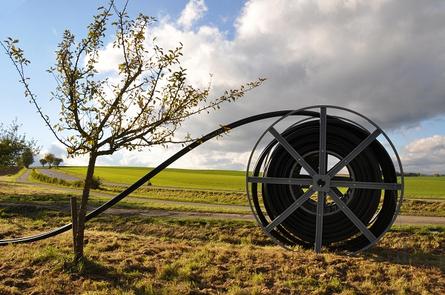
Maybe no solar manufacturers around here yet, but there’s one for wind power.
According to
Windpower Conference & Exhibition May 5-8 2013 Chicago, IL,
one of the exhibitors is
ADB Hoist Rings Mfg. of Valdosta, GA.
-jsq
Maybe no solar manufacturers around here yet, but there’s one for wind power.
According to
Windpower Conference & Exhibition May 5-8 2013 Chicago, IL,
one of the exhibitors is
ADB Hoist Rings Mfg. of Valdosta, GA.
-jsq
It’s literally game-changing time with solar power at the electric utilities, while Georgia Power and Southern Company are sticking with big baseload nuclear, “clean coal”, and natural gas. They cannot win if they don’t even try.
Steven Schultz wrote for Physorg 6 May 2013,
Growth of ‘distributed’ electricity generation could transform
utility systems,
(Phys.org) —The U.S. electric utility industry faces a critical juncture as new technology and declining prices allow a more “distributed” system of small-scale generators, renewable energy installations and energy-efficiency strategies, according to a group of high-level energy industry executives and regulators who met at Princeton University recently.
“We have a monumental challenge,” said Jon Wellinghoff, chairman of the Federal Energy Regulatory Commission, who participated in the all-day meeting Friday, April 26. Citing commentary by an analyst who warned of a potential “train wreck” in the industry, Wellinghoff outlined converging tends in which technological advances are allowing consumers and companies to take matters of reliability, security and efficiency into their own hands, while utility companies are under pressure to maintain and upgrade a national electricity system that is broadly accessible.
“Everybody saw the Super Bowl,” Wellinghoff said, referring to the half-hour blackout that disrupted the 2013 football championship.
He didn’t mention that after blacking out the Super Bowl Continue reading
Worst of all fifty states; worse than South Carolina and worse than Michigan:
that’s why
Georgia’s gets an F
on its corruption risk report card from
State Integrity Investigation.
Gov. Nathan Deal did
just sign an ethics bill,
but as William Perry, executive director of Common Cause Georgia says,
“It’s like you’re starving for a meal and somebody gave you a saltine cracker.
It’s chock full of loopholes.”
I wonder if this lack of ethics in state government has anything to do with widespread rural poverty in Georgia?
-jsq
Received yesterday from Jerome Tucker about the USDA StrikeForce Initiative: “Unfortunately, 90 percent of America’s persistent poverty counties are in rural America. USDA’s StrikeForce aims to increase investment in rural communities for technical assistance and other resources in priority, poverty-stricken communities.” -jsq
Informational Meeting
Thursday, May 23, 2013
9:00 a.m. – 12:00 p.m.
(Individual media interview time will be from
1:00-2:00PM)
Hosted By:
Fort Valley State University
Agricultural Technology Conference Center,
Camp John Hope Road, Fort Valley, GA 31030
This free meeting is open to the general public, partners and members of the press to get a better understanding of this expanding USDA initiative and to learn where it's heading in Georgia!
Pre-Registration is requested by May 20, 2013 by emailing Continue reading
After Harrisburg, PA defaulted on its incinerator bonds, started selling off pieces of itself, and threatened bankruptcy (twice), now the SEC is suing the city for fraud.
James O’Toole wrote for CNN Money 6 May 2013,
SEC sues financially troubled Harrisburg,
Continue readingThe Securities and Exchange Commission has sued the city of Harrisburg for fraud, alleging that officials in the Pennsylvania capital misled the public about the city’s financial condition.
The SEC says the misleading statements came in the city’s 2009 budget report, its annual and mid-year financial statements and a “State of the City” address. The case marks the first time the SEC has charged a municipality with misleading investors in statements made outside of securities documents.
Harrisburg has been mired in
At
last year’s
Southern Company Stockholder Meeting,
Southern Company CEO Thomas A. Fanning said
about the U.S. nuclear industry and
Southern Company’s safety performance:
And if you look at our performance, we absolutely meet the standards that our customers expect and frankly deserve. So let’s start there.
Since then SO has
not managed to pour the concrete base correctly at Plant Vogtle
and
not managed to get a reactor vessel from Savannah port to the site.
Also
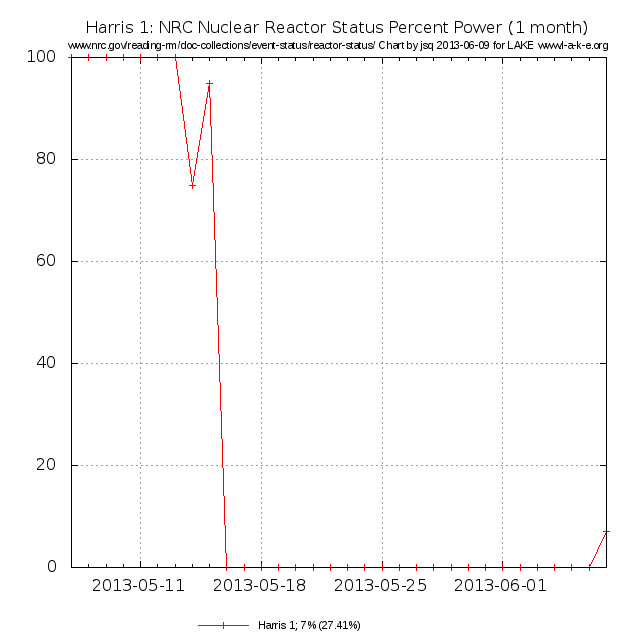
existing Vogtle Unit 1 had a fire
while Unit 2 was shut down for almost all of March 2013.
The two Plant Hatch reactors, same design as Fukushima,
so far as we know
still have substandard fire protection
and has a chronic problem of
radioactive tritium leaking into groundwater.
Tritium,
even the smallest amounts of which can have negative health effects.
And what gets into the watershed
spreads in the watershed.
The U.S. nuclear industry in general has problems with
alcohol, drugs, and broken equipment.
But
back to SO CEO Fanning about Fukushima: Continue reading
An employee still inside and a longtimer since retired both say
the San Onofre nuclear reactor should stay shut down.
Operator Southern California Edison says it’s safe to restart
at 70% power, but the Nuclear Regulatory Commission
won’t show the public Socal Edison’s study about that.
Which seems safest to you?
Trust the operator that let it break in the first place,
or keep it shut down?
JW August wrote for 10bnews.com 25 April 2013, San Onofre insider says NRC should not allow nuclear restart: Team 10 speaks with former NRC employee, insider,
Continue reading
Tiny Vermont demonstrates that the Internet access most telephone
and cable companies are selling us is way overpriced for way too
little speed.
Look Out Google Fiber, $35-A-Month Gigabit Internet Comes to Vermont (by Shalini Ramachandran for WSJ 26 April 2013)
Heads up Google GOOG +1.94% Fiber: A rural Vermont telephone company might just have your $70 gigabit Internet offer beat.
![]()
Vermont Telephone Co. (VTel), whose footprint covers 17,500 homes in the Green Mountain State, has begun to offer gigabit Internet speeds for $35 a month, using a brand new fiber network. So far about 600 Vermont homes have subscribed.
Even more interesting:
Continue readingWe don’t even need new solar innovations for solar to take over most power generation through economies of scale, but we will start seeing more innovative solar gadgets like this one, leading to even more distribution of solar power.
Just stick this portable outlet to your window to start using solar power
(by Sarah Laskow for Grist 29 April 2013)
We have seen a lot of solar chargers in our day. And among all of them, this is the first one we’ve seen that we will definitely run out and buy as soon as it’s made available in the U.S. It’s a portable socket that gets its power from the sun rather than the grid. You plug into a window instead of into the wall. It’s easy.
That was the whole point, according to the designers, Kyohu Song and Boa Oh: “We tried to design a portable socket, so that users can use it intuitively without special training,” they write.
It’s got solar panels, a plug, and batteries for 10 hours. It won’t run your air conditioner, but it will charge your phone.
Here’s another company’s take on the same idea from last year, and you can buy that one right now. Only in bulk, apparently. But stay tuned: we’ll see more ways to put solar chargers on your window, your car’s window, your car, your hat, etc….
-jsq
George Rhynes asks if Wal-Mart can fire employees who disarmed
an armed robber for not following procedures,
why can’t the manager he says didn’t follow procedures when
the manager fired him be fired in return?
I wonder why Wal-Mart procedures and profit are more important
than employee safety, well-being, or the drain on public resources
to cover what Wal-Mart does not?
George Boston Rhynes wrote to Wal-Mart CEO and President Mike Duke and Board of Directors 20 February 2011, Wal-Mart Store 899 and 2615, Valdosta, Georgia and China Workers!
Continue reading