Tag Archives: Valdosta

Germany Added 543 MW of Solar Power Capacity in July

While we in Georgia were still pouring money down that nuclear pit near the Savannah River, Germany has been getting on with real renewable energy. We could have deployed almost that much solar power with just the cost overruns so far at Plant Vogtle.

Nicholas Brown wrote for Clean Technica 8 September 2012, Germany Added 543 MW of Solar Power Capacity in July,

According to Matt McDermott of Treehugger: “[In] the first half of 2012 Germany has installed just over 4.37 gigawatts of grid-tied solar power. Remarkably just about 1.8 GW of that happened in June alone (perhaps even more remarkable, this isn’t even a record amount for one month in Germany).”

The amount of solar power capacity added in June was much more than July’s, but July’s was still impressive. July’s addition brings Germany’s total installed capacity for the first half of 2012 to 4,900 MW (4.9 GW).

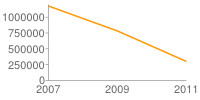
This impressive solar installation rate had a lot to do with Germany’s famous Feed-in Tariffs (FIT), but it also had a lot to do with Moore’s Law, illustrated by that graph of cost per kilowatt rapidly going down.

543 MW? That’s more than the 330 MW of solar the $913 million cost overrun at Plant Vogtle in the first half of 2012 could have bought. 1800 MW in June and 543 MW in July? That’s 2343 MW, which is more than the entire rated 2200 MW output of Plant Vogtle 3 and 4 put together, if they ever get built. Sure, the sun doesn’t shine all the time, but in the years until the nukes ever get built (if ever), how much solar could we deploy at the rate of one Vogtle unit equivalent a month?

Hey, maybe we should cancel Plant Vogtle and deploy solar instead! Maybe Georgia Power and Southern Company will realize their big bet has already gone bad. Or maybe we should elect some Public Service Commissioners and legislators who will get them to realize it.

-jsq


Industrial Authority goes solar, broadband, and conversational!

The Industrial Authority apparently listened to its focus groups, and discovered that broadband and solar energy are important to attract industry. Andrea Schruijer even recommends conversation, which has been sorely lacking in recent years. Congratulations, Industrial Authority!

Jason Schaefer wrote for the VDT today, Authority analyzes Valdosta business: Broadband, solar power, professional services targeted for growth,

The Authority also plans to work toward the availability of more broadband Internet service and solar power in Valdosta and surrounding communities. These amenities would help support local industries as well as draw new ones to the greater Valdosta area for the creation of new jobs.

That’s a good start. Although it’s not clear from the writeup that VLCIA quite got it about Internet access.

As part of presenting Valdosta as an attractive package for prospective industries, the Authority attempts to ready the land set aside for development before beginning the recruitment process. This means investing in infrastructure, including broadband internet.

“It’s not that we don’t have broadband,” Schruijer said. “What we’re looking at is the technology behind the broadband. We have it in certain areas, but in order for us to grow some of these core targets, such as professional services, we need that infrastructure.”

Well, actually, no, we don’t have broadband. 6Mbps is the fastest most people can get around here, and 30Mbps is the slowest you can even buy in many countries. Plus, it’s not just fast Internet to industrial sites that’s needed: it’s fast Internet access everywhere knowledge-based employees may want to live.

But they’re on the right track:

Because the Authority can’t “buy” industries into coming to Valdosta—though it can offer tax abatements—it is necessary to make sure that new businesses have what they will need before ground is even broken, Schruijer said. To this effect, the Authority will “stimulate the conversation” to actively attract more broadband companies to the area.

A conversation! Now there’s something we’ve been needing around here. And it’s a refreshing change from only a year ago when all we heard was

“Debate is not allowed.”

Maybe the Industrial Authority will be the organization that will show the rest of us how to hold civil discussions about things that affect all of us!

The VDT’s writeup skips quickly over another big change:

Continue reading

VZ 4G vs. AT&T DSL, Lowndes County, Georgia, 2012-09-08

It turns out you can’t yet buy Verizon’s HomeFusion Broadband 4G wireless Internet service

in Georgia. (You can buy it in Tennessee.) However, in Georgia, you can buy one of several 4G LTE devices that have most of the same capabilities. For example, I have here a Verizon Jetpack™ 4G LTE Mobile Hotspot MiFi©, which is about the size of a pack of cards. A few minutes ago I compared its speeds directly with AT&T 3Mbps DSL. Here are the results.

The MiFi I’ve got is a slightly older model of the one pictured above, because for years

AT&T DSL: 2.66Mbps down 0.31Mbps up
AT&T DSL
VZ 4G: 10.88Mbps down 7.14Mbps up
Verizon 4G
I’ve been using it and its predecessors on road trips, for Skype, web browsing, blog posting, etc. It’s also come in very handy as a plan B home Internet access method on the many occassions when AT&T’s DSL has flaked out. Mostly I did not use it for uploading videos or watching them much, because until recently it was relatively slow, using EVDO technology at about 1Mbps down and 0.7Mbps up. Suddenly, the MiFi has gotten much much faster, ten times faster, because Verizon has turned on their 4G LTE service in Lowndes County, at least for mobile access.

The tables show results using SpeakEasy Speedtest a few minutes ago.

Megabytes/secMegabits/sec
downup downup
AT&T DSL 2.66Mbps 0.31Mbps 322KB/sec 38KB/sec
Verizon 4G 10.88Mbps 7.14Mbps 1360KB/sec 893KB/sec

Verizon’s 4G LTE is way faster, as in Continue reading

Big Little Water, a talk by Tom Baird, 11 Sep 2012

Tuesday, a talk by a fan from Florida of our own Withlacoochee River, at the VSU Student Center, 7:30 9PM 11 September 2012, free admission. -jsq

Big Little Water by Tom Baird, hosted by Blazer Gardens in conjunction with WWALS

Big Little Water—a survey of the history, geology and archaeology of the Withlacoochee River, with replica artifacts people can handle, and slides.

“I’ll also get into some of the current threats to the river and maybe we can get into a good discussion and Q&A.”

Withlacoochee River Tom Baird is an education consultant who has previously worked as a high school teacher, community college instructor (oceanography and microbiology), director of a science and environmental center, supervisor of science (K-12) in Pasco Co., FL, Director of Science (PreK-12) in Pinellas Co., FL, Principal of a math/science/technology magnet high school in Pinellas Co., FL. and director of a National Science Foundation program. He is on the boards of the Panhandle Archaeological Society at Tallahassee and the St. Marks Refuge Association. He most enjoys exploring Florida and Georgia rivers by kayak and canoe. He is currently working on a book about the Withlacoochee River of South Georgia and northern Florida.

Blazer Gardens Address:
VSU Student Union
Oak Street @ Baytree Road
Valdosta GA 31698
Map and Directions

WWALS There’s also a facebook invitation.

-jsq

NRC rejects nuke permit for EDF in Maryland

French nuclear operator Électricité de France (EDF) was denied a license last week for the proposed Calvert Cliffs nuclear reactor in Maryland, because the Atomic Energy Act of 1954 prohibits majority foreign ownership of nuclear plants. EDF now has 60 days to find a U.S. partner, or give up the project. Who could the possible suitors be? Hint: think southeast.

The handwriting was on the wall two years ago when Constellation Energy pulled out of the project. Jim Polson and Alan Katz wrote for Bloomberg 10 October 2010, Constellation Drops Nuclear Plant, Denting EDF’s U.S. Plans,

Constellation Energy Group Inc. pulled out of negotiations on a $7.5 billion loan guarantee to build a nuclear reactor in Maryland with Electricite de France SA, potentially damaging the French utility’s U.S. expansion plans and the companies’ partnership.

The cost of the U.S. government loan guarantee that the companies’ joint venture, UniStar Nuclear Energy, would need to build the Calvert Cliffs 3 reactor is too high and creates too much risk for Constellation, the Baltimore-based utility said in a statement yesterday. The statement said the next step is up to EDF. Enlarge image U.S. Deputy Energy Secretary Daniel Poneman

In a letter Oct. 8 to Daniel Poneman, deputy secretary of the U.S. Department of Energy, Constellation said it received a government estimate that the venture would have to pay about $880 million to the U.S. Treasury for the loan guarantee, “dramatically out of line with both our own independent assessments and of what the figure should reasonably be.”

Constellation’s decision may make it more likely that the U.S. utility will exercise a put option forcing EDF to buy as much as $2 billion of Constellation’s non-nuclear power plants, said Ingo Becker, head of utilities sector research at Kepler Capital Markets.

“EDF very clearly said if they exercise the put, this thing is over,” Becker said. “Constellation may have just turned around the calendar and pulled out of the new build before exercising the put, anticipating EDF’s reaction.”

In a letter Oct. 8 to Daniel Poneman, deputy secretary of the U.S. Department of Energy, Constellation said it received a government estimate that the venture would have to pay about $880 million to the U.S. Treasury for the loan guarantee, “dramatically out of line with both our own independent assessments and of what the figure should reasonably be.”

Meanwhile, Southern Company is still trying to reduce what it has to pay for its $8.3 billion federal loan guarantee.

Back in Maryland, the news got worse for the nuke last year. EDF asked for the state’s help, but didn’t get the answer it wanted. Scott Dance wrote for Baltimore Business Journal 16 December 2011, EDF: Constellation-Exelon settlement hurts Maryland nuclear industry,

Continue reading

New NRC head says agency is standing up for public health and safety

Sounds to me like the NRC is not telling its new chief everything. For example, what about Vogtle unit 1 shutting down right after it passed an NRC review? What about cancer in Shell Bluff, Georgia, near the reactors?

Mike M. Ahlers wrote for CNN 14 August 2012, New NRC chair vouches for agency’s independence, states goals

Allison Macfarlane said Tuesday she has confidence in the agency and its independence from the nation’s 104 commercial nuclear power plants.

“I have some strong initial impressions of the agency, and one is that I’ve been very impressed with the staff and their dedication to safety, and their willingness to stand up to industry when they believe a situation is not safe,” Macfarlane said in a wide-ranging discussion with reporters.

“So I’m actually quite assured that the agency is completing its mission of protecting public health and safety,” she said. “They take safety issues very seriously. They take their role as regulators very seriously and the public should be assure that they have the public’s best interests in mind.”

Macfarlane said she hopes to build public confidence in the agency by improving communication, increasing transparency and making NRC documents understandable. “Some of them are rather opaque,” she allowed.

She has said some slightly more impressive things back before she was appointed. Continue reading

Wind second only to natural gas in 2011 added capacity

Looks like Southern Company (SO) bet on the wrong horse.

David Danielson wrote for DoE 14 August 2012, A Banner Year for the U.S. Wind Industry,

The report finds total U.S. wind power capacity grew to 47,000 megawatts by the end of 2011 and has since grown to 50,000 megawatts, enough to power 12 million homes annually — as many homes as in the entire state of California. And as wind energy capacity has grown, more and more wind turbines and components like towers, blades, gears, and generators are “Made in America.” Nearly 70 percent of all of the equipment installed at U.S. wind farms last year came from domestic manufacturers, doubling from 35 percent in 2005.

Why should SO worry? Wind only came in second in added capacity. Because of this:

In addition to strong gains in domestic wind manufacturing and capacity, the report finds that as wind technology improves, costs are coming down. Technological innovations are helping make longer and lighter wind turbine blades, while improving turbine performance and increasing the efficiency of power generation. At the same time, wind project capital and maintenance costs have continued to decline.

And wind doesn't even have Moore's Law going for it as much as solar does, plus solar is usable in more areas than wind. Add wind and solar and why do we need much natural gas? (Or any coal or nuclear?)

-jsq

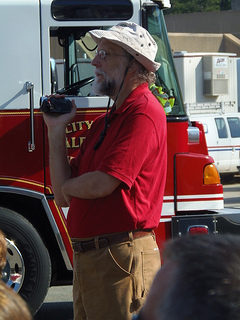
Save the Remerton Mill! —Ransom Gladwin

LTE in the VDT yesterday. -jsq

Part of my teaching load as a professor consists of supervising student teachers at schools throughout Valdosta State University’s 46-county service area. I have traveled many South Georgia back roads. What was once a charming rural landscape of unique little towns has slowly morphed into sameness. Chain-brand retail stores, fast food, and gas stations are interrupted by strip malls and storage units. The region’s character has receded in the face of nationalization and globalization. However, historical features, be they a restored courthouse or a crumbling tobacco barn, light this bleakness. They give character, history, and pride to communities. One such structure is Remerton’s Strickland Mill, now in danger of complete destruction.

As a member of the Save the Strickland Mill Committee of the Valdosta Heritage Foundation, we recently toured the mill, with the approval of the owners and accompanied by Remerton officials. The original mill is structurally solid. The 1899 structure reflects

Continue reading

Sinkhole under the shed

The sinkholes are not just in the garage and under the front steps, Michael McCormick walking towards his shed there’s one under Michael McCormick’s tool shed. He already jacked up the shed and put blocks under it after the ground sunk underneath it. With all these sinkholes on his lot (and more in the yard), how are they connected underground? How will they expand?

Here’s a video playlist:

Videos by Gretchen Quarterman and John S. Quarterman for Lowndes Area Knowledge Exchange (LAKE), Valdosta, Lowndes County, Georgia, 28 August 2012.

-jsq

Phase 2 Solar Power for the Wisenbaker Building —Ron Jackson

Phase 2 after South GA Solar Power, LLC remediated the historic Wisenbaker Building is solar generation, according to Ron Jackson.

We wanted to … remediate some of the problems first to reduce the load, to reduce the energy consumption.

Phase 2 Solar Power for the Wisenbaker Building --Ron Jackson Once we’ve done that, phase 2 kicks in, which is the solar power application. If we’d done that first, we probably would have put on a 20KW system to handle this load. But because we’ve done the phase 1 project and reduced the energy load, now we only need an 8-10 KW system, so the prices have been reduced. Next year hopefully it will be a fully green, fully functioned solar power application.

Right in downtown Valdosta!

The historic Wisenbaker Building, 100 North Patterson Street, is at the corner of West Hill Avenue. It was purchased by Gino Fina in 2006, and is now used as Valdosta Shared Office Space.

Here’s the video.

Phase 2 Solar Power for the Wisenbaker Building –Ron Jackson
Pictures and video by John S. Quarterman for Lowndes Area Knowledge Exchange (LAKE), Valdosta, Lowndes County, Georgia, 5 May 2012.

-jsq