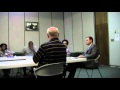
At Monday’s Lowndes County Democratic Party meeting,
LCDP Chair
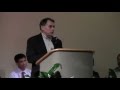
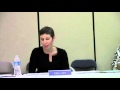
Gretchen Quarterman introduced Kay Harris as chairman of the Library Board.
You can see that board in action a few weeks ago
in these previous videos.
Kay Harris said she was not there as editor of the newspaper,
since as such she wouldn’t be allowed (presumably by the newspaper)
at a partisan meeting.
She was there as chair of the library board.
She said this is her fifth year on that board, and
her second year as chairman.
She said the county put her on that board to move along the
library project, which had been in process for some time.
She said she had led negotiations with the City of Valdosta
for the Five Points process.
She mentioned the
Five Points Steering Committee,
of which she is also a member.
About the current library building and how the new one would be better,
she said,
Southern California Edison bet on big baseload nuclear, and
has been out two units for eight months and counting.
Big baseload turns quickly from 24/7 to 0/7.
Tentative plans are forming for a restart, which will take
many more months, if ever.
Wouldn’t distributed solar and wind be quicker and smarter?
In Georgia, as well as California?
The company announced plans to repair and restart one of two damaged
reactors, Unit 2, at reduced power to hopefully halt vibration that
has caused excessive wear to scores of tubes that carry radioactive
water. The outlook for its heavily damaged sister, Unit 3, appears
grim and no decision on its future is expected until at least next
summer.
The Nuclear Regulatory Commission is expected to take months to
review the plan, and there is no timetable to restart the plant.
There are a few signs that the eventual outcome is dawning on some utility people.
Plans are already taking shape that envision lower output from San
Onofre at least into 2013.
“Whenever you lose generation, it has implications,” said San Diego
Gas & Electric spokeswoman Jennifer Ramp.
Well, yeah, and losing big blocks of power is one of the implications
of depending on a few big baseload plants in the first place.
Distributed
solar
and
wind wouldn’t have this problem.
Here are videos of all the presentations from the
Meet the Candidates
event at VSU Monday.
This adds to the previous
LAKE videos,
and also includes a different perspective from George Boston Rhynes.
Update 4:40 PM 5 October 2012:
Toma Hawk has supplied
a third viewpoint.
“Renewable (energy sources are) going to have a sliver,”
Bowers said of fuels to create electricity. “Is it going to be
2 or 4 percent? That’s yet to be determined. Economics will drive
that. But you always remember (that renewable energy is) an
intermittent resource. It’s not one you can depend on 100 percent of
the time.”
One time you can depend on it is hot summer days when everybody is
air conditioning, which is why
Austin Energy flipped in one year
from spouting such nonsense to deploying the most aggressive solar rooftop
rebate program in the country.
Austin Energy did the math and found those rebates would cost
about the same as a coal plant and would generate as much energy.
And when it is needed most, unlike the fossilized baseload grid,
which
left millions without power in the U.S. in June
and
hundreds of millions without power in India in July.
Pushers of the charter school amendment must be desperate!
Blurring the line between public officials and private
citizens, state Attorney General Sam Olens wrote:
Local school boards do not have the legal authority to expend funds
or other resources to advocate or oppose the ratification of a
constitutional amendment by the voters. They may not do this
directly or indirectly through associations to which they may
belong….
That means organizations like the Georgia School Boards Association,
and perhaps, the Georgia School Superintendents Association, would
be barred from speaking out against the proposed constitutional
amendment.
Olens’ letter would apply to what
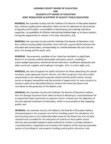
the VDT said was in the VBOE and LCBOE joint resolution,
at least the part about “The resolution explicitly states that the boards
are asking voters to not support the Constitutional Amendment relative
to state charter schools.”
But what does Olens mean, duly elected local school boards don’t
have authority to express opinions about educational matters
that would directly affect the people who elected them?
Will he next be telling the Valdosta City Council it can’t
pass a resolution opposing a referendum?
What exactly is the difference between that elected body and
an elected school board as far as expressing such an opinion?
And all of those resolutions were non-binding opinions.
The Valdosta Board of Education, followed by the
Lowndes County Board of Education, adopted a
“Charter School Amendment Resolution” or a
“Joint Resolution in Support of Quality Public Education”,
depending on which ones minutes you go by.
What does the resolution actually say?
“The Lowndes County and Valdosta City Boards of Education
request that the Governor and State Legislators commit their support
to adequately fund a first-class K-12 public education for students
in Lowndes County and Valdosta City and across the state of
Georgia,” the resolution states.
The resolution explicitly states that the boards are asking voters
to not support the Constitutional Amendment relative to state
charter schools.
So the state has consistently run down the public education system
in Georgia over the course of the last decade by drastically cutting
funding from programs, but are now complaining because student test
scores and graduation rates have decreased.
The state solution? Allow for basically anyone who has a building to
apply to run a “charter school” that would siphon money
away from public education. Students would be able to choose where
they would go, the parents or community officials would
“run” the schools, and they would not have to meet the
same standards as the current public schools, but taxpayers would
still be forced to pay for them.
State officials are fond of saying that charter schools aren’t
private schools, but when a school gets to pick and choose who they
let in and who they don’t, that’s the definition of a private
school. Only the elite whose parents want to run the schools will
have a chance, and the poor and disenfranchised will have no choice,
will not be accepted, and will suffer even more because the money
will no longer be there to educate them.
Here’s an idea: Restore all those drastic austerity cuts from
education to pre-Gov. “Sonny” Perdue levels, invest in
the public education system which is already in place and doing
quite well in spite of the state’s best efforts to shut it down, and
restore the true value of a public education to the taxpayers of the
state who are footing the bill and seeing fewer results.
I like that idea. Let’s vote No on the charter school amendment in November
so we can get back to funding public education.
The library board heard citizens at length about a problem that was
apparently news to the board,
later considered the problem at length,
came up with an interim solution,
and formed a committee to examine it longterm.
Citizen concerns about rules against after hours library use
Concerns were raised about hours at the southside library at the monthly meeting
of the South Georgia Library Board, 18 September 2012.
Apparently rules have recently been changed for
all library branches
so that meetings can no longer be held after library hours.
This is a problem for volunteer groups composed of working people.
It was unclear what the latest version of the rules is.
And the library board appeared
unfamiliar with the hours of its own libraries.
However, they did at the end of their meeting
extensively consider the issue
and apparently come to an interim solution with
a path to a more general solution.
The rules change may have been due to
one incident at one branch
(not the southside branch)
for which the library board knew the sponsoring organization.
Questions were raised as to why a blanket rules change ensued.
One citizen pointed out that
taxpayers pay for the library buildings
so it’s not clear why they should be prevented from using them;
school buildings, too.
Another consideration was
elderly parent care, because it’s hard to get help for that
any time other than during the day.
Kay Harris wanted to be sure everyone who wanted to speak had spoken.
At least one citizen left
a written statement for the record,
which is always a good idea.
Then all the citizens who had spoken left the meeting,
apparently uninterested in anything else the library board was doing.
Interestingly,
a southside library support group
was in one of the regular report items.
Transparency
After the other citizens left, one of the library board (his nameplate
said Ray Devery)
asked whether Gretchen could stay.
Kay Harris without hesitation said yes and moved on to approval of the minutes.
Congratulations to Kay Harris on knowing the open meetings law
and sticking to it!
Speaking of the minutes, where are they so the taxpaying public can see them?
Regarding the planned Five Points library, Kay Harris clarified
that staff are not supposed to help promote that
“in any way, shape, or form.”
During paid hours.
After hours is different.
South Georgia Library Board
southside library hours,
Monthly Meeting, South Georgia Library Board (SGLB),
Video by Gretchen Quarterman for Lowndes Area Knowledge Exchange (LAKE),
Valdosta, Lowndes County, Georgia, 18 September 2012.
 Kay Harris said she was not there as editor of the newspaper,
since as such she wouldn’t be allowed (presumably by the newspaper)
at a partisan meeting.
She was there as chair of the library board.
She said this is her fifth year on that board, and
her second year as chairman.
Kay Harris said she was not there as editor of the newspaper,
since as such she wouldn’t be allowed (presumably by the newspaper)
at a partisan meeting.
She was there as chair of the library board.
She said this is her fifth year on that board, and
her second year as chairman.