Tag Archives: EDF

Chinese nukes in Britain

Bad news from Britain.
Let’s hope U.S. NRC doesn’t take this as a precedent.

The Telegraph, today,

Chinese companies to buy big stake in next generation of British nuclear power
,


George Osborne, the Chancellor, has announced that the UK will allow
Chinese companies to take a stake in British nuclear power plants.

The decision could lead to China taking a future majority
stake—and even be allowed to own up to 100 pc—in the
development of the next generation of British nuclear power.

Mr Osborne made the announcement on Thursday the last day of a
week-long trade visit to China after a visit to Taishan nuclear
power station on the coast near Hong Kong.

Taishan is a collaboration between French energy company EDF and the
China General Nuclear Power Company.


EDF is at the heart of UK Government Continue reading

Last NRC call about foreign ownership of U.S. nuclear reactors: now until noon today

Call in this morning or send written comments.
Here are the

previous materials
(this URL works; the one in the NRC PR is broken).
See also
NRC’s PR
and
Commission Direction.
The nuclear industry has been

pushing for changes for a year now
;
see
more posts.
Rather than relaxing rules on foreign ownership of operating reactors,
how about stop accepting foreign nuke parts from the likes of

document-forging Doosan
, which supplies Plant Vogtle among a dozen
or so other U.S. nukes?

Try joining the
webinar
from a Linux system and you get:

This system isn’t supported


Not supported


Joining a session from this computer’s OS or web browser isn’t supported.


Please view the GoToWebinar system requirements.


Questions?


Contact Global Customer Support or tweet to us @gotowebinar.

They support Windows, Mac, iOS, or Android, but not Linux.
Seriously?
And NRC is asking technical questions?


NRC PR 7 August 2013,

NRC Webinar Aug. 21 to Discuss Regulations On Foreign Ownership of U.S. Reactors
, Continue reading

EDF exits nuclear, focuses on solar and wind

EDF is moving to solar and wind, despite its excuse of shale gas for leaving
the U.S. nuclear market.
EDF already has almost twice as much solar and wind in the U.S., 2.3 gigawatts, as

the 1.2 gigawatts Southern Company plans by 2016
.


Maybe this means

Calvert Cliffs is finally dead

maybe along with

NRC’s attempt to change foreign ownership rules to accomodate EDF
.
EDF is the operator of France’s fleet of nuclear reactors,
including
caught-on-fire Cattenom
and many others

that drain over-hot water into French rivers in the summer
.

Reuters in Climate Spectator 31 July 2013

EDF exits US nuclear, focuses on renewables
,

French utility EDF, the world’s biggest operator of nuclear plants,
is pulling out of nuclear energy in the United States, bowing to the
realities of a market that has been transformed by cheap shale gas.

Several nuclear reactors in the US have been closed or are being
shuttered as utilities baulk at the big investments needed to extend
their lifetimes Continue reading

Twice French GDP and soil contamination as big as France plus Germany: the real cost of a bad French nuclear accident

Sixty hurricane Katrinas or 112 Sandys is the cost
EDF, the French company

that wants to build a new nuke at Calvert Cliffs in Maryland
,
avoided revealing through


“fabricated” reports that “very seriously underestimated the costs of” a potential serious nuclear accident in France.
The real cost would range from 0.76 trillion to 5.8 trillion euros ($1 trillion to $7.62 trillion dollars).
For comparison,
the Gross Domestic Product (GDP) of France is about 2.11 trillion euros,
according to the World Bank.
So a Chernobyl- or Fukushima-style accident in France
would cost ⅓ to 2¾ times French GDP.
No country can afford that.

Not even the U.S., whose GDP is $14.99 trillion or $11.41 euros,
so such an accident, esp. if it happened in the densely populated eastern U.S.,
as for example in Maryland, could cost half the GDP of the United States.
That’s way beyond the

$68 billion cost of Hurricane Sandy or $125 billion for Hurricane Katrina
.
One nuclear accident could cost more than twice the

$4 to $6 trillion for the Iraq and Afghanistan wars combined
.

Wolf Richter wrote for Business Insider 14 March 2013,

French Nuclear Disaster Scenario Was So Bad The Government Kept It Secret
,

Continue reading

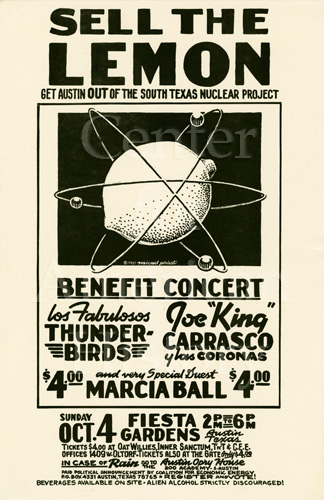
NRC to change foreign ownership so NRG and Toshiba can fire up South Texas Nuclear Project?

Not just

EDF and Calvert Cliffs

that would be enabled by

the current NRC rule-changing comment period
.


In April

NRC denied a license
to NRG and Toshiba Corp. (aka Nuclear Innovation North America, or NINA)
for two new reactors at the South Texas Project nuclear facility outside Bay City;
the same facility where STNP 2

http://www.l-a-k-e.org/blog/2013/01/fire-in-texas-nuclear-reactor.html

had a fire in January.
The reason for denial was the same as for EDF and Calvert Cliffs: Continue reading

NRC to change nuke foreign ownership so EDF can fire up Calvert Cliffs?


The NRC “upheld” license denial for the Calvert Cliffs nuke
with its fingers crossed, the very same day
directing staff to look into changing the requirement
by which it just ruled.
A requirement against majority ownership by a foreign firm,
in this case


Électricité de France (EDF)
,
whose flagship Cattenom reactor

caught on fire a week ago
with smoke seen from miles away;
two people died at Cattenom in February.
You can comment on NRC’s proposed changes to let EDF

fire up Calvert Cliffs

online or in person June 19th in Maryland
.


The same day

the NRC upheld denial of a license
, 11 March 2013,

the same Commission

“directed the staff to provide a fresh assessment on issues relating to FOCD including recommendations on any proposed modifications to guidance or practice on FOCD that may be warranted.”

And the issue with Calvert Cliffs was that very same
“foreign ownership, control, or domination (FOCD) of commercial nuclear power plants.”

This explains why Continue reading

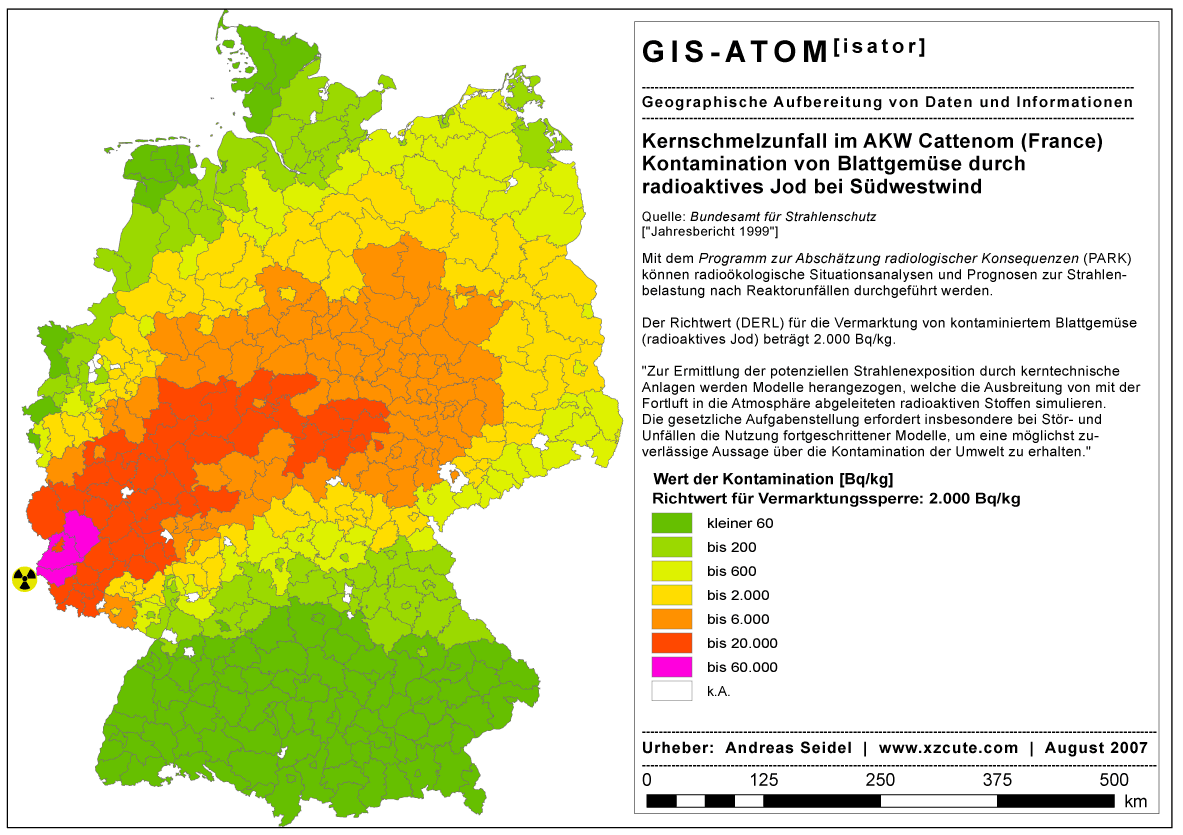
The wind from the Cattenom nuke in France blows into Germany

From France to Berlin is as close as 32 nuclear reactors to here.
Here’s a
scenario for

“Core meltdown accident in the nuclear power plant Cattenom (France) contamination of leafy vegetables by radioactive iodine with wind from the southwest”
:


I was in Germany shortly after Chernobyl, when all the cows were inside so they would not
eat the radioactive grass, and all the salads were frozen.

Here’s

a scenario for radioactive iodine in mother’s milk
, with a similar map: Continue reading

Fire at nuclear reactor in France

Not just for

Plant Vogtle
anymore:
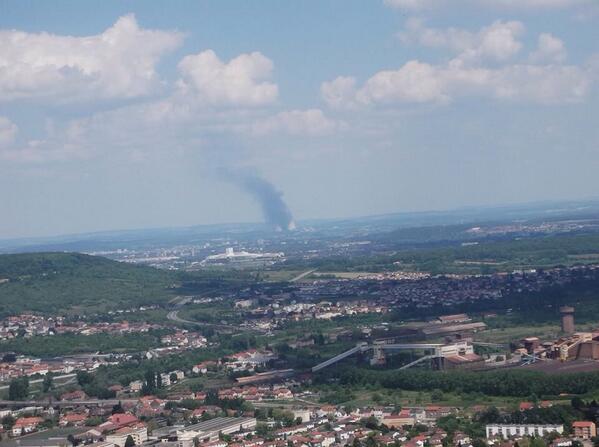
this nuclear reactor site fire was at one of

EDF’s
flagship plants at

Cattenom, Lorraine, France
, on the Moselle River.

ENENews quoted MarketWatch yesterday,

Photo: “Fire broke out at nuclear reactor” — “Plumes of black smoke could be seen from a considerable distance”


French state-controlled power group Electricite de France SA said
Friday a fire started on a transformer at its nuclear plant in
Cattenom, eastern France, adding that it was outside the
nuclear-processing area.

A picture tweeted from France: Continue reading

Change the Atomic Energy Act? How about change the Georgia Electric Territorial Act?

In reaction to

the NRC denying a nuclear permit for Calvert Cliffs,


some nuclear backers suggest

changing the
Atomic Energy Act of 1954 to permit majority foreign ownership
of nuclear reactors.

What will they suggest next?
Asking Iran to invest in U.S. nukes?

Steve Skutnik wrote for http://theenergycollective.com 5 September 2012,

A cost-free way to open up nuclear investment
,

If this seems entirely backward in a world of global production and
investment, that’s because it is. The current regulation is an


artifact of the Atomic Energy Act of 1954, which first authorized
private ownership of nuclear facilities. (Prior to this—per
the Atomic Energy Act of 1946, all nuclear technology was considered
a state secret, during the short time in which the U.S. enjoyed a
monopoly on the technology.)

Is there any real compelling reason for restrictions on foreign
ownership and investment in nuclear facilities to exist at a time
when the U.S. holding a monopoly on the technology has long since
passed? Issues of safety here of course are irrelevant—the
facilities would be licensed and regulated by the NRC, just as any
other nuclear facility is now. About the only salient objection is
the political one—i.e., the implications of a foreign entity
maintaining controlling ownership in key infrastructure. (Although
it’s hard to see anyone getting particularly upset about the
reverse—U.S. entities owning a controlling stake in
infrastructure in other nations.)

Yeah, sure, strict regulation
will deal with that, just like it prevents fracking from setting
drinking water on fire, or BP from poisoning the Gulf.
The new NRC head is

maybe well-meaning
,
but it’s the same NRC

that gave Vogtle 1 a clean bill just before it had to shut down

and the same NRC that’s ignoring

cancer in Shell Bluff.

Oh, by the way, the article gets to the main point eventually:

Continue reading

NRC rejects nuke permit for EDF in Maryland

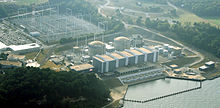
French nuclear operator Électricité de France (EDF)


was denied a license last week for the proposed Calvert Cliffs

nuclear reactor in Maryland, because the
Atomic Energy Act of 1954 prohibits majority foreign ownership
of nuclear plants.
EDF now has 60 days to find a U.S. partner, or give up the project.
Who could the possible suitors be?
Hint: think southeast.

The handwriting was on the wall two years ago when
Constellation Energy pulled out of the project.
Jim Polson and Alan Katz wrote for Bloomberg 10 October 2010,

Constellation Drops Nuclear Plant, Denting EDF’s U.S. Plans
,

Constellation Energy Group Inc. pulled out of negotiations on a $7.5

billion loan guarantee to build a nuclear reactor in Maryland with
Electricite de France SA, potentially damaging the French utility’s
U.S. expansion plans and the companies’ partnership.

The cost of the U.S. government loan guarantee that the companies’
joint venture, UniStar Nuclear Energy, would need to build the
Calvert Cliffs 3 reactor is too high and creates too much risk for
Constellation, the Baltimore-based utility said in a statement
yesterday. The statement said the next step is up to EDF. Enlarge
image U.S. Deputy Energy Secretary Daniel Poneman

In a letter Oct. 8 to Daniel Poneman, deputy secretary of the U.S.
Department of Energy, Constellation said it received a government
estimate that the venture would have to pay about $880 million to
the U.S. Treasury for the loan guarantee, “dramatically out of
line with both our own independent assessments and of what the
figure should reasonably be.”

Constellation’s decision may make it more likely that the U.S.
utility will exercise a put option forcing EDF to buy as much as $2
billion of Constellation’s non-nuclear power plants, said Ingo
Becker, head of utilities sector research at Kepler Capital Markets.

“EDF very clearly said if they exercise the put, this thing is
over,” Becker said. “Constellation may have just turned
around the calendar and pulled out of the new build before
exercising the put, anticipating EDF’s reaction.”

In a letter Oct. 8 to Daniel Poneman, deputy secretary of the U.S.
Department of Energy, Constellation said it received a government
estimate that the venture would have to pay about $880 million to
the U.S. Treasury for the loan guarantee, “dramatically out of
line with both our own independent assessments and of what the
figure should reasonably be.”

Meanwhile, Southern Company

is still trying to reduce what it has to pay for its
$8.3 billion federal loan guarantee
.

Back in Maryland, the news got worse for the nuke last year.
EDF

asked for the state’s help
,
but didn’t get the answer it wanted.
Scott Dance wrote for Baltimore Business Journal 16 December 2011,

EDF: Constellation-Exelon settlement hurts Maryland nuclear industry
,

Continue reading