Author Archives: admin

Private Prisons failing in Texas, leaving locals in lurch

John Burnett writes for NPR that Private Prison Promises Leave Texas Towns In Trouble:
It seemed like a good idea at the time when the west Texas farming town of Littlefield borrowed $10 million and built the Bill Clayton Detention Center in a cotton field south of town in 2000. The charmless steel-and-cement-block buildings ringed with razor wire would provide jobs to keep young people from moving to Lubbock or Dallas.

For eight years, the prison was a good employer. Idaho and Wyoming paid for prisoners to serve time there. But two years ago, Idaho pulled out all of its contract inmates because of a budget crunch at home. There was also a scandal surrounding the suicide of an inmate.

Shortly afterward, the for-profit operator, GEO Group, gave notice that it was leaving, too. One hundred prison jobs disappeared. The facility has been empty ever since.

The pullquote: Continue reading

Gigabit Internet in Chattanooga

If we’re going to copy Chattanooga about something, how about this: 133 US cities now have their own broadband networks by Nate Anderson in Ars Technica:
Such publicly owned networks can offer services that incumbents don’t, such as the 1Gbps fiber network in Chattanooga, Tennessee, run by the government-owned electric power board. And they sometimes have more incentive to reach every resident, even in surrounding rural areas, in ways that might not make sense for a profit-focused company.
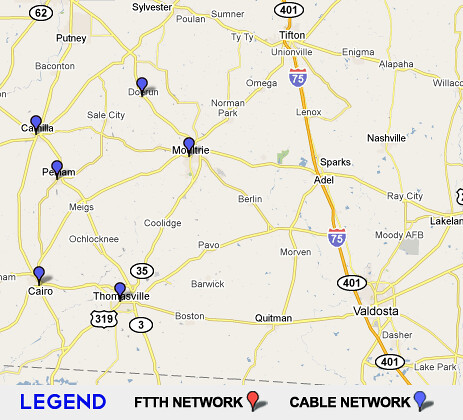
According to this map of Community Broadband Networks by the Institute for Local Self-Reliance, quite a few small cities in south Georgia have municipal cable networks:

All three of Moultrie, Thomasville, and Cairo use CNS, whose brochure for Moultrie says you can get:

DownstreamUpstreamMonthly Cost
5 Mbps1 Mbps$29.95
12 Mbps2 Mbps$35.95
22 Mbps3 Mbps$49.95
Now that’s not 1 Gbps, but it’s a darn sight faster than the allegedly 3Mbps AT&T DSL!

If Moultrie, Thomasville, and Cairo, and yes, Doerun can do this, why can’t Valdosta and Hahira?

And then how about add on a wireless network to reach the rest of us rural folk?

Maybe then we wouldn’t be the Internet backwoods.

-jsq

Thanks to George Rhynes for the district number label idea –Tim Carroll @ VCC 24 March 2011

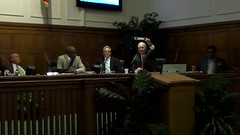
A small example of following up on citizen suggestions, but who knows? maybe it’s a sign of much more to come. In the comments by council members at the end of the 24 March 2011 Valdosta City Council session, member Tim Carroll thanked George Rhynes for his suggestion to put district numbers on council members’ name plates so citizens could more easily tell which was their council member. Caroll raised his plate up so everyone could see it has a number on it, too, now. Other Council members also commented on various things.


Regular meeting of the Valdosta City Council, 24 March 2011,
Valdosta, Lowndes County, Georgia.
Videos by Gretchen Quarterman for LAKE, the Lowndes Area Knowledge Exchange.

George suggested the district number labels on 20 January 2011.

-jsq

It’s an opportunity –John S. Quarterman

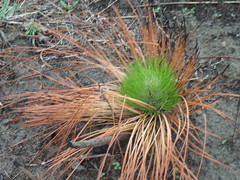
“Like a burned-over longleaf pine, we can come back from this recession greener than ever, if we choose wisely.”

Here is my response to James R. Wright’s questions about jobs and priorities. -jsq

It’s an opportunity for those of us who are not currently searching for our next meal to help those who need jobs, and thereby to help ourselves, so they don’t turn to crime. Like a burned-over longleaf pine, we can come back from this recession greener than ever, if we choose wisely.
Switchgrass seemed like a good idea five or ten years ago, but there is still no market for it.

Meanwhile, local and organic agriculture is booming, and continued to boom right through the recession.

Not just strictly organic by Georgia’s ridiculously restrictive standards for that, but also less pesticides for healthier foods, pioneered as nearby as Tifton. That’s two markets: one for farmers, stores, and farmers’ markets in growing and distributing healthy food, and one for local banks in financing farmers converting from their overlarge pesticide spraying machinery to plows and cultivators.

Similarly, biomass may have seemed like a good idea years ago, but with Adage backing out of both of its Florida biomass plants just across the state line, having never built any such plant ever, the biomass boom never happened.

Meanwhile, our own Wesley Langdale has demonstrated to the state that

Continue reading

After Kia: still school problems in Troup County; no mention of unification

Let’s keep looking for evidence of any connection of school unification in Troup County, Georgia, to the Kia plant, even though CUEE didn’t present any. It’s rather odd that none of the locals seem to have mentioned any such connection in the numerous articles published about the Kia plant.

Here’s an interview with Mayor Drew Ferguson IV of West Point, Georgia by Larry Copeland in USA TODAY, 25 March 2010, Kia breathes life into old Georgia textile mill town. Nope, no mention of schools, education, or unification. Nice picture of the mayor with a Kia, though.

Karen Kennedy published a lengthy article about the Kia plant in GeorgiaTrend in August 2008, LaGrange/Troupe County: The Kia Effect, in which the first mention of schools is for the period after the Kia plant opened:

The biggest need Mayor Ferg-uson sees in West Point right now is public education. “We have a wonderful elementary school.” But there is no middle or high school in the city limits. “The current formula for education funding is not working,” he says of the state’s approach, which bases money on students who are already in the system, not on students who will be coming through the system in the near future. “If you don’t have great education opportunities people will live far away and drive [to work]. Schools should be looked at as an economic driver.” They are a way to help recruit good strong families to an area, he adds.
That’s right, after the Kia plant, there are big problems with the schools, and there’s not even any mention of unification.

-jsq

Greening Of America –James R. Wright

In a long-running email discussion that started with a post by Valdosta City Council member James R. Wright about switchgrass for biomass, Councilmember Wright wrote two messages on Saturday, 26 March 2011, each asking questions of Dr. Michael Noll. The first one contained this paragraph:
Economic development is a high priority on the mind of many people. If you read the local paper you will see page after page of foreclosures, failing businesses, and unemployment at a all time high. Please explain to me how we can address these problems through energy needs?
Councilmember Wright elaborated later that same day: Continue reading

Georgia is CCA’s model partner

“Primary site?” Really?

The initial writeup in the VDT quoted CCA as being all coy about if a need arose from the state they would be ready to deploy the private prison in Lowndes County:

“This is (for) a future need that we don’t even know what it’ll be yet,” Frank Betancourt, CCA’s vice president of real estate development said. “There’s no ground breaking to announce. When the need (for a facility) does arrive, we can be the first ones to offer (our services).”
Yet if you look on CCA’s own website under partnering:
CCA has been a great partner with us for nearly a decade now. Coffee Correctional Facility and Wheeler Correctional Facility certainly meet the standards of the Georgia Department of Corrections. I particularly appreciate CCA maintaining exemplary accreditation status with both the American Correctional Association and the National Commission on Correctional Healthcare. I look forward to a continued long relationship with them.”
—Commissioner James E. Donald, Georgia Department of Corrections
And over in Decatur County people actually asked about this, and were told Continue reading

Call to action for City Council not to sell water to biomass plant –Karen Noll @ VCC 24 March 2011

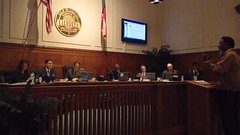
Karen Noll of WACE, Wiregrass Activists for Clean Energy, asked the Valdosta City Council not to sell wastewater to the proposed Wiregrass Power LLC biomass plant. She presented
“500+ signatures from community members and organizations”
asking for that. She also said
“…furthermore a response to our request each member of the council is expected before the next council meeting.”
Here’s the video.


WACE, Wiregrass Activists for Clean Energy, at
Regular meeting of the Valdosta City Council, 24 March 2011,
Valdosta, Lowndes County, Georgia.
Videos by Gretchen Quarterman for LAKE, the Lowndes Area Knowledge Exchange.

-jsq

Record year for U.S. solar power

Wendy Kotch wrote in USA Today 10 March 2011, U.S. solar industry reports record 2010 growth:
The U.S. solar power market grew a record 67% last year, making it the fastest-growing energy sector, the industry reports Thursday.

“This remarkable growth puts the solar industry’s goal of powering 2 million homes annually by 2015 within reach,” Rhone Resch, SEIA president and CEO, said in announcing the findings.

That curve is the inverse of this other one of the plummeting cost of solar electricity. Needs no fuel, fouls no air; costs less, powers more: go solar!

-jsq

The Internet backwoods: that’s south Georgia

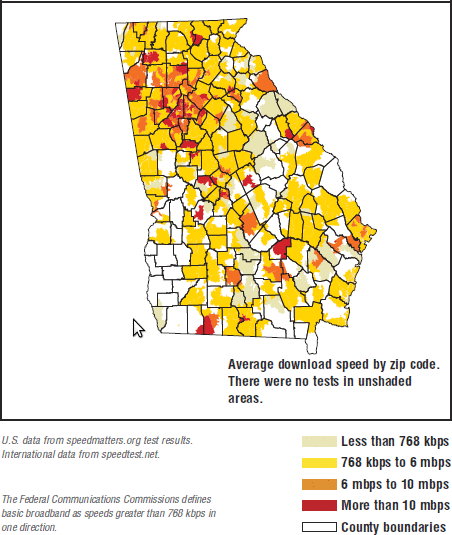
Saturday I heard somebody bragging about how fast the Internet is in Atlanta. That would be maybe a tenth of the speed it is in Tokyo. But still blazing fast compared to the broke-down wagon in a muddy ditch speeds we get in south Georgia:

I wrote that article more than a year ago, and Internet speeds in rural Georgia have not improved much if at all. This isn’t just about playing Farmville. It’s about communicating with your relatives, about competing in business, Continue reading