Category Archives: Politics

Solar: jobs, leadership, grid, independence, and health

Peak power when you need it: solar. Somebody has been studying it, and addressing problems local decisionmakers right here in south Georgia have been raising.

Solar Power Generation in the US: Too expensive, or a bargain? by Richard Perez, ASRC, University at Albany, Ken Zweibel, GW Solar Institute, George Washington University, Thomas E. Hoff, Clean Power Research. That’s Albany, New York, but it applies even more to Albany, Georgia and Lowndes County, Georgia, since we’re so much farther south, with much more sun.

Let’s cut to the chase:

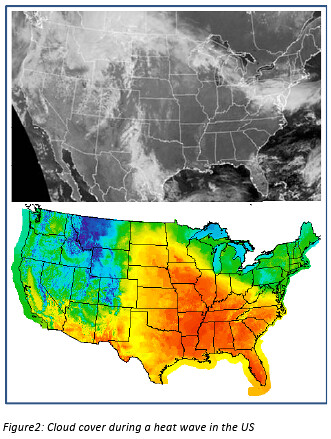
The fuel of heat waves is the sun; a heat wave cannot take place without a massive local solar energy influx. The bottom part of Figure 2 illustrates an example of a heat wave in the southeastern US in the spring of 2010 and the top part of the figure shows the cloud cover at the same time: the qualitative agreement between solar availability and the regional heat wave is striking. Quantitative evidence has also shown that the mean availability of solar generation during the largest heat wave driven rolling blackouts in the US was nearly 90% ideal (Letendre et al. 2006). One of the most convincing examples, however, is the August 2003 Northeast blackout that lasted several days and cost nearly $8 billion region wide (Perez et al., 2004). The blackout was indirectly caused by high demand, fueled by a regional heat wave3. As little as 500 MW of distributed PV region wide would have kept every single cascading failure from feeding into one another and precipitating the outage. The analysis of a similar subcontinental scale blackout in the Western US a few years before that led to nearly identical conclusions (Perez et al., 1997).

In essence, the peak load driver, the sun via heat waves and A/C demand, is also the fuel powering solar electric technologies. Because of this natural synergy, the solar technologies deliver hard wired peak shaving capability for the locations/regions with the appropriate demand mix peak loads driven by commercial/industrial A/C that is to say, much of America. This capability remains significant up to 30% capacity penetration (Perez et al., 2010), representing a deployment potential of nearly 375 GW in the US.

The sun supplies solar power when you need it: at the same time the sun drives heat waves.

The paper identifies the problem I’ve encountered talking to local policy makers, especially ones associated with power companies: Continue reading

Andrea Schruijer’s Opportunity —John S. Quarterman

Here’s my op-ed in the VDT today. -jsq
Welcome Andrea Shuijer Schruijer to a great opportunity as the new Executive Director of the Valdosta-Lowndes County Industrial Authority (VLCIA)!

For a year I’ve been asking for a list of jobs attracted by the Authority. We welcome your marketing expertise so we’ll know the Authority’s successes!

We welcome your communications expertise to inform the community affected by the process of bringing new jobs. VLCIA could publish its agendas, minutes, and videos of its meetings, events, and new jobs on its web pages, and facebook, maybe even twitter.

We welcome your stewardship of the Authority’s $3 million/year in taxes. Maybe some

Continue reading

Uvalde “mayor for everybody” works against HB 87

Sometimes somebody does the right thing not for fear or favor, just because it’s the right thing.

Catherine E. Shoichet wrote for CNN 28 June 2011 about Paul Bridges, mayor of Uvalde, Republican mayor in the South becomes unlikely advocate for immigrants:

Bridges is waging a deeply personal battle.

Enforcement of the Georgia law could put him in prison and tear apart the families of some of his closest friends.

He thinks Governor Nathan Deal got it wrong when he signed HB 87: Continue reading

Budget meeting and Lowndes County Commission meeting tonight

Remember there’s a second budget hearing today, 28 June 2011 at 5PM. The county didn’t publish the proposed budbget, but LAKE did. Maybe you’d like to come ask some questions, like these by Jessica Bryan Hughes.

Then there’s the regular session of the County Commission; agenda appended. They plan to vote tonight to approve the budget they never published.

-jsq

LOWNDES COUNTY BOARD OF COMMISSIONERS
PROPOSED AGENDA
WORK SESSION, MONDAY, JUNE 27, 2011, 8:30 a.m.
REGULAR SESSION, TUESDAY, JUNE 28, 2011, 5:30 p.m.
327 N. Ashley Street – 2nd Floor
Continue reading

Why make it hard to obtain the budget? —Jessica Bryan Hughes

Why, indeed? -jsq
This is ridiculous.

-Jessica Bryan Hughes

This comment came in yesterday on Proposed Lowndes County Budget published by LAKE.

Lowndes County budget hearing today 5PM

That’s 5PM, before the usual 5:30 PM Lowndes County Commission regular session time, at 327 North Ashley Street. The county has published a public notice about this second hearing. It’s not clear they did that for the first budget hearing, which was last week. And the budget doesn’t include the T-SPLOST boondoggles Lowndes County is requesting.

VDT opined 23 June 2011, What We Think: Surviving, not thriving:

Lowndes County Commissioners held a budget hearing Tuesday to discuss the 2011-2012 fiscal year with citizens, only to have no citizens appear. The budget will be finalized at a public hearing Tuesday, June 28, prior to the regular commission meeting.

With all of the attention paid lately to officials and their expenses, you would think that the opportunity to learn how the county spends citizens’ tax dollars would have been an opportunity not to be missed. But missed it was.

After giving people in Valdosta a hard time for not showing up at their city’s budget hearing, I have to say: mea culpa. I wasn’t there.

However, I would ask: how were we supposed to know about it? Someone from LAKE has been at every regularly-scheduled Lowndes County Commission meeting in the recent past, videoing the whole meetings, and I must have missed the announcement of this recent budget hearing, which is also not on the county’s website calendar.

The VDT continues:

Maybe it’s because there’s nothing new about the county’s budget. It’s the same as it has been for several years — flat.

No increases in revenue are projected. No new positions, merit raises, cost of living increases, or significant purchases, again. Caps on assessments, the continuing lull in construction, and slow sales mean no new revenue is coming in. What is projected is enough to make ends meet, but there are no frills, no luxury items, not this year.

Oh, there are luxury items, they’re just not in the budget, because the county is asking we the taxpayers to pay through the proposed new T-SPLOST tax for That’s $24 million in new taxes they’re requesting for unnecessary road projects that will promote sprawl into far north Lowndes County and into Lanier County. Sprawl that will end up costing Lowndes County more than it can bring in in taxes from the sprawling developments.

And Lowndes County has tacked onto the end a request for $7.5 million for a bus system. Which would you rather have? A bus system that would promote the entire county’s economy, or five lanes on New Bethel to add to Lanier County sprawl?

Fortunately, T-SPLOST does publicize its hearings, the next of which will be 6 July 2011 in Nashville, Georgia.

The VDT concludes;

But for Lowndes to thrive, to make such a possibility come alive, it needs citizens willing to participate in the process. We need creative thinking and we need leaders willing to listen to the possibilities of new ideas.
Hear hear!

Stay tuned for what happens when a citizen tries to get involved in the Lowndes County budget process.

-jsq
A commitment from the city —Karen Noll

This comment from Karen Noll came in Sunday on San Antonio promises to shut down a coal plant. By “the city” I’m assuming she means Valdosta, although there’s no reason any other municipality around here, including Hahira, Lake Park, Remerton, Dasher, or Lowndes County, couldn’t set similar goals.
SanAntonio has a solar Goal to reach by 2020. New Jersey also has such a goal to reach by a similar date. We can move forward with just such a comittment from the city to attain a reasonable goal.

-Karen Noll

Harrisburg prepares to file bankruptcy

After defaulting on its incinerator bonds and preparing to sell off pieces of itself, Harrisburg, PA, is preparing to file bankruptcy.

Laura Vecsey wrote in Pennlive 16 June 2011, Harrisburg City Council looks to introduce resolution that would allow bankruptcy paperwork to be prepared:

Harrisburg City Council member Brad Koplinski is seeking to introduce a resolution that will allow the council to prepare paper work that might become necessary should a majority of the council decide to file for Chapter 9 bankruptcy.

Koplinski said the urgency of being prepared escalated Thursday when state Sen. Jeffrey Piccola introduced legislation that called for a state takeover of Harrisburg should the distressed city fail to adopt the Act 47 plan it was presented Monday.

It seems Harrisburg applied for Act 47, which is apparently a state bankruptcy protection plan last October, but now: Continue reading

The Atlantic dissects Georgia’s anti-immigrant law

The VDT’s pan of HB 87 gets national notice. Why we don’t need a law that puts south Georgia farmers out of business while profiting private prison company CCA at taxpayer expense.

Megan McArdle wrote in the Atlantic 21 June 2011, Georgia’s Harsh Immigration Law Costs Millions in Unharvested Crops. She started by quoting Jay Bookman, who quoted the VDT. She then goes into the economics:

The economics here aren’t particularly complicated, and I’m sure they won’t be new to the sophisticated readers of the Atlantic, but they are useful to look at and consider explicitly when thinking about issues like this.

It goes like this. If you’re not going to let illegal immigrants do the jobs they are currently being hired to do, then farmers will have to raise wages to replace them. Since farmers are taking a risk in hiring immigrant workers, you can bet they were getting a significant deal on wage costs relative to “market wages”. I put market wages here in quotations, because it’s quite possible that the wages required to get workers to do the job are so high that it’s no longer profitable for farmers to plant the crops in the first place.

Yes, that would be the problem. A law that benefits private prison company CCA at the expense of Georgia taxpayers while putting Georgia farmers out of business.

She concludes: Continue reading

GA HB 87 ridiculed in Atlanta; VDT cited

Who could have forseen this? Well, other than anyone who actually knows Georgia farmers. And the VDT becomes thought leader to the world:
“Maybe this should have been prepared for, with farmers’ input. Maybe the state should have discussed the ramifications with those directly affected. Maybe the immigration issue is not as easy as &lquo;send them home,&rquo; but is a far more complex one in that maybe Georgia needs them, relies on them, and cannot successfully support the state’s No. 1 economic engine without them.”
Except of course HB 87 doesn’t just send them home: it also locks up as many as it can catch, to the profit of private prison company CCA, at the expense of we the taxpayers.

That’s as quoted by Jay Bookman in the AJC 17 June 2011, Ga’s farm-labor crisis playing out as planned:

After enacting House Bill 87, a law designed to drive illegal immigrants out of Georgia, state officials appear shocked to discover that HB 87 is, well, driving a lot of illegal immigrants out of Georgia.

It might be funny if it wasn’t so sad.

Continue reading