Who approved the $40 million purchase of Smith Northview Hospital by
South Georgia Medical Center (SGMC)?
The Valdosta-Lowndes County Hospital Authority.
Who is that?
Let’s look on their web pages.
We would, if they had any.
Let’s try the
Valdosta city web pages:
the link to Hospital Authority gets 404 not found.
How about the
Lowndes County web pages? Don’t be silly! The Lowndes County government
doesn’t provide links to any of the 20+ boards and authorities to which
it appoints members.
Another item that was tabled at the last meeting was the selection of the second person from the county to be a member
of the Department of Behavioral Health and Developmental Disabilities Community Service Board. I have asked to be appointed, but the item did not get put on this week’s agenda. In this critical period while new systems are going to be put in place for consumers of DBHDD’s services, it is important that people be at the table to hear and react to what is planned by Atlanta for Region IV in which we reside. Linda Floyd, RN from the VSU Nursing program will be re-appointed, but another place is empty.
I promise one can only imagine what it’s like to have a loved one
die in your arms from a chronic lung disease like COPD, when every
breath is a struggle and each day that passes a long and horrible death
is the inevitable, my mother moved here with me from south Florida,
her quality of life changed until her death from COPD in 2003. Biomass
affects everyone, not just in the county it’s built in.
I personally
have children which I would love to see grow with strong healthy lung
functions. Some children and adults already have asthma and other lung
disorders. I’m not quite sure of the long term effects biomass consist
of but I am quite sure were going to be the ones that suffer in the end
each and every one of us! It does raise my concern when Dr. Noll speaks
about biomass and we all might need to rethink the potential danger it
will bring with it. Previously I thought it was a good energy source,
I now think otherwise. Speak now or forever hold your peace because I
get this feeling… there sneaking in!
Dr. Noll, president of WACE, welcomed VLCIA’s new executive director Andrea Schruijer, and
then reminded the board that the honking cars outside
indicated an ongoing community assessment of biomass,
and he encouraged them to consider previously presented
materials and to prevent the biomass plant from
finding a back door to come back in.
He remarked that he had visited his mother in Germany:
One and half years ago she was in the intensive care unit for about three weeks
because she had severe lung issues.
She moved away after that
to an area where there isn’t the kind of air pollution she was
exposed to before hand,
and every single day she wakes up she feels like she’s on vacation.
Because of my mother —Dr. Noll @ VLCIA 19 July 2011
Regular Meeting, Valdosta-Lowndes County Industrial Authority (VLCIA),
Norman Bennett, Tom Call, Roy Copeland chairman, Mary Gooding, Jerry Jennett,
Andrea Schruijer Executive Director, J. Stephen Gupton attorney, Allan Ricketts Project Manager,
Valdosta, Lowndes County, Georgia, 19 July 2011.
Videos by John S. Quarterman for LAKE, the Lowndes Area Knowledge Exchange.
Peak power when you need it: solar.
Somebody has been studying it, and addressing problems
local decisionmakers right here in south Georgia have been raising.
Solar Power Generation in the US:
Too expensive, or a bargain?
by
Richard Perez, ASRC, University at Albany,
Ken Zweibel, GW Solar Institute, George Washington University,
Thomas E. Hoff, Clean Power Research.
That’s Albany, New York, but it applies even more to Albany, Georgia
and Lowndes County, Georgia, since we’re so much farther south,
with much more sun.
Let’s cut to the chase:
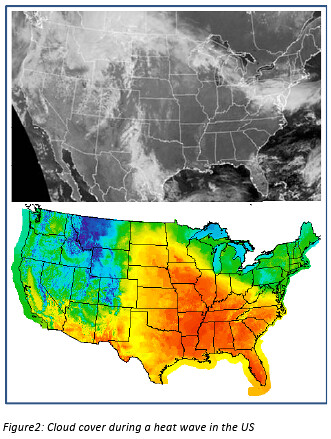
The fuel of heat waves is the sun; a heat wave cannot take place without a
massive local solar energy influx. The bottom part of Figure 2 illustrates
an example of a heat wave in the southeastern US in the spring of 2010
and the top part of the figure shows the cloud cover at the same time:
the qualitative agreement between solar availability and the regional
heat wave is striking. Quantitative evidence has also shown that the
mean availability of solar generation during the largest heat wave
driven rolling blackouts in the US was nearly 90% ideal (Letendre et
al. 2006). One of the most convincing examples, however, is the August
2003 Northeast blackout that lasted several days and cost nearly $8
billion region wide (Perez et al., 2004). The blackout was indirectly
caused by high demand, fueled by a regional heat wave3. As little as 500
MW of distributed PV region wide would have kept every single cascading
failure from feeding into one another and precipitating the outage. The
analysis of a similar subcontinental scale blackout in the Western US
a few years before that led to nearly identical conclusions (Perez et
al., 1997).
In essence, the peak load driver, the sun via heat waves and A/C demand,
is also the fuel powering solar electric technologies. Because of this
natural synergy, the solar technologies deliver hard wired peak shaving
capability for the locations/regions with the appropriate demand mix
peak loads driven by commercial/industrial A/C that is to say, much
of America. This capability remains significant up to 30% capacity
penetration (Perez et al., 2010), representing a deployment potential
of nearly 375 GW in the US.
The sun supplies solar power when you need it:
at the same time the sun drives heat waves.
The paper identifies the problem I’ve encountered talking to local
policy makers, especially ones associated with power companies:
Continue reading →
At an event this afternoon at UT-San Antonio, Mayor Julian Castro
announced a suite of green energy projects that he said would position
San Antonio as the nation’s “recognized leader in clean energy technology”
and help fulfill his aggressive environmental goals.
Most notably, Castro and leaders from CPS Energy, the city-owned utility,
pledged to shut down one of its coal-fired power plants 15 years ahead
of schedule. By 2018, the city would mothball the 871-megawatt J.T. Deely
Power Plant — a bold move in a growing state that’s seemingly addicted
to coal.
The Department of Community Health (DCH), Healthcare Facility Regulation
Division (HFRD) invites you to attend a Town Hall Meeting on the topic,
“Establishing Meaningful Distinctions for Levels of Care in Licensed
Personal Care Homes, Assisted Living Communities and Nursing Homes”.
The Town Hall Meeting will be held in the DCH Board Room, 5th Floor,
2 Peachtree Street, NW on Wednesday, June 22, 2011 at 11:30 a.m.
The purpose of this Town Hall Meeting is to provide a forum where
interested consumers, providers, advocates, stakeholders and regulators
may discuss the topic informally. This informal dialogue will assist
the DCH in its development of proposed rules for personal care homes
and assisted living communities as a result of the passage of SB 178
which creates a licensure category called assisted living communities.
Of course, any rules that the DCH ultimately develops would be
taken through an informal rules advisory group process and the public
rule-making process. If you are unable to attend the Town Hall Meeting,
but would like to provide input on this topic, please feel free to send
your input electronically to DCH staff using the following email address:
sedoughe@dhr.state.ga.us.
That web page also includes some questions for which DCH wants public input.
Leigh Touchton, president of the Valdosta-Lowndes NAACP,
says the local and state NAACP are opposed to the biomass plant
because the community that is most affected is the minority community.
She referred to her previous presentation of a letter from
Dr. Robert D. Bullard.
She also brought up an incident with Brad Lofton and recommended
that VLCIA hire an executive director who wouldn’t act like that.
And she said she deals with VSEB all the time:
I’ve taken men through there, I’ve signed them up.
She referred to me when she said that, so what I said before
is appended after the video.
The health of the community is way more important than the job —Leigh Touchton
Regular Meeting, Valdosta-Lowndes County Industrial Authority (VLCIA),
Norman Bennett, Roy Copeland, Tom Call, Mary Gooding, Jerry Jennett chairman,
J. Stephen Gupton attorney, Allan Ricketts Acting Executive Director,
Valdosta, Lowndes County, Georgia, 17 May 2011.
Videos by John S. Quarterman for LAKE, the Lowndes Area Knowledge Exchange.
What I actually recommended regarding VSEB, in response to
a specific request from Leigh Touchton for recommendations,
was maybe schedule a meeting with Roy Copeland to talk about
VSEB and solar job opportunities:Continue reading →
… has made some courageous and profoundly
important recommendations in a report on how to bring more effective
control over the illicit drug trade. The commission includes the former
presidents or prime ministers of five countries, a former secretary
general of the United Nations, human rights leaders, and business and
government leaders, including Richard Branson, George P. Shultz and Paul
A. Volcker.
The report describes the total failure of the present global antidrug
effort, and in particular America’s “war on drugs,” which was
declared 40 years ago today. It notes that the global consumption of
opiates has increased 34.5 percent, cocaine 27 percent and cannabis 8.5
percent from 1998 to 2008. Its primary recommendations are to substitute
treatment for imprisonment for people who use drugs but do no harm
to others, and to concentrate more coordinated international effort
on combating violent criminal organizations rather than nonviolent,
low-level offenders.
These recommendations are compatible with United States drug policy from
three decades ago. In a message to Congress in 1977, I said the country
should decriminalize the possession of less than an ounce of marijuana,
with a full program of treatment for addicts. I also cautioned against
filling our prisons with young people who were no threat to society, and
summarized by saying: “Penalties against possession of a drug should
not be more damaging to an individual than the use of the drug itself.”
Imagine that!
A drug policy meant to address the problem.
From: “Jane Osborn”
Subject: Georgia Crisis Response system
Date: Thu, 16 Jun 2011 11:54:39 -0400
John, There was a Conversations that Matter group held here June 9th to
discuss the changes coming with the closing of the state hospitals as
it relates to persons with developmental disabilities. We had about 40
local people who were consumers, family members and some service
providers in addition to officials from the Region 4 office that covers
this area. The services for them will be drastically smaller than those
planned for persons with a diagnosis of mental illness, but this
training announcement has one session left in this area…June 28 in
Thomasville.
Scroll all the way to the bottom to find information for
the
Thomasville
event.
The one we had here was sponsored by the
Georgia Department of Behavioral Health and Developmental Disabilities
and All About Developmental Disabilities, an Atlanta-based advocacy
group. One of the things we learned was that these Crisis Response
Systems supposedly have been in place since June 1, one based in
Valdosta and one in another part of the region. You can go to the
DBHDD website to see the counties included in our area.
The teams were
formed by contracting with organizations from California and Indiana
(instead
 Who approved the $40 million purchase of Smith Northview Hospital by
South Georgia Medical Center (SGMC)?
The Valdosta-Lowndes County Hospital Authority.
Who is that?
Who approved the $40 million purchase of Smith Northview Hospital by
South Georgia Medical Center (SGMC)?
The Valdosta-Lowndes County Hospital Authority.
Who is that?
 How about the
Lowndes County web pages? Don’t be silly! The Lowndes County government
doesn’t provide links to any of the 20+ boards and authorities to which
it appoints members.
How about the
Lowndes County web pages? Don’t be silly! The Lowndes County government
doesn’t provide links to any of the 20+ boards and authorities to which
it appoints members.