Category Archives: Festivals

Videos: Solar Dublin High School groundbreaking @ DHS Solar 2013-03-11


Breaking ground

Groundbreaking for solar power to save Dublin High 40%,
thus reducing teacher furloughs,

financed by municipal bonds
,
made possible by cooperation among a wide range of
government officials, private companies, and individuals:
that was the groundbreaking story in Dublin, Laurens County, yesterday,
videod by Gretchen Quarterman for LAKE.


Dublin City Schools are willing to try something new, and that’s why
they were groundbreaking,

said Chuck Ledbetter, Superintendent
, yesterday.
He

recognized members present
of the Dublin City Council, the
Laurens County Commission, the Dublin-Laurens Development Authority,
and state representative Matt Hatchett, and
Public Service Commissioner Bubba McDonald.

Ledbetter’s theme
,


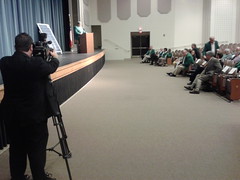
News camera and speaker

Everybody worked together to make this happen.

was echoed over and over by many other speakers.
What they worked for was economic help for Dublin City Schools
through solar power, financed by municipal bonds.


The Mayor of Dublin, Phil Best
added to the list

Continue reading

Azalea Festival in Drexel Park, Valdosta, GA 2103-03-09


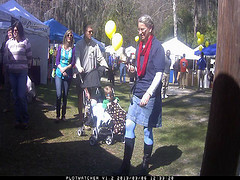
Men, women, children, babies in strollers, old folks with walkers,
dogs, and a large yellow chicken
in a time-lapse movie from the
wildlife camera Gretchen set up at the
Thirteenth Annual Azalea Festival yesterday,
plus other videos and stills, and WCTV.

Here’s

a video playlist:

Here’s

a flickr slideshow:

Continue reading

Internet speeds into jobs

Something good out of Chattanooga?
The city with the fastest metropolitan Internet access
plans to turn that into jobs.

Elizabeth Prann wrote for Fox 26 January 2013,

City turns Internet speeds into jobs
, that Chattanooga


is home to most advanced smart grid in the nation, customers are
enjoying Internet speeds that are almost 100 times faster than the
national average. Most Internet users in the U.S. have access to
about 4.5 megabits of Internet speed.

We wish!
OK, you can get spees that fast here:

with Verizon 4G LTE
,
not too many places via land access.

So what’s Chattanooga got that’s better?

Continue reading

Food as tourism: Buffalo now has a “brewery district”


It’s not all

fracking shutdowns in Buffalo
;
now for some good news:
food and drink as tourism.
We could do that!

Don Postles wrote for WIVB yesterday,

Brewery district” now open for tours
,

Downtown Buffalo is looking to attract more visitors, and a new
concept called the Buffalo Brewing District could be the answer.

Continue reading

Wiregrass Alley for local agricultural knowledge-based jobs

What jobs and businesses can we

build out of local agriculture and VSU and Wiregrass Tech and GMC
and SGMC and Moody
? Build like the way Silicon Valley grew out of
Stanford and HP and Intel, but different, drawing on our local strengths?
Various things, no doubt, but the companies
the VDT listed in its

agricultural heartland
article
suggest maybe Wiregrass Alley:

When you factor in businesses such as South Georgia Pecan, PCA, the
Langdale Company,
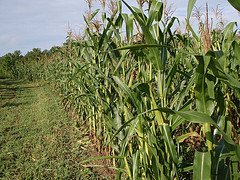

Shiloh Farms, Dupont, Arizona Chemical, ERCO
Worldwide, Coggins Farms, Carter and Sons, and the additional
farmers represented by Farmer Browns, the impact of agriculture in
Lowndes County alone is one of the largest private, non-governmental
industries. Across the region, ag and forestry sustain the economies
of a number of counties.

Many of those are obviously agricultural, but Dupont, Arizona Chemical,
and ERCO?
OK, I’ll buy

Arizona Chemical

which turns pine products into adhesives and smells.
But DuPont?
Sure, they make chemical fertilizer,
but that’s like listing Chevron as a home heating company.

And what’s this

ERCO Worldwide
, which provides chemicals like caustic soda for PCA?
ERCO Worldwide’s other name hereabouts is
Sterling Pulp Chemicals.
That’s right, the VDT listed Sterling Chemicals as an agricultural company!
Well, that’s hard to deny, because,
according to

FundingUniverse
,
Sterling Chemicals
“was founded in 1986 to acquire and operate Monsanto Co.’s petrochemical plant in Texas City, Texas.”
Nobody can say Monsanto isn’t agricultural, when 90+% of corn, soybeans,
cotton, and peanuts grown hereabouts are grown from Monsanto seeds.
Which is why we have so many chemical fertilizers and poisonous
pesticides being used around here.
Is that really the direction we want to go?

What if we turn the VDT’s list around,

and start with the “additional farmers”
represented by Farmer Brown and Carters?
You know, the ones who sell at Valdosta Farm Days?
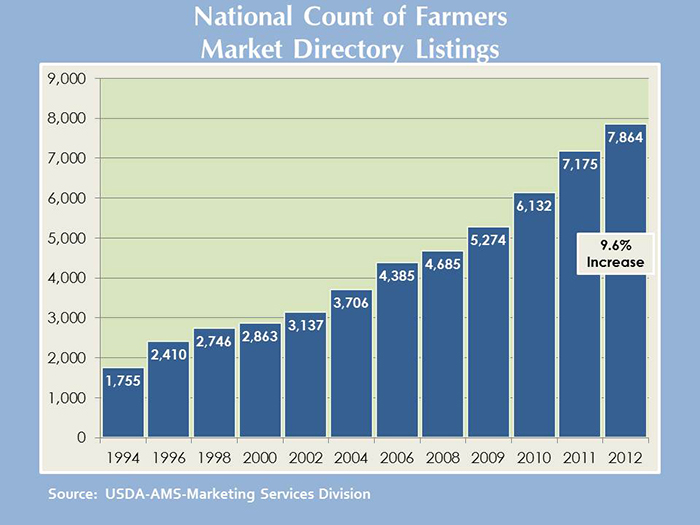
Farmers markets have

increased 6% on average for the past decade.

Why is that?
Partly because of
the conversations and community
at a farmers market.
Anybody who has gone to Valdosta Farm Days or Hahira Farm Days can attest to that.
And it’s not just anecdotal:
there is

research to demonstrate that in farmers markets compared to supermarkets:

On average, the sociologists found, people were having ten times as
many conversations per visit.

Another reason farmers markets are spreading so fast is
people are paying attention to the increasing number of scientific
reports that “conventional” agriculture is poisoning us,
such as

the recent one that demonstrates that even the inert ingredients
in Roundup are poisonous

or the one that links the active ingredient, glyphosate,

to Parkinson’s disease.

Maybe they’ve heard about Monsanto

being sued for “devastating birth defects” and chemical poisoning.

And most farmers market customers seem to like fresh local foods that
taste good and that support local farmers.


So what if we started with those “additional farmers”
that sell at Farmer Brown and Carters and Valdosta Farm Days?
They are the ones already starting in a different direction.
A direction that is actually

more profitable
,
in addition to healthier (and less flooding and more wildlife).
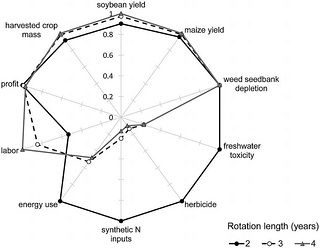
Crop rotation takes more thought and more labor (more jobs!)
than just spraying,
but it also takes a lot less expense on patented seeds and chemicals,
for a net financial profit.

Which could help explain why

the USDA says
:

Consumer demand for organically produced goods has shown
double-digit growth for well over a decade, providing market
incentives for U.S. farmers across a broad range of products.

The USDA is talking certified organic, which has so many hoops
to jump through that most local producers are not certified, yet many

also aren’t using a lot of chemical inputs and are using
crop rotation and other organic techniques.
Techniques which many old-timers around here will recognize,
because they used to use them a half century ago,
but with new wrinkles such as computerized records and
recent research that may make them even more effective.
That’s right:
modern organic and local agriculture is a knowledge-based industry.

What has all this got to do with the colleges and SGMC and Moody?

Moody could be a big customer for local agricultural produce,
as could the local K-12 schools; VSU already is.
Wiregrass Tech can (and already is) help teach people how to grow
organic or with fewer manufactured inputs.
VSU and GMC can study how that’s working out,
in conjunction with SGMC, which eventually will have fewer
cases of some kinds of diseases to deal with.
How many cases, of what kinds of diseases?
There’s a field of research we could lead,
along with the agricultural industry to cause such improvements in health:
healthy jobs from planting to PhDs!

And if we do want other kinds of knowledge-based businesses and workers
(which is where Silicon Valley usually gets mentioned),
I think we’ll find they like a place that produces local healthy foods.

-jsq

Agriculture considered beneficial —VDT

The VDT’s first recent agriculture story
started to connect the dots to

building on local strengths

to growing local knowledge-based jobs in

Wiregrass Alley.

“Staff Writer” wrote for the VDT 14 November 2012,

Valdosta-Lowndes: An agricultural heartland
,

When the Valdosta Daily Times and its sister newspapers in Tifton,


Thomasville, Cordele, Americus and Moultrie decided to launch an
agriculture magazine in January 2011 to be distributed across South
Georgia, it was unknown how it would be received.

Well, the first couple of issues were quarterly, and then due to
overwhelming response and requests, it is now a bi-monthly
publication going into its third year.

While Valdosta may not consider itself an agriculture community, we
sometimes forget just how much acreage and economic benefit derives
from the ag and forestry industries locally. With a farmgate value
of $70 million and more than two thirds of our entire county taxable
digest in agriculture and forestry use, Lowndes County remains
dependent on this economic sector almost as much as the surrounding
counties, which we consider far more rural than ours.

That’s great, and I congratulate the VDT.
Their conclusion is also good as far as it goes,
but it could go further:

Continue reading

Thumbs up for agriculture —VDT

The VDT continues to congratulate agriculture as a mainstay of the
local economy.
It’s amazing what a little investigative reporting can turn up!
Now if the VDT would connect a few dots of local strengths and suggest how
we could take a few tips from Silicon Valley on how to become
the Wiregrass Alley of agricultural knowledge-based industry.

The VDT opined Friday,

Thumbs up
,


THUMBS UP: To the region’s farmers and people involved in the
agricultural industry. While some may think agriculture is a thing
of South Georgia’s past, a Times story revealed this week that
Lowndes County’s farmgate has a $70 million value, making it one of
the strongest private-sector industries after South Georgia Medical
Center. Given the continued financial clout on the economy, we offer
a green thumbs up.

The “some people” would presumably include the Chamber,
which made it pretty clear

it considers agriculture mostly good for paving over for a shopping mall
.

The VDT story mentioned in the Thumbs Up was apparently not
Kay Harris’

agriculture alive and well
,
rather another one of the same day.
See
next post.

-jsq

Agriculture alive and well in Lowndes: even Kay Harris says so

The VDT went out and did some research and discovered that
agriculture is not only still here in Lowndes County,
it’s one of the biggest industries here, and by some
measures it’s increasing.
What if the local elected and appointed and self-appointed
boards and authorities helped promote agriculture
as a local industry?

Kay Harris wrote for the VDT yesterday,

South Georgia agriculture alive and well
,

Agriculture and forestry remain among the strongest economic engines
in South Georgia, including Lowndes County.

A look at the recent farmgate value for 2011 for Lowndes County
shows a $70 million effect on the local economy, making it one of
the strongest private-sector industries in the county following
South Georgia Medical Center.

The popularity of The Times’ bi-monthly sister publication Ag Scene
led this newspaper to look at the ag/forestry industry to see if it
has diminished in economic importance over the years.


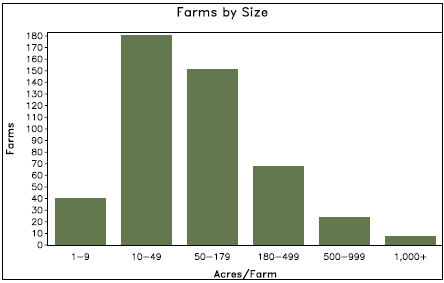
Actually, the number of farms in Lowndes County

has slightly increased in recent some recent years.

The VDT proceeded to do som research, asking Jake Price,
Lowndes County Extension Agent, who noted there are actually
more farms in Lowndes County than in some surrounding counties,
because they tended to be smaller here, with quite a few people
farming on the side.
That and agriculture-based events have become more popular,
such as last week’s Hog Show.
(And he didn’t mention the new last year Valdosta Farm Days.)
He continued:

Continue reading

Charles Darwin won 16% against Paul Broun (GA-10)

Occupy Athens, which a few weeks ago couldn’t draw more than a few
people to its General Assembly, has pulled off some electoral theater
seen nation-wide:
write-in candidate Charles Darwin drew 16% of the vote against
evolution-denier Paul Broun in Congressional district 10.

Natalie Jennings wrote for the Washington Post 9 November 2012,

Charles Darwin earns nearly 4,000 write-in votes against Ga. Rep. Broun
,


Darwin, who was the original proponent of the theory of evolution
and died in 1882, got nearly 4,000 write-in votes against the
incumbent Broun, according to the

Athens Banner-Herald.
Broun, a
physician, is a creationist who in September said evolution was
based on “lies straight from the pit of hell.”

And here’s part of what one of Occupy Athens wrote online today:

Continue reading

VDT and Chamber feuding about which is the most negative


popcorn


Image courtesy Fir0002/Flagstaffotos under GFDL v1.2

Break out the popcorn!
The VDT and the Chamber of Commerce are feuding.
About which one is the most negative!
Also, the Chamber hates agriculture.
And everything good around here is to the Chamber’s credit,
but anything bad is not their fault; just ask them.

The VDT editorialized 18 October 2012,

Is Valdosta really one of the poorest?

mostly criticizing

the recent report
that ranked
Valdosta MSA as the third poorest in the country.
The VDT added:

Now that the world wide web has broadcast this story, what can be
done locally to combat this image? And what are the various entities
involved in job and business recruitment, i.e. the Chamber of
Commerce and the Industrial Authority primarily, doing to fix the
underlying problem — low household income and the high
percentage of individuals living below the poverty line.

Valdosta can attract retailers. But can Valdosta step it up and
attract larger industries offering high paying jobs? Has the
community turned away from what made this a successful, viable up
and comer in the state, namely manufacturing and agriculture? These
industries sustained Valdosta for many years and provided good, well
paying, solid blue collar and middle income jobs. Educational
opportunities are far greater today, there are more high school,
tech and college graduates in the area than ever, and blaming the
quality of the work force is starting to lose its luster as a viable
excuse for not bringing in industry. We have the land, we have the
workers, we have the infrastructure and we have a great location
with a good quality of life.

Perhaps the community leadership should focus on the assets that are
already here and less on what’s not. Then maybe the next time a
story like this appears on the Internet, Valdosta won’t be cast in
such a poor light.

The Chamber fired back a broadside to its members, which
I’ve included below here, since I don’t think you can find it online elsewhere.
Here’s the most precious part:

Second, while there is still farmland in Lowndes County, it’s
shrinking and when it sells, it’s for uses at prices that rule out
agricultural use. Agriculture had begun moving to nearby more rural
counties even before the cotton field at the end of Baytree Road
was paved over for Valdosta Mall. Our largest tractor and farm
implement dealers followed.

That’s right, farmland is good for nothing but paving over,
so says the Chamber!
Nevermind that knowledge-based workers generally like

Continue reading