Author Archives: John S. Quarterman

Divestment is about undermining the political power of the fossil fuel industry –Tim DeChristopher

Answering Harvard President Drew Faust’s excuses,

Tim DeChristopher, who went to jail for directly opposing gas and oil drilling and is now a student at Harvard Divinity School,

To seriously suggest that any research will solve the climate crisis while we continue to allow the fossil fuel industry to maintain a stranglehold on our democracy is profoundly naive.

Wen Stephenson wrote for the Nation 4 October 2013, Tim DeChristopher: There Is No ‘Neutral’ in the Climate Fight, including DeChristopher’s statement:

Drew Faust seeks a position of neutrality in a struggle where the powerful only ask that people like her remain neutral. She says that Harvard’s endowment shouldn’t take a political position, and yet it invests in an industry that spends countless millions on corrupting our political system. In a world of corporate personhood, if she doesn’t want that money to be political, she should put it under her mattress. She has clearly forgotten the words of Paolo Freire: “Washing one’s hands of the conflict between the powerful and powerless means to side with the powerful, not to remain neutral.” Or as Howard Zinn put succinctly, “You can’t be neutral on a moving train.”

She touts Continue reading

Harvard excuses for not divesting from fossil fuels

Drew Faust wants us to believe Harvard can’t figure out how to power its own campus and vehicles on renewable solar, wind, wave, and tidal energy? Come on, pull the other one!

President Faust wrote that divestment would make Harvard appear “as a political actor rather than an academic institution”, that Harvard might not make enough money, that “Universities own a very small fraction of the market capitalization of fossil fuel companies”, and that “I also find a troubling inconsistency in the notion that, as an investor, we should boycott a whole class of companies at the same time that, as individuals and as a community, we are extensively relying on those companies’ products and services for so much of what we do every day.” The first three excuses would have applied just as much back in the 1980s when Harvard finally divested from companies dealing in apartheid in South Africa, a symbolic, and yes, political action that contributed markedly to the release of Nelson Mandela, the downfall of the apartheid regime, and later the election of Nelson Mandela as president of South Africa.

Harvard President Derek Bok, 18 May 1990, in a letter to students explaining the Unversity’s September 1989 decision to divest from tobacco companies, since completed:

In reaching its decision, the corporation was motivated by a desire not to be associated as a shareholder with companies engaged in significant sales of products that create a substantial and unjustified risk of harm to other human beings.

Harvard divestment was good enough for apartheid and tobacco.

In veritas, Harvard can have just as much or more influence by divesting from fossil fuels, and that cause is even more important for the whole world. In south Georgia truth, so can Valdosta State University in its own region.

Office of the President, Harvard, 3 October 2013, Fossil Fuel Divestment Statement; I added the links and images, all directly related to Harvard.

Dear Members of the Harvard Community,

Continue reading

Test program meeting at Plant Vogtle –NRC and Southern Company 9 October 2013

Safety at Plant Vogtle, this Wednesday, with call-in number, by NRC and Georgia Power’s parent the Southern Company. One hour from 1 to 2PM is the public part, then 3 more hours closed “because the staff has determined that the information is proprietary in nature.” Why is nuclear testing affecting public safety proprietary?

It’s at Vogtle Training Center, 9034 River Road, Waynesboro, GA 30830, which is on the corner of the Plant Vogtle site. Do you get a tour of the construction if you appear in person? Here’s what it looks like in Georgia Power’s Vogtle 3 and 4 Construction Photos September 2013, and on google maps:


View Larger Map

Here’s the NRC meeting announcement: Continue reading

From Seven Out in Waycross to CSX to Pecan Row Landfill in Lowndes County

CSX was involved directly in the Seven Out contamination, storing hazardous water that leaked: and then that water was apparently shipped to the Pecan Row Landfill in Lowndes County. This is in addition to the the CSX trichloroethylene groundwater contamination dating back to 2000 and earlier.

According to a letter from Georgia Department of Natural Resources to BCX, Inc. of 20 July 2004, EPA Identification Number: GAR000030007,

  1. Twenty-seven tanks of wastewater were stored at the facility. Four portable tanks were storing the excess capacity of wastewater next door on property owned by CSX Transportation. These portable 10,000-gallon tanks were not labeled to indicate their contents;
  2. According to a BCX representative, one of the portable 10,000-gallon tanks had a gasket failure on the forward manhole which caused the release of an unknown substance onto the ground at the site owned by CSX Transportation;
  3. Dead vegetation was observed in a 15 feet by 30 feet area downgradient of the tank that caused the release;
  4. A yellowish-green substance was observed on the ground between the portable tank that had the release and another portable tank adjacent to it. There was also dead vegetation observed between these two tanks; and

And GA EPD tested the soil and found something the document doesn’t specify, but whatever it was was enough that: Continue reading

CSX groundwater contamination in Waycross

The MCLG for
trichloroethylene
is zero.
Around the Seven Out and CSX contamination areas in Waycross more than 100 people have gotten sick or died, most since 2000, with groundwater contamination known since 1985, according to Joan Martin McNeal, So the CSX problem long predates the Seven Out problem. Here’s her map of the CSX property (in yellow) and contamination, sickness, and death:


brown stars: known contamination areas
red markers: confirmed deceased or confirmed cases of severe illness mostly cancer (bone, lung, prostate, blood, colon, breast), some severe neurological disorders, some heart failure, with ages ranging from 4 to 85 years.
green markers: likely early stage cases of such problems

According to this February 2000 tricholoroethylene isopleth map, there was already extensive contamination in the CSX railyard by 2000, extending across an internal drainage ditch that goes into the Waycross Canal that become Tebeau Creek, running through downtown Waycross into the Satilla River.

According to U.S. EPA, Trichloroethylene 79-01-6 Hazard Summary-Created in April 1992; Revised in January 2000, Continue reading

October LAKE meeting Monday 7 October 2013

Different day (Monday) and time (4PM), and some new developments, also adding that natural gas pipeline to the usual agenda of local governance: Water (sinkholes, aquifer recharge, runoff, drinking water, and wastewater), trash (how about that Exclusive Franchise!), and money (no-bid contracts and plus SPLOST VII). If you want to help, we have a little list of tasks you can do.

If you're on Facebook, please Like the LAKE facebook page. You can sign up for the meeting event there, Or just come as you are.

Pipeline points with streets
What: Monthly LAKE Meeting
When: 4PM Monday
7 October 2013
Where: Michael’s Deli
1307 N Ashley St.
Valdosta, GA 31601

-jsq

WWTP surveying, Norwood withdrawn, Colbert on agenda, radar, benefits, and parking @ VCC 2013-10-10

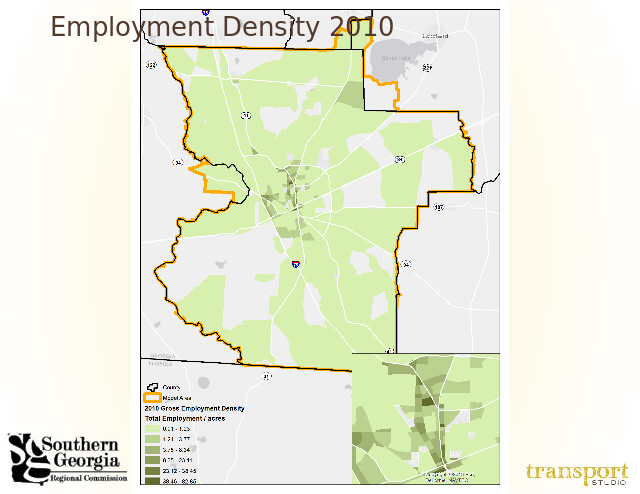
Valdosta wants to survey to prepare for moving and upgrading the Withlacoochee Wastewater Treatment Plant. The City Council is awarding retirement benefits, and the employee of the month is three people this month. One rezoning has been withdrawn and another is up for action Thursday. Plus somebody didn’t like the Valdosta Historic Preservation Commission actually requiring preservation and is appealing to the City Council. It would be interesting to see what’s in that WWTP surveying and engineering contract and which parking is being appealed, but Valdosta City Council doesn’t publish its agenda packets online, unlike for example Augusta, which has the second highest high tech job growth in the country.

Here’s the agenda. They also have a Work Session Tuesday 8 October 2013 at 5:30 PM, inconveniently the same time as the Lowndes County Commission Regular Session.

AGENDA

REGULAR MEETING OF THE VALDOSTA CITY COUNCIL

5:30 P.M., Thursday, October 10, 2013
COUNCIL CHAMBERS, CITY HALL
Continue reading

No Nottinghill + 3 other rezonings, 3 contracts, a bid, and vice chairmanship @ LCC 2013-10-07

Will the County Commission take up Nottinghill even though the Planning Commission tabled it? Is Barrington subdivision now ready to sprawl into the county? Did Commissioners ever get that list of roads for striping? Do we have enough evidence yet for juvenile justice? Or will we continue to concentrate on fining people coming off of I-75? Who was Leila Ellis, anyway? And who will be Vice Chairman (hint: Joyce Evans is now)? All that and a group photo, continuing the tradition of County Commission meetings as content-free photo-ops.

Here’s the agenda.

LOWNDES COUNTY BOARD OF COMMISSIONERS
PROPOSED AGENDA
WORK SESSION, MONDAY, OCTOBER 7, 2013, 8:30 a.m.
REGULAR SESSION, TUESDAY, OCTOBER 8, 2013, 5:30 p.m.
327 N. Ashley Street – 2nd Floor
Continue reading

Former Japanese PM Koizumi calls for zero nukes

Current PM Shinzo Abe was his chosen successor, and now Junichiro Koizumi (prime minister 2001-2006) calls on Abe to end nukes in Japan. Why? “A large majority of the population now understands that nuclear energy is the most expensive form of power generation.” For sure here in Georgia, with Georgia Power charging through the nose for power customers aren’t even receiving while trying to hike the price of solar power, too. Let’s end Plant Vogtle and get on with renewable solar inland and wind off the coast.

Wolf Richter wrote for Zerohedge 4 October 2013, The End Of Nuclear Energy In Japan?

And on August 26, his words made it into the Mainichi Shimbun. If he were an active politician, he’d want “to convince lawmakers to move in the direction of zero nuclear plants,” he said. Now would be the ideal time to move that direction. All 50 nuclear reactors were off line. All opposition parties favored zero nuclear power. It could be done “as long as the prime minister made the decision” — putting the onus squarely on his former protégé. And nuclear politics in Japan haven’t been the same since.

The next blast came on September 24 at a forum in Tokyo. He talked about his trip to Finland in August. The purpose was to inspect the Onkalo spent-fuel repository. He was accompanied by Continue reading

Georgia Power wants to charge you for your solar power

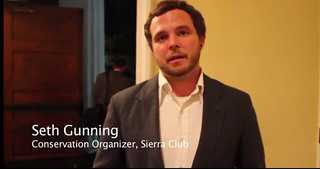
Georgia Sierra Club’s Seth Gunning batted away Georgia Power’s proposed solar tax, which would charge about $22 a month for many new home solar installations. GA PSC needs to call Georgia Power’s proposal out, because it was a bad idea when Dominion Power did it in Virginia, and it would be a worse idea here in sunny Georgia. Besides, Austin Energy already established that the purported basis for such a solar tax is nonsense: actually, utilities should be paying more for home solar power because of the benefits they receive.

Jonathan Shapiro wrote for WABE yesterday, Georgia Power’s Proposed Solar Tariff Scrutinized,

The company is proposing an average tariff of about $22 per month for new home solar systems that aren’t a part of Georgia Power-sponsored solar initiatives.

Company officials argue the tariff is necessary because most solar users still require the power grid as a back-up when the sun isn’t shining. As solar use spreads, the company stands to collect less revenue from those customers. What doesn’t change is the cost to maintain the grid. Georgia Power says non-solar customers shouldn’t have to bear all the costs.

“We don’t want to contribute to the problem of shifting costs so before we do that we very much prefer to get these tariffs right so all customers benefit,” said Roberts.

PSC Chairman Chuck Eaton wondered if the tariff is about making up for lost revenue, why not consider new fees for any number of energy efficiency measures.

“What makes solar unique?” asked Eaton. Continue reading