Tag Archives: Lowndes County

Rural AIDS: poverty the cause, solar power part of the solution

Director Lisa Biagiotti spent two years travelling around the South interviewing people about AIDS to make a film, deepsouth. She found rural AIDS is a bigger and faster-growing problem than AIDS in center cities, yet most health and prevention funding goes to urban areas. The root cause seemed clear to her: poverty. Here’s some deeper dirt (literally) on rural poverty in the U.S., and one thing we know can help with that: distributed solar power, for jobs, for reduced electrical bills, and for energy independence. What politician wouldn’t want jobs for their constituents?

The director said the screening at VSU at the end of November drew more people than the day before in Little Rock. There were clearly more than 150 in the audience in Valdosta. It’s a topic very relevant to here, as Dean Poling wrote in the VDT 26 November 2012,

Organizers note that Georgia is ranked sixth highest nationally for its cumulative number of AIDS cases reported through December 2009. More than 40,000 known HIV/AIDS cases were reported in Georgia as of 2010.

The South Health District’s 10 counties, which include Lowndes and surrounding counties, report 950 confirmed cases of HIV/AIDS, while many more are likely infected and risk becoming sick because they are not being treated. More specifically, there are about 460 reported cases in Lowndes County.

In reporting these numbers, HIV is the virus (HIV disease) and AIDS is the medical diagnosis made by a doctor of the symptoms, according to South Health District.

It’s a great movie and I highly recommend it. Director Biagiotti spent a substantial amount of her own money and two years to make this film, yet there are aspects she could only note in passing, such as incarceration. She can’t be expected to have researched every aspect; maybe somebody else can step up and help follow more threads.

The movie starts with some maps about poverty and AIDS in the South. It did not, however, look outside the South for poverty. Here are better poverty maps, from the CDC:

Continue reading

Shutdown at San Onofre: permanent this time?

California only has a couple of nuclear reactor locations (unlike the 32 reactors within 500 miles of here), and one is in even worse shape than the other: San Onofre, almost as bad as Crystal River. I’m sure Southern Company would never cut corners or have design or construction problems at Plant Vogtle, right?

Harvey Wasserman wrote for AlterNet 7 January 2013, Showdown at San Onofre: Why the Nuclear Industry May Be Dealt a Big Blow,

Perched on an ocean cliff between Los Angeles and San Diego, the reactors’ owners cut unconscionable corners in replacing their multi-million-dollar steam generators. According to Russell Hoffman, one of California’s leading experts on San Onofre, inferior metals and major design failures turned what was meant to be an upgrade into an utter fiasco.

Installed by Mitsubishi, the generators simply did not work. When they were shut nearly a year ago, tubes were leaking, banging together and overall rendering further operations impossible.

Southern California Edison and San Diego Gas & Electric have unofficially thrown in the towel on Unit 3. But they’re lobbying hard to get at least Unit 2 back up and running. Their technical problems are so serious that they’ve asked the Nuclear Regulatory Commission to let them run Unit 2 at 70% capacity. In essence, they want to “see what happens” without daring to take the reactor to full power.

The NRC has expressed serious doubts. On December 26 it demanded answers to more than 30 questions about the plant’s technical realities. There have been assertions that unless San Onofre can be shown as operable at full power, its license should be negated.

It’s good the NRC got around to doing something, after Continue reading

Solar: Pieces of a Puzzle —Dr. Michael G. Noll

Op-ed in the VDT today, responding to a response to my op-ed. -jsq

If the attempt of a guest column from Jan 13 was to shine light on solar power, it left everyone in the dark. Neither mockery nor close mindedness will assist us in finding real answers if we want to solve the energy puzzle of the 21st century.

In July 2012, the Financial Times interviewed Jeffrey Immelt, CEO of GE. GE knows perhaps more about the world of energy business than any other company. Immelt stated that

“on a cost basis it is impossible to justfy investing in nuclar power for the future.”

People who sitll claim that solar is more expensive than nuclear are not paying attention. If solar is viable as far north as New Jersey, it certainly is in Georgia. If countries like Germany can excel in solar energy production, so can we. Companies like Walmart, Costco, Apple, and Google are havily investing in solar because it works.

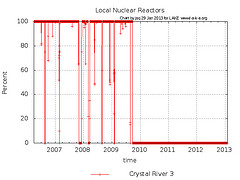
It should also be noted that the nuclear plant on Crystal River has been idle since 2009. As the Tampa Bay Times reported last December,

Continue reading

Valdosta Lowndes County Conference Center and Tourism Authority

VLCCCTA Logo Stopped by the main desk of the Conference Center Wednesday. I asked for a list of the current members of the board and was provided a photocopy of a February 2012 list. See also LCC 2012-11-13. -gretchen

Board of Directors

February 1, 2012

Commissioner Joyce Evans
Lowndes County Board of Commissioners

Term Expires: December 31, 2014

VLCCCTA Board Page 1 Councilman Tim Carroll
Valdosta City Council

Term Expires: December 31, 2015

Andy Anderson
Lowndes County Board of Commissioner Appointment

Term Expires: December 31, 2014

Rick Williams – Vice Chairman
Valdosta City Council Lodging & RV Appointment

Term Expires: December 31, 2012
Continue reading

How to get fast Internet service —Susan Crawford

Susan Crawford has a plan for getting us fast Internet access for jobs, community, education, and health care.

Susan Crawford wrote for Wired 2 October 2012, We Can’t All Be in Google’s Kansas: A Plan for Winning the Bandwidth Race, about how the incumbent telephone and cable companies that provide our Internet access aren’t going to help:

They have no incentive to do so. Because they never enter one another’s territories, they don’t face the competition that might spur such expansion.

Instead, incumbent internet access providers such as Comcast and Time Warner (for wired access) and AT&T and Verizon (for complementary wireless access) are in “harvesting” mode. They’re raising average revenue per user through special pricing for planned “specialized services” and usage-based billing, which allows the incumbents to constrain demand. The ecosystem these companies have built is never under stress, because consumers do their best to avoid heavy charges for using more data than they’re supposed to. Where users have no expectation of abundance, there’s no need to build fiber on the wired side of the business or build small cells fed by fiber on the wireless side.

If the current internet access providers that dominate the American telecommunications landscape could get away with it, they’d sell nothing but specialized services and turn internet access into a dirt road.

So what is her plan?

Continue reading

Captive cable audience —Susan Crawford

Affordable high-speed Internet access would bring us jobs, community, “online commerce and services, the ability to reach world markets, to invent and innovate, to learn and communicate” and “a wealth of economic activity and information” writes Susan Crawford, a very savvy and experienced communications law professor who has been recommended by many as a potential chair of the FCC, who also explains why we aren’t currently getting it.

The Diane Rehm Show 10 January 2013, Susan Crawford: “Captive Audience”, and that’s the title of her book, Captive Audience: The Telecom Industry and Monopoly Power in the New Gilded Age, excerpted here:

The sea change in policy that led to the current situation has been coordinated over the past twenty years by legions of lobbyists, hired-guneconomists, and credulous regulators. The cable companies have no incentive to upgrade their core network hardware to ensure that advanced fiberconnections are available to every home throughout the country. Communications companies describe globally competitive high-speed access as aluxury, just as the private electricity companies did a century ago.

Yet communications services are now as important as electricity. Today if you asked American mayors what technology they most want for their city, the majority would say, “affordable high-speed Internet access.” And they want these networks not simply for the jobs created to construct them but because the Internet brings the world to their community. High-speed Internet access gives towns and cities online commerce and services, the ability to reach world markets, to invent and innovate, to learn and communicate. It brings a wealth of economic activity and information. But despite these manifold benefits, Americans continue to treat such services as the exclusive domain of private monopolies and as luxuries obtainable only by the wealthy.

Not coincidentally, the United States has fallen from the forefront

Continue reading

Microloans for small farmers —USDA

USDA PR 0010.13:

USDA Finalizes New Microloan Program

Microloans up to $35,000 aim to assist small farmers, veterans, and disadvantaged producers

WASHINGTON, Jan. 15, 2013 — Agriculture Secretary Tom Vilsack today announced a new microloan program from the U.S. Department of Agriculture (USDA) designed to help small and family operations, beginning and socially disadvantaged farmers secure loans under $35,000. The new microloan program is aimed at bolstering the progress of producers through their start-up years by providing needed resources and helping to increase equity so that farmers may eventually graduate to commercial credit and expand their operations. The microloan program will also provide a less burdensome, more simplified application process in comparison to traditional farm loans.

“I have met several small and beginning farmers, returning veterans and disadvantaged producers interested in careers in farming who too often must rely on credit cards or personal loans with high interest rates to finance their start-up operations,” said Vilsack.“By further expanding access to credit to those just starting to put down roots in farming, USDA continues to help grow a new generation of farmers, while ensuring the strength of an American agriculture sector that drives our economy, creates jobs, and provides the most secure and affordable food supply in the world.”

The new microloans, said Vilsack, represent how USDA continues to make year-over-year gains in expanding credit opportunities for minority, socially-disadvantaged and young and beginning farmers and ranchers across the United States. The final rule establishing the microloan program will be published in the Jan. 17 issue of the Federal Register.

Administered through USDA’s Farm Service Agency (FSA) Operating Loan Program,

Continue reading

Rep. Austin Scott (R GA-08) @ VLCoC 2013-01-10

Ron Borders introduced Congressman Austin Scott (R GA-08) who made some remarks on the front porch at the Chamber of Commerce Thursday 10 January 2013.

Bookended by some formulaic remarks about debt (without mentioning that it’s already mostly solved), the Congressman noted he is on the Committee on Armed Services. He said there is no current BRAC (Base Realignment and Closure Commission), although one has been asked for. He said a BRAC wouldn’t do anything for near-term debt, anyway (but he didn’t say anything about ending the war in Afghanistan or stopping funding for un-needed weapons systems as ways of saving money).

He said he is the chair of a House Agriculture Subcommitee (Horticulture, Research, Biotechnology, and Foreign Agriculture). He said he was for research, for the agricultural extension, and for agricultural exports.

Here’s the WCTV news report, with responses by Gretchen Quarterman, Chair of the Lowndes County Democratic Party (LCDP).

Here’s a video playlist:

Continue reading

Videos: new website @ VLCIA 2013-01-15

Both Meghan Duke (PR and Marketing) and Andrea Schruijer (Executive Director) invited comments and additional information for the new website. They were speaking to their board at its meeting last night, but in the Industrial Authority’s new conversational spirit, maybe they’ll take suggestions from the rest of the community, as well. Both Allan Ricketts (Project Manager) and J. Stephen Gupton (Attorney) said the Hahira well site work was going well. They’ve got a new intern, and I reminded them about the need for fast Internet access. It was a long meeting by County Commission standards, yet short for Industrial Authority meeting: about half an hour.

Here’s the agenda, with links to the videos, and a few notes.

-jsq

Continue reading

Failed concrete: the bane of nuclear reactors

Let’s not forget the failed concrete on which Plant Vogtle’s unprotected stranded reactor vessel is supposed to sit.

A week before the reactor vessel train wreck, news stories said concrete pouring was delayed due to “noncompliant rebar”. Thomas Clements elaborated for the Aiken Leader 14 January 2013, Vogtle AP1000 Nuclear Reactor Vessel Discovered Unprotected, Stranded in Savannah Port since December 15 Shipment Failure,

Due to chronic delays in the pouring of “nuclear concrete” for the basemat of the AP1000 units at Vogtle and VC Summer, it remains unknown when or if any reactor vessels can actually be placed into the excavated holes at the sites. A January 10 meeting of the NRC confirmed that another basemat-related “license amendment request” (LAR) was soon to be filed by SCE&G for its AP1000 project and that the target date for granting of the LAR was March 18. It appears that the Vogtle project has fallen behind the V.C. Summer project and no strategy for the filing of a similar and necessary LAR by Southern Company is known.

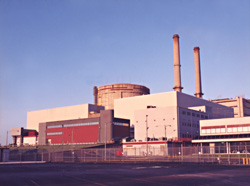
Concrete, the long-time bane of Seabrook Station and also what’s keeping Crystal River shut down because nobody wants to pay the billions of dollars it would take to fix it.


What say we call the whole thing off, like Dominion Power did with its existing Kewaunee nuke, and TEPCO and NRG did with their plans for new South Texas nukes.


Maybe it’s a sign that meanwhile Google has invested a billion dollars in wind and solar and gotten 2 gigawatts of power, almost as much as the 2.2 GW the two new Vogtle nukes were supposed to produce, except Google’s solar and wind projects are online on time, and for less than just the cost overruns at Vogtle.

The Georgia legislature is in session. You can contact your legislator or the PSC today about toppling Southern Company’s three-legged nuclear regulatory-capture stool and fixing that 1973 Territoriality Law so we can get on with solar and wind in Georgia, for jobs and energy independence, and oh by the way clean air and plenty of clean water.

-jsq