Tag Archives: GFA

UK biomass plant exploded from Waycross wood pellets

Explosions in Tilbury, England, explosions in Waycross:
south Georgia wood pellet dust blowing up here and there and
producing CO2 when burned there.
Why is
“the world’s largest wood pellet plant”
a better use of Georgia foresters’ resources than solar farms,
which don’t pollute and don’t explode?


Josh Schlossberg wrote for The Biomass Monitor 24 May 2013,

Biomass Industry Plays With Fire, Gets Burned
,

A massive fire raged inside wood pellet silos for RWE’s Tilbury
Power Station in Essex, UK, on February 27, 2012. The biomass
incinerator—the largest in the world at 750
megawatts—had just been converted from coal to woody biomass a
month earlier. RWE claims no single cause can be attributed to the
fire, but suspects that smoldering wood pellets triggered the dust
fire.


In a recent editorial (apparently not online),

Robert Farris

Executive Director of the

Georgia Forestry Commission
,
wrote that Georgia has nine wood pellet plants.
He didn’t name them, but
Biomass Magazine has
a list of U.S. wood pellet plants
,
including these in Georgia (I added the City column): Continue reading
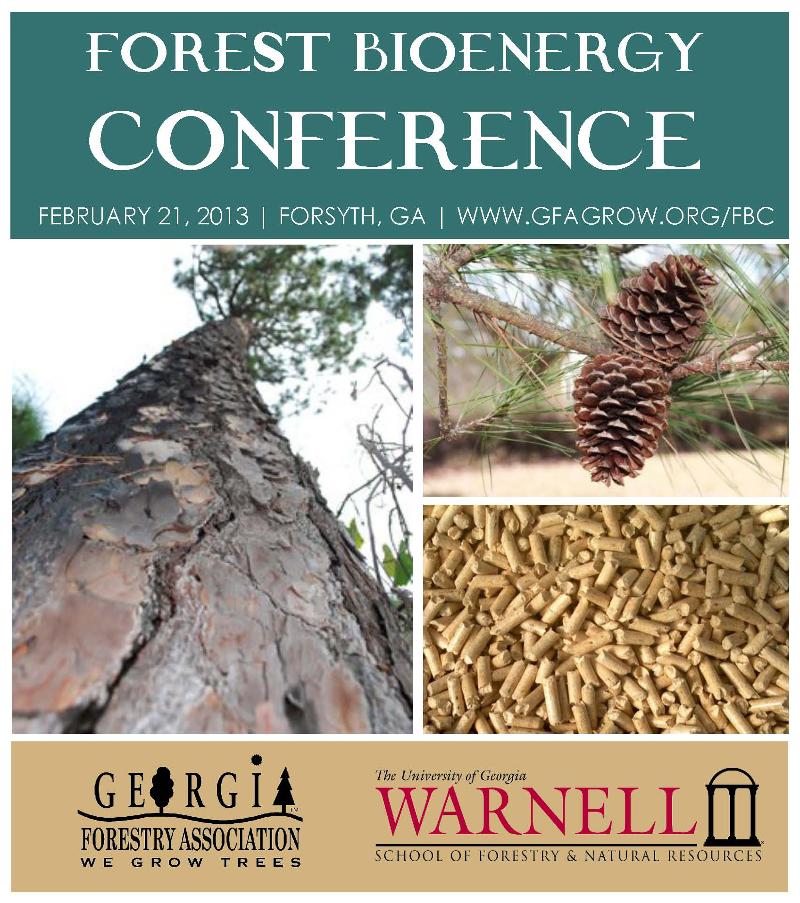
Forest Bioenergy Conference —GFA

Seen Monday.
Seems to me that instead of burning trees
tree farmers should start growing solar farms
on some of their less useful land.


Forest Bioenergy Conference —GFA


Deadline for early registration is Sunday, February 10…
register
today to save money!

It’s 21 February 2013 in Forsyth.

Interest in forest biomass as a potential feedstock for renewable
energy facilities has been especially keen for the past several
years and much of the activity has been centered in Georgia. GFA and
UGA are excited about hosting our fourth biennial conference to
examine where we are with forest bioenergy development in Georgia
and where we may be going in the near future. While many issues are
becoming clearer, much uncertainty remains with regard to government
policy and market prices for fossil fuels. This conference is an
excellent opportunity to hear from some of the players on the front
lines of developing markets, influencing government policies, and
conducting research on how these changes may impact our wood supply
system.

These are some of the topics that will be addressed during this
conference by many of the people directly involved with these
changes that are taking place in our state. Join us and stay abreast
of these significant changes taking place in our forest industry.

The talk I think they should pay attention to is:

What does Low-Cost Natural Gas Mean for Future Biomass Use?

Continue reading

Georgia forests worth more standing than incinerated


Sandi Martin writes in

Southeast Farm Press
:

A University of Georgia researcher has found that Georgia’s forestlands
provide essential ecosystem services to the state worth an estimated
$37 billion annually.

This is in addition to the value of timber, forest products and
recreation. This is the first time these indirect benefits of Georgia’s
private forests have been estimated.

That’s substantially more than the $28 billion annually from the
conventional wood-products industry.

What are these ecosystem services?

Continue reading