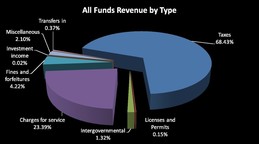
Revenues |
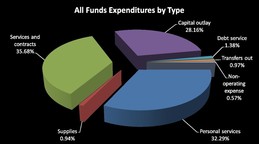
Expenditures |
Thanks to Ashley Turner and Paige Dukes for sending them along.
-gretchen
|
Revenues |
Expenditures |
Thanks to Ashley Turner and Paige Dukes for sending them along.
-gretchen
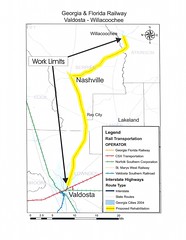 from Valdosta to Moody AFB
and on to Ray City and Nashville in Berrien County,
and Willacoochee in Atkinson County.
This proposal is to aid freight, but with this upgrade to the track,
the same track would be even more readily usable for passenger rail.
That same track was used for passenger travel up into the 1950s.
My mother used to catch the train at Barretts (just north of Moody) to go visit her relatives in Pearson (a bit east of Willacoochee).
from Valdosta to Moody AFB
and on to Ray City and Nashville in Berrien County,
and Willacoochee in Atkinson County.
This proposal is to aid freight, but with this upgrade to the track,
the same track would be even more readily usable for passenger rail.
That same track was used for passenger travel up into the 1950s.
My mother used to catch the train at Barretts (just north of Moody) to go visit her relatives in Pearson (a bit east of Willacoochee).It’s true the project sheet talks about “potential customers in the region”:
This project will provide for more efficient train operations along the rail corridor to accommodate the increase rail traffic serving the existing and potential customers in the region.However, rail promotes development in existing population centers and at stations, unlike all along automobile roadways.
This project is also another example of how the economic area of Moody AFB includes Continue reading
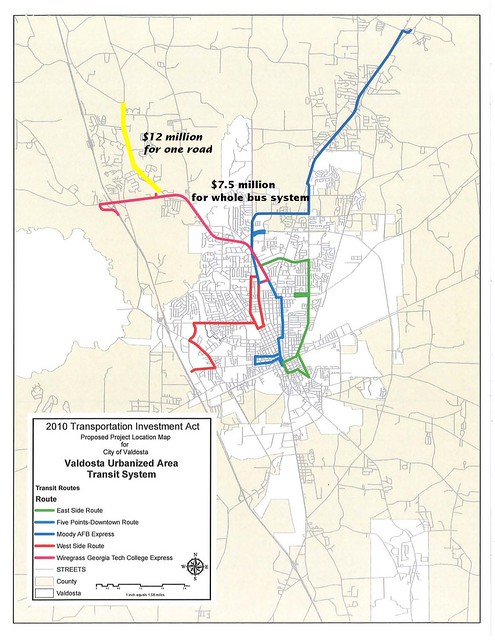
One short stretch of road vs. a three-line bus system to connect Wiregrass Tech, Five Points, Downtown, Moody, East Side, South Side, West Side, and the Mall.
Road and bridge proponents usually mutter that a bus system won’t pay back for years, if ever. And that’s right: bus systems usually operate at a loss because local governments subsidize them for the social and economic benefits they bring, such as these:
This project will provide mobility options for all travelers; improve access to employment; and help mitigate congestion and maximize the use of existing infrastructure by promoting high-occupancy travel.Employment, safety, and less sprawl, all from a bus system.
What road and bridge proponents don’t ever mention is: Continue reading
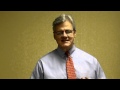 Here is the complete
playlist for yesterday’s (8 September 2011) Lowndes County Lunch and Learn,
in which County Manager Joe Pritchard reviewed the county’s budget process.
County Clerk Paige Dukes said she would also send the slides for posting.
Here is the complete
playlist for yesterday’s (8 September 2011) Lowndes County Lunch and Learn,
in which County Manager Joe Pritchard reviewed the county’s budget process.
County Clerk Paige Dukes said she would also send the slides for posting.
County Manager Joe Pritchard presents the budget process
Lowndes County Lunch and Learn 8 September 2011
Videos by Gretchen Quarterman for LAKE, the Lowndes Area Knowledge Exchange
Here are last month’s Lunch and Learn playlist and slides.
-gretchen
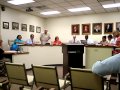 Here’s a
video playlist
for the whole meeting: teacher hiring, board member training,
and a statement against school consolidation, with additional
comments by many citizens.
Many of these videos have already been published in the
VBOE 29 August 2011 category in this blog.
Here’s a
video playlist
for the whole meeting: teacher hiring, board member training,
and a statement against school consolidation, with additional
comments by many citizens.
Many of these videos have already been published in the
VBOE 29 August 2011 category in this blog.
Videos of entire VBOE 29 August 2011 meeting
education, referendum, consolidation, statement,
Work Session, Valdosta Board of Education (VBOE),
Valdosta, Lowndes County, Georgia, 29 August 2011.
Videos by John S. Quarterman for LAKE, the Lowndes Area Knowledge Exchange.
The playlist also includes other video material, such as Continue reading
Georgia has gained enough population in the past ten years to add a congressional seat. This means redrawing the CongressionalContinue readingdistrict lines not only to balance population, but to also add another representative in Congress. Lowndes County has been split between the first and second districts, and all spring rumors of where we might end up were circulating. Eventually we saw a draft map that had Lowndes completely in the 8th District,
along with other counties along Interstate 75. That map made some sense south of Macon. Some communities of interest were preserved (most of the Lowndes-Valdosta MPO was in the same district) and the hospitality corridor of I-75 was in one district, along with the rural farms that surround it. Valdosta to Macon is easier to traverse than Valdosta to Savannah, or Valdosta to Columbus.
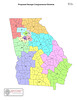
BeforeBut then Congressman Jack Kingston stuck out his green tongue.
The Valdosta Board of Education
voted last week to oppose school consolidation.
 Note plenty of FVCS people there, many
speaking against consolidation.
If there were CUEE people present, they were awful silent.
Note plenty of FVCS people there, many
speaking against consolidation.
If there were CUEE people present, they were awful silent.
If “unification” is about education, where was CUEE at that meeting or at the Lowndes County Board of Education meeting the following day when LCBOE unanimously passed a resolution supporting VBOE in opposition to consolidation? Maybe CUEE will show up tonight and say something. Unless VDT is right, and CUEE can’t answer the relevant questions.
-jsq
The correction has this new link to the form. The form says:The SGRC website has been updated to correct the error for the public comment form. Thank you for letting us know and helping to spread the word about these public meetings.
-Southern Georgia Regional Commission
and asks for your name, address, phone, email, and your comments. I bet you could email that information if you don’t want to print out the form and write on it. The public notice about the regional T-SPLOST meetings said:Public Comment Form
Southern Georgia Regional Transportation Roundtable
Comments are being accepted by email at chull@sgrc.us, by fax at 229-333-5212, or by mailing them to SGRC, ATTN: SG RTR, 327 W Savannah Ave., Valdosta, GA 31601.For more information please call Corey Hull at 229-333-5277.
-jsq
Continue readingWe can only prosper as a society if we work together. Despite the differences we might have, we share so much more in common. Yet it seems that we prefer to fall into separate camps, that we seek to view issues in black and white, and that we like to belong to those who have “got it all figured out”. Just pick your side (liberal, conservative) and you “know” who got it all wrong.
I have been humbled by the wide-ranging support WACE received to stop a biomass plant that was once considered a done deal. In the end what mattered was the realization by people across all ages, racial and ideological lines that we want to breathe clean air, and that we don’t want to waste millions of tax dollars on a project that will lead to increases in respiratory illnesses, heart diseases, and cancer. Thus the people spoke up, and with the help of elected representatives and the Industrial Authority “no biomass” became the consensus.
In the last couple of months I noticed another issue many agree on.
 This is the clearest statement of the football argument I’ve heard.
This is the same speaker who already mentioned
quality of education, property taxes, and property values,
so this is just one argument among many.
The speaker is associated with FVCS, and if I went to VHS,
I’d know his name right away; I’m an LHS graduate.
This is the clearest statement of the football argument I’ve heard.
This is the same speaker who already mentioned
quality of education, property taxes, and property values,
so this is just one argument among many.
The speaker is associated with FVCS, and if I went to VHS,
I’d know his name right away; I’m an LHS graduate.
The first thing they’ll do is sell that stadium. They’d be crazy not to do…. They’re not going to pay upkeep on two stadiums. Look at Tallahassee, Macon: all the schools play at one stadium….By “those people” I don’t think he means the Lowndes County Board of Education; I think he was referring to CUEE.…
Don’t let those people run the show. Don’t let them take the power away from us.
…
If one day it makes good economic sense for y’all to make the decision to sell that property to Valdosta State and build another stadium and we can come out ahead, I think that’s a great idea.
Like my granddaddy said, if it ain’t broke, don’t fix it.
Here’s the video: Continue reading