Michigan, Massachusetts,
and
New Jersey,
plus Georgia.
Why are so many states attempting pro or con charter school referendums
this year?
Because many states have a push for charter schools,
especially
Louisiana.
Where’s that coming from, at the same time in so many states?
ALEC, that’s where.
The poster child for charter school privatization is Louisiana.
It started in New Orleans after Hurricane Katrina,
but the man-made education disaster has spread to the whole state.
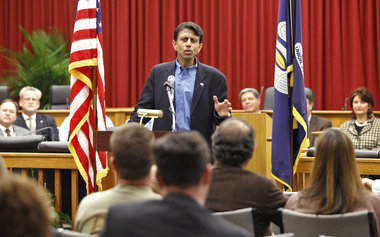
Louisiana Governor Bobby Jindal has wasted no time this legislative
session in pushing wide-reaching education reforms designed to
expand the charter school footprint, while opening the door to
vouchers and tying teacher tenure to student test results. In the
early hours of the morning on March 23rd, after a marathon session,
the Louisiana State House passed two bills that form the core of a
wide-reaching education reform agenda designed to expand the charter
school footprint, while opening the door to vouchers and tying
teacher tenure to student test results. Governor Bobby Jindal wasted
no time in pushing these reforms through in the first weeks of the
legislative session, and the urgency with which he has advanced this
agenda has infuriated teachers and left even some charter-school
advocates alarmed. “The governor’s expression of urgency for
these bills is specious at best. [They] did not have to be passed
under cover of darkness,” says Louisiana Federation of
Teachers (LFT) president Steve Monaghan. Even Senator Mary Landrieu,
a Democrat who has been an avid charter school advocate, criticized
the Governor’s haste: “I am by no means naïve, and know full
well the Administration’s political advantage of pushing legislation
through with as little debate as possible.” With these bills,
Louisiana is set to join Florida, Ohio and Minnesota amongst the
states that have enacted the most far-reaching of these school
reforms. This marks the latest wave in a concerted nation-wide
effort by right-wing advocacy organizations and their corporate
supporters to ravage the public sector.
While “reform” usually has connotations of “making better”,
in this case, “better” means more profit for private school companies,
not better education for students.
Why would Louisiana’s legislators vote for something so counterproductive
for education?
Awarded more than $1.3 billion to conduct more than $3.8 billion of research and development.
Qualified for $412 million of investment tax credits for a 21st century coal plant being built in Mississippi.
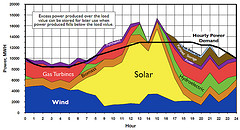
OK, SO, let's see you do the study to show what we can really do with
conservation, efficiency, wind, sun, and less natural gas than we have now.
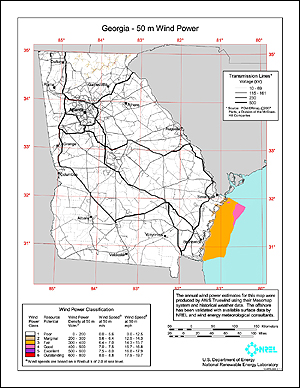
Sure, in the Georgia Bight we do have to contend with hurricanes.
But a
"great, big company"
like SO should be able to focus its vaunted private R&D on that problem and solve it.
Maybe SO doesn't want to do that because the result might show there is no need for
any coal plants, nor new natural gas plants, nor any nuclear plants, which would mean
Georgia Power would have to give up its nuclear-funding rate-hike stealth tax
and SO would have to give up its $8.3 billion loan guarantee.
Hey, we might even need to
change the 1973 Georgia Electric Territorial Act,
and that might damage Georgia Power's guaranteed profit!
Nevermind that Georgia Power and SO might make more profit if they got out
in front on solar and wind power and a smart grid.
The Assembly education committee yesterday moved a bill that would
give local voters the right to approve new charters in their home
districts. If passed by both houses, the law would make New Jersey
only the third state to require charter schools to face a local
referendum.
First proposed last year, the new bill has been toughened for the
new session. Amendments filed with the bill would make those
referendums retroactive for as many as 30 urban and suburban schools
awaiting their final charters.
The votes would come after the state’s preliminary approval, but
often as much as a year can lapse before the final charter is
granted and a school can open.
Charter schools in Georgia already have to be approved by local school boards.
Let’s not give up that local control.
Vote No on the charter school referendum in November.
The Valdosta-Lowndes County Industrial Authority Monthly Meeting for
September Has Been Rescheduled For Tuesday, Sept. 25, 2012 5:30pm
Valdosta-Lowndes County Industrial Authority Offices
That’s at
2110 N. Patterson Street, Valdosta.
They also posted this notice on
their facebook page yesterday.
No agenda is posted yet.
Regular Meeting, Valdosta-Lowndes County Industrial Authority (VLCIA),
Norman Bennett, Tom Call, Roy Copeland, Chairman, Mary Gooding, Jerry Jennett,
Andrea Schruijer, Executive Director, J. Stephen Gupton, Attorney, Tom Davis, CPA, Allan Ricketts, Project ManagerS. Meghan Duke, Public Relations & Marketing Manager, Lu Williams, Operations Manager,
Videos by John S. Quarterman for Lowndes Area Knowledge Exchange (LAKE), Valdosta, Lowndes County, Georgia, 21 August 2012.
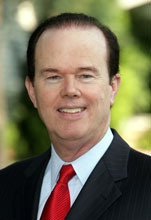
Dario Orlando, CEO of
Steeda Manufacturing,
which currently makes performance parts for Mustangs,
told the Industrial Authority at its
21 August 2012 Regular Session
that Steeda
is moving into making medical parts, plus selling to GM,
and into new geographical markets.
Video by John S. Quarterman for Lowndes Area Knowledge Exchange (LAKE), Valdosta, Lowndes County, Georgia, 21 August 2012.
Allan Ricketts, VLCIA Project Manager, explained that
Steeda had requested a second extension, and an amendment to reduce
the requirement of number of jobs from 40 to 30.
We certainly think that is justified in the very difficult economic climate
and conditions that we’ve had over the past couple of years,
and certainly acknowledging that in that very challenging economic time,
we’ve had steady continued growth by Steeda.
And so now we’re up to about 23 employees there.
I think it is also significant to note […] that
Steeda has now moved its entire manufacturing operation to Valdosta.
That move represents about a million five investment in the community.
Actually specifically it is $1,480,950
in some very unique manufacturing equipment.
I think it is important to understand
that some of this manufacturing equipment provides a great resource here
that two of the current projects that we are chasing are very interested in.
Video by John S. Quarterman for Lowndes Area Knowledge Exchange (LAKE), Valdosta, Lowndes County, Georgia, 21 August 2012.
Dario Orlando then remarked that things were going very well, and:
We’re expanding into other markets
like I’d mentioned before the commencement of the meeting.
We’re moving into medical manufacturing because we do have the most advanced
manufacturing capabilities here in Valdosta.
Furthermore, we’re starting to supply General Motors
with performance parts,
the GM performance brand.
We opened up another company here in Valdosta called LSR Performance.
I was telling Allan this morning… that we’re all going to be looking back at this day.
I plan to have a couple of hundred employees here in the next five years.
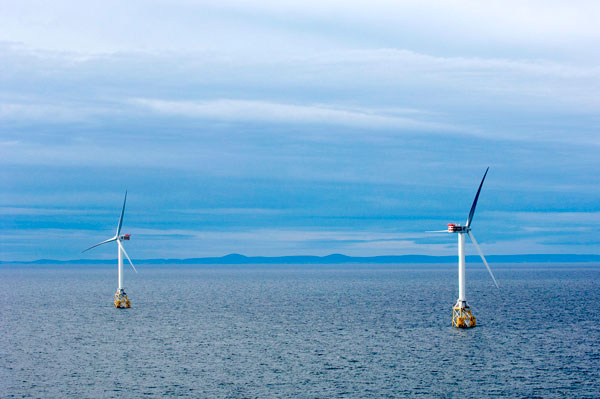
A new analysis by Stanford researchers reveals that there is enough
offshore wind along the U.S. East Coast to meet the electricity
demands of at least one-third of the country.
The scientists paid special attention to the Maine-to-Virginia
corridor; the historical lack of strong hurricanes in the region
makes it a favorable site for offshore wind turbines. They found
that turbines placed there could satisfy the peak-time power needs
of these states for three seasons of the year (summer is the
exception).
“We knew there was a lot of wind out there, but this is the first
actual quantification of the total resource and the time of day that
the resource peaks,” said Mark Z. Jacobson, a professor of civil and
environmental engineering at Stanford who directed the research.
“This provides practical information to wind farm developers about
the best areas to place turbines.”
The measure would have removed limits on number of charter schools,
their funding, and enrollment. Other changes would have been made in
laws that governed charter schools, including requiring approval of
qualified applications for charter schools to be in districts where
there was low student performance.
 New Jersey,
plus Georgia.
Why are so many states attempting pro or con charter school referendums
this year?
Because many states have a push for charter schools,
especially
Louisiana.
Where’s that coming from, at the same time in so many states?
ALEC, that’s where.
New Jersey,
plus Georgia.
Why are so many states attempting pro or con charter school referendums
this year?
Because many states have a push for charter schools,
especially
Louisiana.
Where’s that coming from, at the same time in so many states?
ALEC, that’s where.