Tag Archives: Valdosta

13 oil spills in 30 days

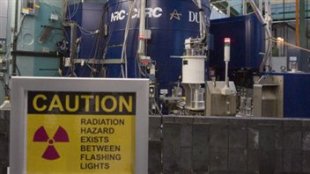
As if three spills in one week wasn’t bad enough, the spills, leaks, and derailments just keep on coming, 13 of them on 3 continents in just the past 30 days, as listed by tcktcktck and illustrated in this graphic. Meanwhile, a solar spill is still called a nice day.

-jsq

Speed dating local officials

Tallahassee does it, and local governments here could also sit down and talk with citizens. It even has built-in time limits, for those elected officials who are concerned about citizen longwindedness.

Gina Pitisci wrote for WCTV Thursday, Ever heard of speed dating? What about speed dating your local officials?

“The more any one of us can get out and talk with the citizens the better off we are,” Gil ziffer, Tallahassee City Commissioner, said. “If we’re insulated in our offices, it’s not like getting out and talking with folks so this is great for us.”

Here’s how it works: every 9 minutes the 12 leaders rotate from table to table giving each group of people an opportunity to ask questions or offer their ideas.

Listening to citizens: now there’s an idea!

-jsq

Valdosta receives water treatment award

Rather ironic, wouldn’t you say, what with all the problems at the other end of the water usage pipeline? This award is for treating water as it comes out of the city’s wells.

WCTV posted a City of Valdosta press release yesterday, Valdosta Receives GAWP Water Treatment Plant of the Year Award,

The City of Valdosta Water Treatment Plant has been recognized as the 2013 Water Treatment Plant of the Year by the Georgia Association of Water Professionals (GAWP).

The plant was recently evaluated by GAWP inspectors on its well field operations, chemical processes and documentation, and scored 90% or better in all areas. City staff will accept the award in the category for groundwater systems that pump over 10 million gallons daily (MGD), at the GAWP Conference in Macon, Ga., on Tuesday April 16.

“Every day,

Continue reading

Solar could burn utility business model

Exhibit 2 Utilities say that like it’s a bad thing. The same utilities that left millions without power in the U.S. repeatedly last year, and that gouge ratepayers for 10% or more profits. Moore’s Law continues to drive solar costs down and installations up, with increasingly more each like compound interest. Utilties need to adapt or get out of the way.

Last November Moody’s reported that solar and wind were eroding credit for coal and gas power plants, and were already having ‘a profound negative impact’ on the competitiveness of thermal generation companies. That was in Europe. David Roberts wrote for Grist yesterday, Solar panels could destroy U.S. utilities, according to U.S. utilities,

The thing to remember is that it is in a utility’s financial interest to generate (or buy) and deliver as much power as possible. The higher the demand, the higher the investments, the higher the utility shareholder profits. In short, all things being equal, utilities want to sell more power. (All things are occasionally not equal, but we’ll leave those complications aside for now.)

And they want to produce that power from big baseload power stations for their economy of scale while the monopoly power utilities get guaranteed profits, not to mention huge ratepayer and loan-guaranteed boondoggles like the new nukes at Plant Vogtle. (Electric Member Cooperatives are somewhat different.)

Now, into this cozy business model enters cheap distributed solar PV, which eats away at it like acid.

Continue reading

Lancaster, CA: transparent city

This is how a city that means business acts: in public, on TV and on the web, where its citizens can see it and its citizens can interact.

Not only is Lancaster, California moving ahead with solar energy for jobs and financial benefit, it’s a transparent city:

City of Lancaster, California City Council Meetings are broadcast live on local cable channel 28.

And city council meetings are archived for viewing online; video of yesterday’s meeting is already up. They do require Microsoft Silverlight to view, but nothing’s perfect, and other cities use YouTube, Vimeo, or other more generally usable methods.

And it’s not just the Lancaster City Council: videos of their Planning Commission and numerous other authorities and commissions are also on the web. Plus:

Continue reading

Lancaster, CA solar capital?

What does it take to turn a city into a solar power powerhouse of jobs and clean energy profit? Mostly the will to do it, plus some public relations and business relations.

Felicity Barringer wrote for NYTimes 8 April 2013, With Help From Nature, a Town Aims to Be a Solar Capital, the mayor of Lancaster, California, R. Rex Parris, said,

“We want to be the first city that produces more electricity from solar energy than we consume on a daily basis,”

And then the city of Lancaster took action, requiring

that almost all new homes either come equipped with solar panels or be in subdivisions that produce one kilowatt of solar energy per house. He also was able to recruit the home building giant KB Home to implement his vision, despite the industry’s overall resistance to solar power.

Result, according to one solar tracker?

Continue reading

Believe So. Cal. Edison about San Onofre?

Should we believe the operator of the broken San Onofre 2 nuclear plant that it’s safe to restart at 70% power? The same operator that knew the now-broken steam generators were flawed before it installed them? Recommended by the same NRC staff who couldn’t answer opponents’ questions? The same NRC that doesn’t publish licensee documents and says that’s never been a practice?

SanDiego6.com wrote yesterday, Sen. Boxer Blasts Report on San Onofre Nuclear Generating Station,

On Monday, Southern California Edison announced it had formalized a request to amend its operating license to allow it to operate its Unit 2 reactor at 70 percent beginning June 1.

The reactor was undergoing scheduled maintenance in January 2012 when a small, non-injury leak was discovered in plant’s other reactor. The plant has been shut down since.

According to Edison, vibrations that led to premature wearing of steam pressure tubes in the reactors don’t occur at 70 percent power. The utility wants to operate on limited power for the five warm weather months and then shut down for an inspection of the tubes.

After the inspection, the reactor would resume operating at 70 percent power. The company said it would use the collected tube data to determine an appropriate power setting for the long term.

There’s the catch:

Continue reading

Videos of ZBOA April meeting @ ZBOA 2013-04-02

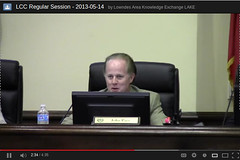
Here are videos of the two Lowndes County cases (both in Lake Park) and the one Valdosta case at the April meeting of the Valdosta-Lowndes County Zoning Board of Appeals (ZBOA).

ZBOA is setting an example for local elected and appointed authorities by publishing its own agendas and minutes which you can find here on the City of Valdosta website. The minutes for the March 2013 meeting are not up yet, but the agenda is. Here’s transcription of the case descriptions.

Here’s a video playlist:


Videos of ZBOA April meeting
Regular Session, Valdosta-Lowndes County Zoning Board of Appeals (ZBOA),
Videos by Gretchen Quarterman for Lowndes Area Knowledge Exchange (LAKE), Valdosta, Lowndes County, Georgia, 2 April 2013.

-jsq

IKEA biggest solar in Georgia

The biggest solar rooftop installation in Georgia? Not by mighty Georgia Power, not by an EMC, not even by GaSU: it’s IKEA’s distribution center in Chatham County. Chatham is also trailing only Atlanta in solar installations in general.

Mary Landers wrote for Savannahnow.com 7 January 2013, New solar adds to Chatham’s growing inventory,

Just in time for the new year, and for a tax break for the old one, Consolidated Utilities began producing electricity from solar panels at its water treatment plant in west Chatham County on the afternoon of New Year’s Eve.

“When I left on Monday the meter was receiving power,” said Tony Abbott, president of Consolidated Utilities, a private local water company.

The 416-panel, 100-kilowatt system is big enough to power about 10 average homes for 25 years, said Julian Smith, of SolarSmith, which installed the system. At the water treatment site, however, solar will instead power the blowers that keep the sewage ponds aerated. The panels occupy previously useless property in a flood zone, Smith noted.

OK, the Wiregrass Solar installation at Valdosta’s Mud Creek Wastewater Treatment Plant is larger, and the Valdosta City Council recently voted to expand it further. Go Valdosta!

But what about IKEA?

It’s not the largest solar installation in the county. That honor still goes to the IKEA distribution center, which in October plugged in its 1,460-kilowatt solar array on the roof of its distribution center. That IKEA installation is in fact the largest in the state.

Back in July I mentioned that IKEA was going to build that array, and IKEA was building almost as much solar as all of Georgia Power’s parent Southern Company. BusinessWire reported 9 Oct 2012 IKEA Plugs-In Georgia’s Largest Private Solar Rooftop Array on Savannah Distribution Center: Surpasses 75% U.S. Solar Presence.

This installation represents the 34th completed solar project for IKEA in the U.S., with five more locations underway, making the eventual U.S. solar presence of IKEA nearly 89% of its U.S. locations, generating with a total 38 MW. IKEA owns and operates each of its solar PV energy systems atop its buildings — as opposed to a solar lease or PPA (power purchase agreement) — and globally has allocated €590 million to invest in renewable energy, focusing on solar and wind during the coming three years. This investment reinforces the long-term commitment of IKEA to sustainability and confidence in photovoltaic (PV) technology. More than 250,000 solar panels have been installed on IKEA stores and buildings across the world. The company also owns and/or operates approximately 110 wind turbines in Europe.

The Savannahnow article mentions something happening in Chatham County but not so much yet in Lowndes County:

“What’s really going on in Chatham is that lots of homeowners put solar on their rooftops,” Arora said. “The excitement exists in Chatham for solar.”

-jsq

Banks as slumlord renters reducing property values

Lou Raguse write for WIVB.com 4 April 2013, Cheektowaga picks fight with big banks,

CHEEKTOWAGA, N.Y. (WIVB)—Neighbors in Cheektowaga say empty houses are ruining the value of their neighborhoods and bringing in unwanted guests.

Residents want to know why these properties, seized by banking giants, have been left to crumble. The town board says they have serious issues with the homeowners.

“In normal life, you would call them slumlords,” says Town Board Member Charlie Markel.

Those so-called “slumlords” are big banks like Bank of America and Chase. Markel says in too many cases, a homeowner falls behind on a mortgage and the bank begins to foreclose. But then, it stops short. He says the bank continues paying property tax but allows the homes to fall into disrepair, never allowing them back on the market for sale, or to be auctioned.

Let’s remember what last year’s study of America’s richest and poorest cities found about the Valdosta MSA:

Despite these positives, 14.4 percent of housing units were vacant last year [2011], higher than the national vacancy rate of 13.1 percent.

I wonder how big national and multinational banks are serving our area? And with a vacancy rate that high, and housing prices still dropping, why are we building more houses?

-jsq