Tag Archives: health

VDT on Foxborough v. McDonalds

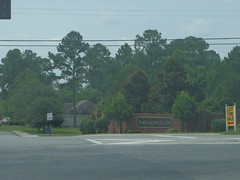
It looks like the strategy I recommended to the Foxborough opponents to McDonalds worked: go to the County Commission work session and you may get in the newspaper. Kay Harris writes in the VDT about Issues with development, Neighborhood upset about commercial encroachment:
According to Vince Schneider, the spokesman for the residents, the majority of the neighborhood is opposed to the possibility of a McDonald’s restaurant openin g there. The property is currently listed with Lowndes County as owned by First State Bank, but the county engineer, Mike Fletcher, confirmed Monday at the Lo wndes County Board of Commissioners work session that he has received a plat fo r the proposed development.

Schneider appeared before commissioners at the work session to request they rec onsider the commercial zoning in the area.

Many of the residents only found out aboout the proposed McDonalds from a cryptic mention by Kay Harris in the VDT a few weeks ago. Naturally, the VDT ends the current story on a note of finality: Continue reading

Nix on biomass plant in Traverse City, Michigan

Looking farther afield in Cadillac, Michigan than schools and realtors, there are some people who aren’t completely pleased with the local biomass plant:
Complaints are more frequent along Mary Street, a short stretch a few hundred yards south of the plant. Residents there deal with more intense noise and odors.

Craig Walworth’s home is among the closest to the plant. He walked up to his Jeep — a vehicle he cleaned the day before — and dragged his finger through a layer of film on the hood.

“Every morning, you have that to look forward to,” he said. “I clean my screens three times a year during the summer because they clog up.”

Nonetheless he didn’t say it affected his property values. However, that’s not the only issue.

Meanwhile, about an hour north on the edge of Lake Michigan, in Traverse City local activism caused cancellation of a proposed biomass plant: Continue reading

Green Exercise for Mental Health

Quantifying something we can all feel:
ScienceDaily (May 1, 2010) — How much “green exercise” produces the greatest improvement in mood and sense of personal well-being? A new study in the American Chemical Society’s semi-monthly journal Environmental Science & Technology has a surprising answer.

The answer is likely to please people in a society with much to do but little time to do it: Just five minutes of exercise in a park, working in a backyard garden, on a nature trail, or other green space will benefit mental health.

All natural environments were beneficial including parks in urban settings. Green areas with water added something extra. A blue and green environment seems even better for health, Pretty noted.
Here’s a link to a news blurb in the journal:
Pretty says that his goal with this study is not to provide just another recommendation for individuals but to provide data that can be used in policy discussions. Those data “could translate into what the landscape guidelines are for schools or for public housing,” says Nancy Wells, associate professor of community ecology at Cornell University.
Here is a link to the actual article.

Biomass Air Quality Hearing Set

This appears to be the date and location for the Georgia EPD air quality hearing for the Wiregrass Biomass plant proposed for Valdosta:
6:30 PM, 27 April 2010
Multipurpose Room
Valdosta City Hall Annex
300 North Lee Street
Valdosta, Georgia
We’ve been waiting on this date for a while. EPD is going to send a press release to the VDT a few weeks in advance and post it on its own website, www.georgiaair.org. Assuming, of course, that the date and place don’t change again.

Why should you care? This plant proposes to burn sewage sludge, which can release numerous hazardous chemicals into the air. Here is Seth’s letter to the editor of the VDT of 21 Feb 2010: Continue reading

Nature Makes Healthy

Wide base Something to consider when planning development:
The closer you live to nature, the healthier you’re likely to be.

For instance, people who live within 1 kilometer (.6 miles) of a park or wooded area experience less anxiety and depression, Dutch researchers report.

The findings put concrete numbers on a concept that many health experts had assumed to be true.

“It’s nice to see that it shows that, that the closer humans are to the natural environment, that seems to have a healthy influence,” said Dr. David Rakel, director of integrative medicine and assistant professor of family medicine at the University of Wisconsin School of Medicine and Public Health.

That’s Amanda Gardner, writing in USA Today. A few other points:
Children and poor people suffered disproportionately from lack of green acres, the researchers found.
And what affects the most vulnerable affects all:
More green space may also be a way for whole communities to become healthier.
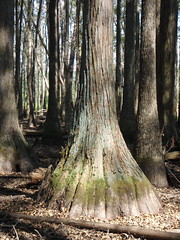
The cypress pictured is much like those in the swamp on Val Del Road that the county let a developer cut down last year.