Category Archives: Law

Solid Waste, Developer Favors, Dollar General, Library, and Alcohol: Agenda @ LCC 2012-12-10

Updates 9 Dec 2012: Marked with *.

Will the Lowndes County Commission Tuesday evening
finish railroading through their non-solution to solid waste disposal,

without shouldering its legal responsibility to protect
the environment and the public health, safety, and well-being from solid waste,
and what’s this about a vendor change?
Will the Chairman once again invite a developer to speak in Monday morning’s
Work Session without letting anyone else speak?
Will the Commission change the zoning code and rezone inside and against
the Moody Exclusion Zone for that same developer they already
provided $130,000 in road construction labor to back in 2007?
Does Naylor need the area’s nineteenth Dollar General, and who’s behind it, anyway?
How come the Five Points library is still on the agenda even though SPLOST VII failed?
And what are they doing to the Alcoholic Beverage Ordinance this time?
Come Monday morning at 8:30 AM and Tuesday evening at 5:30 PM and see!
Better yet, also call or write your Commissioner before then.

Trash

6.b. Solid Waste Ordinance

Will the Commissioners finish

railroading through
their


already-failing
non-solution to solid waste disposal
in the last session of this Chairman?
The plan for which they held

zero public hearings while any of
the Commissioners who voted on it this October were on the Commission
,
yet someone down there feels free to

anonymously ridicule
concerns about that plan failing?
Two citizens

spoke up anyway,

even though

Citizens Wishing to Be Heard

was after the scheduled vote last time,
and

another on this blog,

all willing to state their names, unlike the anonymous pro-trash-railroad
ridiculer.
What was that

unspecified new information

that caused them to table it last time, anyway?

8.b. Exclusive Franchise Agreement for Residential Solid Waste Collection Services with Advanced Disposal Services of Central Alabama, Inc.

What happened to Veolia;
Continue reading

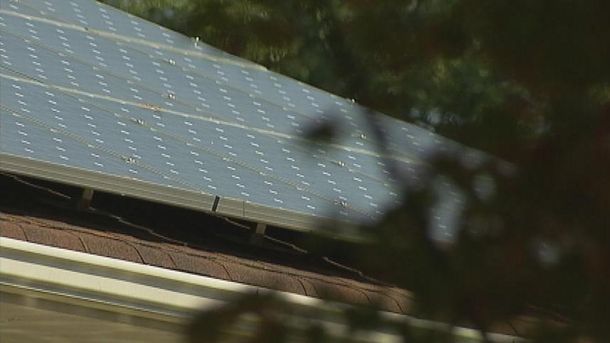
Financing solar energy: Georgia’s special problem

In most states, financing solar energy is largely a matter of learning
all the local ropes.
In Georgia, there’s a bigger problem.

Michael Mendelsohn
wrote for RMI 5 December 2012,

How Do We Lower Solar Installation Costs and Open the Market to Securitized Portfolios: Standardize and Harmonize
,

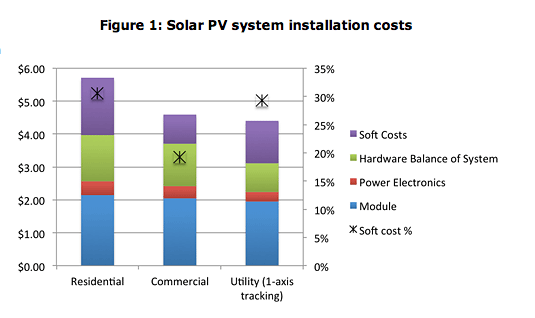
Soft costs can be pretty tough. The cost of solar installations can
be generally separated into “hard” costs — representing
primary components such as modules, racking, inverters — and
soft costs including legal, permitting, and financing. While the
former group — particularly modules — have dropped
dramatically over the last several years, the latter have not.
According to a recent NREL analysis, these costs represent roughly
30% of both residential and utility installations (slightly less for
commercial-host systems). See Figure 1.


In fact, soft costs are so critical to the overall success of solar
adoption, their reduction is a primary focus of the Department of
Energy’s SunShot Initiative to make solar energy cost-competitive.
In order to reduce the cost of financing, NREL recently completed
and continues to work on various efforts to tap public capital
markets and enable other vehicles that securitize project
portfolios.

We’ll come back to tapping public capital markets and the like,
because that’s the key to what

Georgia Solar Utilities (GaSU) is trying to do.

But there’s a special problem in Georgia, buried in the next paragraph:

Continue reading

Videos, Solar Energy Forum @ CSC 2012-12-01


Solar Energy Forum at Center for a Sustainable Coast, Savannah, Chatham County, Georgia, 1 December 2012

Here are videos of Saturday’s

Solar Energy Forum

at the

Center for a Sustainable Coast
(CSC)
in Savannah,
with

We will probably post more later on the presentations by Paul Wolff
and Robert Green, and the ensuing questions and answers.
Meanwhile,
here’s

a video playlist

of the entire event:


Videos, Solar Energy Forum

Solar Energy Forum, Center for a Sustainable Coast (CSC),

Videos by Gretchen Quarterman for Lowndes Area Knowledge Exchange (LAKE),

Savannah, Chatham County, Georgia, 1 December 2012.

-jsq

Citizens can video on duty police —Supreme Court

The Supreme Court has declined to review a Seventh Circuit Court of Appeals
decision that struck down an Illinois law prohibiting audio recordings
without permission,
echoing last year’s

First Court decision that you can record police on the job.

Let’s remember it’s not just police:

“Gathering information about government officials in a form that can
readily be disseminated to others serves a cardinal First Amendment
interest in protecting and promoting

‘the free discussion of
governmental affairs.’

That means all elected or appointed or employed government officials, from
County Commissioners and City Councils down through sheriff and
police departments to the Animal Shelter.
Police are employees, not elected or appointed, so these rulings would appear
to apply to other governmental employees.

Radley Balko wrote for Huffpo 27 November 2012,

Supreme Court Inaction Boosts Right To Record Police Officers
,


The Illinois and Massachusetts laws have been used to arrest people
who attempt to record on-duty police officers and other public
officials. In one of the more notorious cases, Chicago resident
Tiawanda Moore was arrested in 2010 when she attempted to use her
cell phone to record officers in a Chicago police station.

Continue reading

How to implement trash, health, and safety?

Disposal of solid waste (trash/garbage) is a matter of

community public health and safety

and providing such service

is the responsibilty of the local governing bodies.

How should trash health and safety responsibly be implemented?


We cannot be left in a situation where residents are either “forced
to buy” service from a provider, or have no option but to burn
their trash. The government can levy a tax, but they cannot say that
residents are forbidden to buy a service from an independent provider.

Such a ruling is

  • unfriendly to those who currently own, or want to
    start

    a waste collection business in our county
    ,
  • unfriendly to the
    residents who are counting on the government to follow
    the state-legislated goals to

    “protect the health
    safety, and well-being of its citizens and to protect
    and enhance the quality of its environment” ,

  • unfriendly to the environment as trash ends up on the side of the
    road or polluting the air by being burned and leaves us to
    face a new problem on a different day.

Residents in the unincorporated areas of the county who want curb side
collection, for the most part, already purchase it. Those of us using

the collection centers
do so because it is our preference.

The county
should (in my opinion) create a special tax district for waste disposal
(it already makes special lighting districts) and tax the residents
for the maintenance of the collection centers.

-gretchen

Who implements trash, health, and safety?

As we’ve seen, solid waste is a matter of public health, safety,
well-being, and the environment,

according to Georgia state law.

Whose responsibility is it to protect the environment
and the public health, safety, and well-being from solid waste?

Many health and safety issues are handled through the health department,

Diagram of the waste hierarchy


including the Georgia Department of Public Health,

and the

South Health District

(Ben Hill, Berrien, Brooks, Cook, Echols, Irwin, Lanier, Lowndes, Tift and Turner Counties).
Particularly, water quality (septic tanks, well water), food safety,
cleanliness of hotels, motels, restaurants, swimming pools and so on
are the responsibility of the local health department,
such as the

Lowndes County Health Department.

However, disposal of solid waste (trash/garbage) is handled by
the local municipality or governmental body (county).

The EPA has a variety of documents available about solid waste.

So does the state EPD, as enabled through Georgia Legislation:

Existing Rules and Corresponding Laws
.

So, where does this leave us?
See next post.

-gretchen

Trash, health, and safety

Solid waste is a health and safety issue,
according to Georgia law.

According to the
Georgia Department of Natural Resources
copy of the

GEORGIA COMPREHENSIVE SOLID WASTE MANAGEMENT ACT OF 1990
AS AMENDED THROUGH 2004
,

O.C.G.A. § 12-8-21. Declaration of policy; legislative intent


a) It is declared to be the policy of the State of Georgia, in
furtherance of

its responsibility to protect the

public health, safety, and well-being

of its citizens and to protect and enhance
the

quality of its environment,
to institute and maintain a
comprehensive state-wide program for solid waste management and

to prevent and abate litter,
so as to assure that solid waste does not
adversely affect the

health, safety, and well-being
of the public
and that solid waste facilities, whether publicly or privately
owned, do not degrade the quality of the environment

by reason of
their location, design, method of operation, or other means and
which, to the extent feasible and practical, makes maximum utilization
of the resources contained in solid waste.


Emphasis added on the parts about
health, safety, well-being, and the environment.
Those are the goals of this legislation, stated twice in the first paragraph.
Georgia being a home rule state, the implementation of these goals
is now left to the local governing bodies.
More on that next.

-gretchen

U.S. has “moral responsibility to reduce the flow of [drug] money towards Mexico” —Felipe Calderón, President of Mexico

The Mexican president who put the Mexican Army onto the streets
to stop the drug war, resulting in 40,000+ deaths, many
collateral damage like

the son of writer Carlos Fuentes
,
the Mexican president who

a year ago started hinting that that didn’t work and something else should be done
,
is already following the path of his predecessors
Ernesto Zedillo and

Vicente Fox,
in calling for the U.S.
to end the war on drugs.
Georgia can’t afford to continue spending a billion dollars a year to lock people up, especially while cutting education.
If we listen to the Mexican presidents, we can save much of that billion and spend much of the savings on education.

T.W. wrote for the Economist 23 November 2012,

“Impossible” to end drug trade, says Calderón,

In an interview recorded last month for this week’s special report

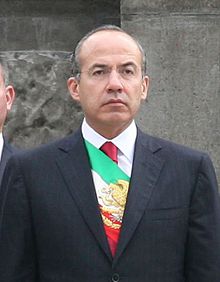
Felipe Calderon, President of Mexico

on Mexico, Mr Calderón said: “Are there still drugs in Juárez [a
violent northern border city]? Well of course, but it has never been
the objective…of the public-security strategy to end something
that it is impossible to end, namely the consumption of drugs or
their trafficking…

“[E]ither the United States and its society, its government and its
congress decide to drastically reduce their consumption of drugs, or
if they are not going to reduce it they at least have the moral
responsibility to reduce the flow of money towards Mexico, which
goes into the hands of criminals. They have to explore even market
mechanisms to see if that can allow the flow of money to reduce.

“If they want to take all the drugs they want, as far as I’m
concerned let them take them. I don’t agree with it but it’s their
decision, as consumers and as a society. What I do not accept is
that they continue passing their money to the hands of killers.”

The Economist article spelled out what Calderón still doesn’t quite say:

Continue reading

TV station gets it: Territoriality Law prevents solar in Georgia

Local TV is getting it about solar in Georgia,
and what’s holding it back!

WSBTV.com posted 20 November 2012,

Georgia law keeps power customers from saving with solar energy


Supporters say it could save some people big on their electric
bills, but leasing solar panels in Georgia isn’t worth it because of
a current state law.

Critics believe it gives Georgia Power a solar monopoly and prevents
consumers from saving money.

Jeff Sain installed solar panels on his Dunwoody house because his
electric bill was nearly $600 a month in the summer. With solar his
Georgia Power bill plummeted.

“The first month’s power bill, I saved 91 percent on my power bill,”
Sain said.

Purchasing solar panels required a big outlay of cash. Sain spent
$32,000.

But companies in 14 states now offer systems that can be leased with
no upfront costs. However, you get less in savings because you have
split it with the leasing company providing the equipment.

“Typical savings if you lease panels as people do in other states
will be 30 to 50 percent of your power bill,” Consumer advocate
Clark Howard said.

The main law that prevents us getting financing for solar
like in

Continue reading

GaSU wins at GA PSC, but will GaSU help all of us win in the legislature?

GA PSC Stan Wise’s 2009 nuclear CWIP lobbying points eerily matched Southern Company’s,
but suddenly he’s got separation-of-powers religion about Georgia Solar Utilities (GaSU).
The PSC recommended GaSU’s utility bid anyway.
When the legislature takes that up in a month or so, will GaSU CEO Robert Green,
unlike SO or Georgia Power or Stan Wise, help the rest of us little people
fix the 1973 Territoriality law so we can sell our solar electricity
on a free market?

Dave Williams wrote for the Atlanta Business Chronicle yesterday,

Georgia Public Service Commission moves ahead on solar energy
,


Georgia Power logo

The Georgia Public Service Commission approved a plan by Georgia
Power Co. Tuesday to acquire an additional 210 megawatts of solar
generating capacity, more than tripling its investment in solar
energy.


GA PSC PR about 20 November 2012 decisions

But a sharply divided PSC also gave a potential competitor to
Georgia Power its blessing to appeal to the General Assembly to
amend a 39-year-old law that gives the Atlanta-based utility the
exclusive right to continue serving existing customers.

Under Georgia Power’s Advanced Solar Initiative, the company will
buy solar power produced by both large “utility-scale”
solar farms and from smaller projects operated by residential and
commercial property owners.

Right, that’s actually

only 10 Megawatts from “smaller projects”,

maintaining Georgia Power’s monopoly while throwing throwing
a bone to the rest of us.

While the PSC supported Georgia Power’s plan unanimously, a
subsequent motion by McDonald encouraging other solar utilities
interested in serving Georgia to pursue their plans with the
legislature passed by the narrow margin of 3-2.

Georgia Solar Utilities Inc., a company launched in Macon, Ga.,
earlier this year, filed an application with the PSC in September
for authority to generate solar energy in Georgia on a utility
scale.

The two Nay votes were from the two recently-reelected PSC members,
apparently now thoroughly in the pocket of the incumbent utilities.
Here’s one of them now:

Continue reading