Tag Archives: Alice Walton

Most corrupt state sells public education to Waltons


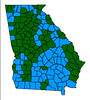
Amendment 1 results

And it wasn’t even close:

2,152,091 to 1,526,959 (58.50% to 41.50%).

Lowndes County went for the Atlanta-power-grab “charter school” amendment
18,606 to 17,619 (51.36% to 48.64%).
The voters of Georgia just sold their children’s educational
birthright for a mess of slick brochures.

Amendment 2 results

The

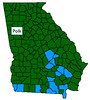
other ALEC amendment, on multi-year contracts,

passed by

an even wider margin:

2,241,621 to 1,275,809 (63.73% to 36.27%).
Lowndes went for it 20,205 to 14,414 (58.36% to 41.64%).

Apparently Georgia voters will vote for any old thing that’s
submitted to them as a constitutional amendment.
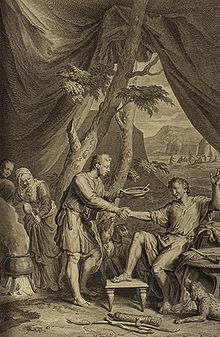

Esau sells his birthright for a mess of pottage

Congratulations, ALEC and Wal-Mart!
You’ve demonstrated money talks and

slick brochures sell.

This was even better for you than

ALEC’s so-called anti-immigration law
which the legislature passed
and

that actually devastates Georgia agriculture
for
the profit of private prison company CCA.
This time you got the people of Georgia to vote directly against
their own best interests to the benefit of school privatizing
corporations in Virginia and Michigan!

Boo Georgia voters.
You’ve just given

the most corrupt legislature in the country

the ability

to commit you the taxpayers to contracts for decades.

And you’ve just traded your children’s educational birthright
for a mess of slick paper.

-jsq
Wall Street’s next big thing: privatizing public education

What’s really behind the charter school amendment referendum?
Corporate greed.

Jeff Faux wrote for AlterNet 15 October 2012,

Education Profiteering: Wall Street’s Next Big Thing?
Wall Street’s involvement in the charter school movement is presented as an act of philanthropy, but it’s really about greed.

He reviews some of

the evidence that charter schools don’t improve education
,
especially when forced on states.
Then he gets into why so much money is flowing into charter schools
anyway.

Education privatization would not, per se, create a net new stimulus

Wall Street greed

for the economy. But by diverting large existing flows of money from
the public to the private sector it would create new profit-making
ventures that could be capitalized and transformed into stocks,
derivatives and leveraged securities. The pot has been sweetened by
a 39 percent federal tax credit for financing charter school
construction that can double an investor’s return in seven years.
The prospect of new speculative opportunities could well recharge
the animal spirits upon which Wall Street depends.

Some “liberal” privatization promoters claim that charter schools
should not be considered private. But that’s an argument the
management companies that run the schools only use when they are
asking for more government funding. At the same time they argue in
courts and to legislatures that as private enterprises they should
not be subject to government audits, labor laws and other
restrictions.

These companies rent, buy, and sell buildings; make contracts for
consulting, accounting and legal services, food concessions, and
transportation; and pay their managers far more than public school
principals earn. In cases where city governments have given land to
charter schools, for profit real estate companies have ended up
owning the subsidized land and buildings. In states where charter
schools are required to be nonprofit, profit-making companies can
still set them up and then organize a board of neighborhood
residents who will give them the right to manage the school with
little or no interference.

In 2008 Dennis Bakke, CEO of Imagine Schools, a private company that
managed 71 schools in eleven states, sent an email to the firm’s
senior staff. It reminded his managers not to give school boards the
“misconception” that they were “responsible for making decisions
about budget matters, school policies, hiring of the principal, and
dozens of other matters.” The memo suggested that the community
board members be required to sign undated letters of resignation.
“It is our school, our money, and our risk,” he wrote, “not theirs.”

Yet in Georgia it’s our tax money they want to use to fund those
“public” private charter schools.
That’s the “large existing flows of money” they want to divert
into their profiteering pockets.
No wonder ALEC is so big into charter schools!
And look who else:

Continue reading

Score high on ALEC policy, score low on education


According to ALEC’s own website, states that score high
on ALEC’s education policies score low on education.
Remember,

ALEC is behind the Georgia charter school amendment

on the November ballot.
If you didn’t believe

Stanford Credo’s study
that showed
adding a charter school authorizer, as that amendment would do,
reduces academic learning,
how about ALEC’s own data?

Bill Simon write for The Political Vine today,

Charter Schools and ALEC: The Facts ALEC Doesn’t Want You To Know,

If you take the state performance rankings and match them up to each
state’s education policy rankings, you come-up with an entirely
different picture of how little (if any at all) a state’s degree of
conservative education “policy” translates into actual
education performance.

I did this (
PDF copy available here
)
and this is what the 2012 Top 10 states in Performance looks like,
and their corresponding Policy ranks:

2012 Performance/Policy Rank


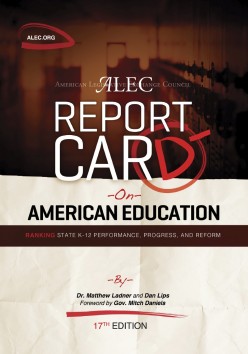
ALEC's 17th Report Card on American Education

  1. Massachusetts / B-
  2. Vermont / D+
  3. New Jersey / B-
  4. Colorado / B
  5. Pennsylvania / C+
  6. Rhode Island / C
  7. North Carolina / C
  8. Kansas / C-
  9. New Hampshire / C+
  10. New York / C-

The numbers are ALEC’s performance rankings,
and the letters are ALEC’s policy grades.

Continue reading

K12 CEO Packard: $5M in 2011, up 36%

Does your school superintendent get paid $5 million a year?
Ronald J. Packard, CEO of K12 Inc., the second biggest
donor to the pro-charter school amendment campaign, does.
Is that where you want your tax dollars to go?

According to Bloomberg Businessweek,

Executive Profile,
Ronald J. Packard CFA,
Founder, Chief Executive Officer and Director, K12, Inc.


K12 CEO Packard made $551,539 in salary in 2011,
but was awarded other compensation totaling $5,002,933.
Which is even richer than the

approximately $3,266,387 total compensation
private prison company CCA’s CEO Damon Hininger got in 2010
,
which, according to Bloomberg Businessweek, apparently only went up to

3,696,798 in 2011
.

According to
Emma Brown for the Washington Post 9 December 2011,

K12 Inc. chief executive Ron Packard paid $5 million compensation package in 2011
,

That’s nearly twice the $2.67 million Packard earned in 2010. It
includes $551,000 in cash, $4.2 million in stock awards and about
$290,000 in other compensation.

Packard’s pay reflects a new employment agreement negotiated in
September 2010 and good until 2014. The company had $522 million in
revenue in 2011, up nearly 36 percent percent from the year before.

“We determined that these awards were necessary and
appropriate to retain Mr. Packard as our Chief Executive Officer and
in recognition of Mr. Packard’s leadership and performance over the
term of his employment with the Company,” the filing said.

Do we want our tax revenue going to retain K12 Inc.’s CEO?
What if we retain our local schools instead?
After all, it’s dubious that charter schools would be any better

Continue reading

Walton Family Foundation granted $1.05 million towards GA charter schools in 2011

The total amount of Walton family affiliate money backing the Georgia
charter school referendum is far larger than

Alice Walton’s $250,000.

In the Walton Family Foundation’s list of

2011 Education Reform Grants
,
there are two Georgia organizations:


Georgia Charter Schools Association Inc. 700,000
Georgia Family Education and Research Council, Inc. 350,000

GCSA has

made the news
quite a bit lately,


and its name makes its purpose pretty clear.
According to

the National Association of Charter School Authorizers (NACSA),

GCSA is a NACSA member.
You remember NACSA,

the organization that Zaid Jilani
discovered was an ALEC member, and that bailed out of
ALEC two days later.

That was in May 2012, after the Georgia legislature
passed the bill putting the charter school referendum on the ballot.

Georgia Family Education and Research Council, Inc. (GFERC)
is slightly less obvious. According

Continue reading

Class action lawsuit against second largest donor to GA charter school referendum

K12 Inc. of Virginia has a class action lawsuit against it,
as well as allegations of lack of effectiveness of its courses.
K12 is the

second biggest contributor to the Georgia charter school
referendum
which would privatize Georgia’s public schools.
Shades of

CCA desperately offering 48 states to privatize their prisons!

And we know there’s a connection:

ALEC helps push both private prisons and privatization of public schools.

We didn’t fall for ALEC’s privatized prisons:
let’s not fall for ALEC’s privatized schools.

Emma Brown wrote for the Washington Post 31 January 2012,

Shareholder lawsuit accuses K12 Inc. of misleading investors
,

A shareholder in Virginia-based K12 Inc. has filed a lawsuit against

K12 Inc. CEO and Founder Ronald J. Packard, named in class action lawsuit

the virtual-schools operator in federal court, alleging that the
firm violated securities law by making false statements to investors
about students’ poor performance on standardized tests.

The class-action complaint, filed Monday in U.S. District Court in
Alexandria, also accuses K12 of boosting its enrollment and revenues
through “deceptive recruiting” practices.

Herndon-based K12 is the country’s largest operator of full-time
public virtual schools, a growing sector in which students as young
as five learn at home via computer.

The lawsuit comes after a spate of national news stories —
including in The Washington Post — raised questions about the
effectiveness of virtual schools, K12’s in particular. The firm’s
stock has since plummeted.

There’s more in the article, and in the actual

Harry T. Hawks, K12 Inc. executive vice president and chief financial officer, named in class action lawsuit


Class action suit against K12 Inc.

Named in the suit are

Ronald J. Packard
(K12 Inc’s CEO and Founder) and

Harry T. Hawks
, executive vice president and chief financial officer,
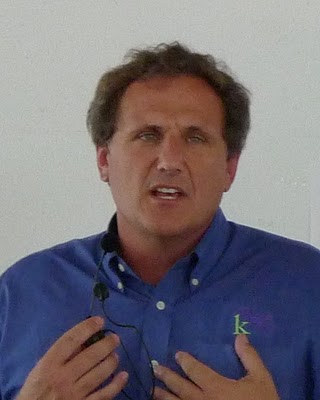
both pictured here.

-jsq

Outside money fueling charter school amendment referendum

Why does Alice Walton want, to the tune of $250,000, for Atlanta
to be able to force charter schools on local areas that don't want them?

Wayne Washington wrote for the AJC 14 September 2012,

Outside money pours into Georgia for charter amendment fight
,

Out-of-state money is fueling the campaign of a group trying to
convince Georgia voters to change the state constitution so more
charter schools can be approved.


Families for Better Public Schools has raised $486,750, campaign
disclosure forms show. About 96 percent of that money has come from
donors outside of Georgia.

Donors include Wal-Mart heiress Alice Walton, politically
well-connected law firms and for-profit companies that are operating
charter schools in Georgia.

Here's

the Georgia campaign finance report for Families for Better Public Schools,

which shows Alice Walton of Bentonville AR in for $250,000, K12 Inc. of Herndon VA in for $100,000,
Charter Schools USA of Ft. Lauderdale FL in for $50,000,
also J.C. Huizenga and National Heritage Academies, both of Grand Rapids MI,
each in for $25,000.
That's $450,000 from those five biggest donors, all out of state.

What about opposition money; where's it coming from?

A coalition of groups opposing the amendment, Vote Smart, has raised
$80,951, mostly from traditional school officials like teachers,
principals and superintendents who say more charter schools and more
state money for them would threaten the funding of already
cash-strapped traditional public schools.

So we have big out-of-state money funding demolishing our public schools,
and public school people spending some of what little money they have
defending them.
I know which side I choose.
Which side are you on?

Do we want to turn our public schools into private corporate fiefdoms?
If not, vote No on the charter school amendment in November.

-jsq