Category Archives: Economy

Score high on ALEC policy, score low on education


According to ALEC’s own website, states that score high on ALEC’s education policies score low on education. Remember, ALEC is behind the Georgia charter school amendment on the November ballot. If you didn’t believe Stanford Credo’s study that showed adding a charter school authorizer, as that amendment would do, reduces academic learning, how about ALEC’s own data?

Bill Simon write for The Political Vine today, Charter Schools and ALEC: The Facts ALEC Doesn’t Want You To Know,

If you take the state performance rankings and match them up to each state’s education policy rankings, you come-up with an entirely different picture of how little (if any at all) a state’s degree of conservative education “policy” translates into actual education performance.

I did this ( PDF copy available here) and this is what the 2012 Top 10 states in Performance looks like, and their corresponding Policy ranks:

2012 Performance/Policy Rank

ALEC's 17th Report Card on American Education
  1. Massachusetts / B-
  2. Vermont / D+
  3. New Jersey / B-
  4. Colorado / B
  5. Pennsylvania / C+
  6. Rhode Island / C
  7. North Carolina / C
  8. Kansas / C-
  9. New Hampshire / C+
  10. New York / C-

The numbers are ALEC’s performance rankings, and the letters are ALEC’s policy grades.

Continue reading

GA PSC questionnaire: David Staples

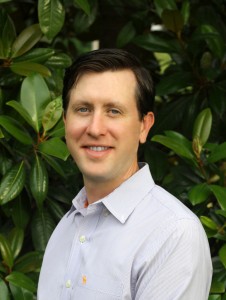
David Staples The Georgia Sierra Club sent a questionnaire to all candidates for Georgia Public Service Commission. None of the incumbents answered. The two challengers did. Here’s the one from David A. Staples for District 5. -jsq

  1. As a Candidate for Public Service Commission, what is your campaign strategy for achieving 50% +1 of the votes cast?

    [I’m omitting the answers to this question. -jsq]

  2. How should the Public Service Commission consider and weight the impacts to community health (asthma, cancer rates, etc.) and on Georgia’s environmental (water quantity, air quality etc.) when making decisions about a utility’s generation portfolio?

    Impacts to community health and the environment have to be considered very carefully. I know there are a number of different ways of viewing the situation but the explanation I’ve found that works best with Republicans in trying to get their support is that it comes down to a private property matter. The right to swing ones fist ends at the other person’s nose. Does anyone have the right to pollute the air that I breathe or the water that I drink?

    If I buy a piece of property for instance along the Savannah River or Ogeechee River, does someone upstream from me have the right to pollute the water that then flows onto my land, carrying those pollutants with it?

    Absolutely not.

Continue reading

WCTV on LCC Chair Candidates

Greg Gullberg at the Lowndes County Palace Greg Gullberg wrote for WCTV today, Lowndes County Commission Chair Candidates Polar Opposites,

The Chairman of a County Commission can have great impact on the lives of residents. And in one local county, the candidates couldn’t be more different.

She wants to make it easier to see what the Commission is doing; he worries ordinances make it too difficult for business.

Gretchen Quarterman for Lowndes County Chairwoman Bill Slaughter for Lowndes County Chairman

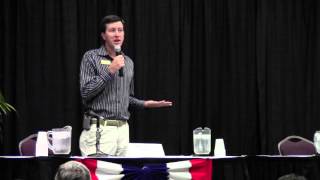
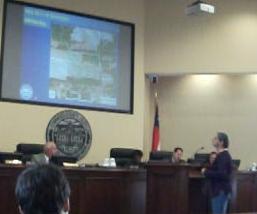
Gretchen Quarterman speaking to the Lowndes County Commission WCTV using LAKE video Here’s the WCTV video, which appears to start with outtakes from LAKE videos of Commission meetings. LAKE videos that were taken by… Gretchen Quarterman. The one of her speaking to the Commission? Camera on a tripod.

-jsq

“Great, big” SO is 1/10 Australia for solar farm deployment in Georgia

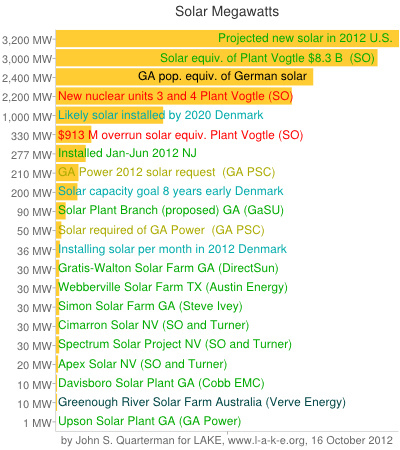
Solar Megawatts 2012-10-11 So if Southern Company is a “great, big company” similar to Australia, why did Australia just deploy a solar farm ten times the size of the biggest one SO has in Georgia?

Back in May, Southern Company (SO) CEO Thomas A. Fanning said:

From an energy standpoint, Southern Company is a little bit smaller, but similar to, the energy production profile of the nation of Australia. We are a great, big company from an energy production standpoint.

Meanwhile in Australia, Giles Parkinson wrote for Clean Technica 10 October 2012, Australia’s 1st Utility-Scale Solar Farm Now On!

At about 11am local time near the Western Australian town of Geraldton this morning, Australia’s first-utility scale solar farm was officially switched on.

It was a suitably sunny day (blighted by three million flies) and although just 10MW in size, and built courtesy of funding from the local government, a state-owned utility and by one of the wealthiest companies on the planet, it may presage a dramatic change in the way this country produces energy.

So what’s SO or Georgia Power’s biggest solar plant in Georgia? You remember, 1 MW in Upson.

OK, to be fair, that’s just Georgia Power. SO does have larger solar farms elsewhere, including

Now I know Georgia Power’s party line is that solar is only good in the U.S. southwest. But I don’t know how that explains Continue reading

4 rezonings (one big), 3 water items, and more @ VCC 2012-10-11

200 West Jane Street The item with 9 conditions, VA-2012-14, is at a rather vague location, “the southeast corner of West Brookwood Drive, North Oak Street, North Toombs Street, and West Jane Street” which presumably means 200 W Jane St, as shown in the map here. That’s directly across W. Toombs Street from 1302 N Patterson Street, which is part of VSU.

Here’s the agenda.

-jsq

AGENDA
REGULAR MEETING OF THE VALDOSTA CITY COUNCIL
5:30 PM Thursday, October 11, 2012
COUNCIL CHAMBERS, CITY HALL
Continue reading

Solar and broadband are good for the economy and for PR

When the Industrial Authority came out for solar and broadband WCTV noticed. It seems solar and broadband are good not only in themselves, but also for good PR for the community. PR that might attract the kinds of businesses the Industrial Authority is looking for.

WCTV wrote 9 September 2012, Solar Power and Broadband Internet Could Boost Local Job Growth,

The Valdosta-Lowndes County Industrial Authority has put a spot light on solar power and broadband internet. That’s according to a new analysis of regional businesses and employment. They say it will be a way to generate job growth going forward. Many in the community agree.

Valdosta Resident Mark Yates said “if they could bring those all in, it would be great for the economy and bring a lot of jobs for a lot of people in town here.”

That’s how Saginaw, Michigan, attracted that second Suniva plant away from Georgia: it has a plan for solar industry and it gets it in the news. Way better than worrying what Albany thinks, don’t you think?

By the way, Saginaw also goes for wind manufacturing jobs, and we already have one wind manufacturing business right here; more on that later.

It sure would be good if the Industrial Authority, with its 1 mil tax rate or almost $3 million a year, could succeed in attracting some jobs here:

Continue reading

Ethics Matter —David Staples for GA PSC

Received 2 October 2012 from David Staples. -jsq

One of the most frequent topics that comes up in political conversation these days is ethics. On July 31st, Georgians overwhelmingly voted that there needs to be a cap on the amount of gifts our elected officials are allowed to accept. However, there are many of us who believe that even a $100 per day cap is still too much—that perhaps $0 is a better cap. After all, looking at the Georgia Government Transparency and Campaign Finance Commission website, one can see that while the $150 rounds of golf and several hundred dollar dinners for the official and their spouse may be eliminated, there are many more of the smaller lunches, dinners, and various other goodies that would still be allowed. Would you be surprised to hear that some Public Service Commissioners walk out of their office or a hearing at lunch time and say “I’m hungry, where’s a lobbyist”?

However, there is one completely legal process by which we can eliminate all gifts

Continue reading

What Georgia Power is afraid of: GaSU and Dr. Smith; and you

So what is Georgia Power afraid of that made their CEO Paul Bowers double down on old-style baseload? Competition, that’s what! What could be more scary in the power-monopoly state of the 1973 Territorial Electric Service Act?

GaSU sun On one side, Georgia Power faces GaSU and its 80 or 90 MW solar plant proposal. Walter C. Jones wrote for OnlineAthens 24 September 2012, Proposed solar company could stir up Georgia’s utility structure,

A proposal from a start-up business promises to lower electricity rates by rebating profits to customers if given a chance to compete as Georgia Power Co.’s “mirror image.”

GaSU fb profile image To proceed with its long-range plan of developing 2 gigawatts of solar power, the start-up, Georgia Solar Utilities Inc., wants to start by building an 80-megawatt “solar farm” near Milledgeville as soon as it gets a green light from the Georgia Public Service Commission. GaSU filed its request last week, and as of Monday, it’s still too fresh for public evaluation.

So radical is the proposal that spokespersons for Georgia Power and the Georgia Solar Energy Association said they still were evaluating it and could not comment.

Groups that normally advocate for customers also are staying quiet.

GaSU executives recognize such a big change won’t come easily.

Continue reading

Georgia Power’s Bowers pushes solar misinformation out the next fifty years

Paul Bowers, CEO of Georgia Power, doubled down on baseload nuclear, coal, and natural gas for the next fifty years. What’s he scared of?

Nick Coltrain wrote for OnlineAthens yesterday, Renewable push not in the cards for Ga. Power,

Georgia Power CEO Paul Bowers in Georgia Trend, November 2011 “Renewable (energy sources are) going to have a sliver,” Bowers said of fuels to create electricity. “Is it going to be 2 or 4 percent? That’s yet to be determined. Economics will drive that. But you always remember (that renewable energy is) an intermittent resource. It’s not one you can depend on 100 percent of the time.”

One time you can depend on it is hot summer days when everybody is air conditioning, which is why Roger Duncan of Austin Energy in 2003 Austin Energy flipped in one year from spouting such nonsense to deploying the most aggressive solar rooftop rebate program in the country. Austin Energy did the math and found those rebates would cost about the same as a coal plant and would generate as much energy. And when it is needed most, unlike the fossilized baseload grid, which left millions without power in the U.S. in June and hundreds of millions without power in India in July.

Bowers knows better than the nonsense he just spouted; as recently as November 2011 he told Georgia Trend,

Continue reading

Southern Company’s three-legged nuclear regulatory-capture stool

The failed EDF nuke project at Calvert Cliffs in Maryland makes it clearer why Southern Company (SO) was the first company to get a nuclear permit in 30 years: it was the only one big enough and monopolistic enough to pull it off. Even then it’s such a bet-the-farm risk that even “great, big company” SO only dared to deploy its great big huge scale equipment with the regulatory capture triple-whammy of a stealth tax on Georgia Power bills, PSC approval of cost overruns, and an $8.33 billion federal loan guarantee:

  1. a legislated stealth tax in the form of a rate hike on Georgia Power customers for power they won’t get for years if ever. If you’re a Georgia Power customer, look on your bill for Nuclear Construct Cost Recovery Rider. You’ll find it adds about 5% on top of your Current Service Subtotal. Georgia is one of only a handful of states where such a Construction Work in Progress (CWIP) charge is legal thanks to our regulatory-captured legislature. Doubling down on bad energy bets, Southern Company is also trying to use CWIP to build a coal plant in Mississippi.
  2. A captive Public Service Commission that rubber-stamps costs for Plant Vogtle. In case there was any doubt as to the PSC’s role in legitimizing those new nukes, the very next day Fitch reaffirmed Southern Company’s bond ratings.

    Southern Company’s regulated utility subsidiaries derive predictable cash flows from low-risk utility businesses, enjoy relatively favorable regulatory framework in their service territories, and exhibit limited commodity price risks due to the ability to recover fuel and purchased power through separate cost trackers.

    Translation: Georgia Power customers subsidize SO’s bonds and SO shareholders’ stock dividends. The PSC also approved cost overruns being passed on to Georgia Power customers, and those nukes are already over $400 or $900 million, depending on who you ask. What do you expect when 4 out of 5 Public Service Commissioners apparently took 70% of their campaign contributions from utilities they regulate or their employees or their law firms, and the fifth commissioner took about 20% from such sources? Hm, there’s an election going on right now!
  3. An $8.33 billion federal loan guarantee. Even that’s not good enough for SO and Georgia Power: SO is asking for less down payment.

And what if even one of that three-legged regulatory capture stool’s legs went away? Continue reading