U.S. drug war afflicts Latin America and rebounds on U.S.

The war on drugs causes violence, poverty, and illiteracy in Latin America that drives illegal immigration into the U.S., for the profit of Monsanto, military contractors, and private prison companies. Does that seem right to you?

Neal Peirce wrote a syndicated column 22 May 2011, Misguided U.S. drug policies afflict Mexico, Central America:

The war on drugs in Mexico, partially funded by hundreds of millions of dollars in U.S. government assistance, has not only failed to curb the trade but intensified horrific violence, corruption and human rights abuses, writes Neal Peirce.

For most Americans, the recent news of popular demonstrations in Mexico was probably a small diversion from the daily tide of bloody global reports from such faraway hot spots as Pakistan, Syria, Libya, Afghanistan and Bahrain.

Why worry, most of us likely concluded, if thousands of Mexicans are marching in the streets, protesting the horrific violence and high death toll in their nation’s raging drug war? Isn’t that their problem?

It’s true, the news reports focus less on the American role, more on growing anger with the government of President Felipe Calderón and the meager returns from the massive police and military crackdown on the drug trade he inaugurated in 2006.

Since then, more than 37,000 Mexicans have been murdered, often tortured and brutalized before their deaths, as cartels battle for control of drug smuggling routes and brazenly assassinate anyone, official or average citizen, they think is in their way.

The hard lesson is that the war on drug dealers, decreed by Calderón and partially funded by hundreds of millions of dollars in U.S. government assistance, has not only failed to curb the trade but intensified horrific violence, corruption and human-rights abuses.

So what can be done? Continue reading

VSU study and videos of Economic Summit on VLCoC website

The Chamber has put videos of its Economic Summit along with the VSU report it commissioned up on its website. The videos are on vimeo, because they’re a tad lengthy. However, they are conveniently linked in by subject.

Here’s a quote from Chamber president Myrna Ballard:

Particularly our average weekly wage rates, which we started becoming very concerned about around 2004. My first human inclination was to go into denial. I spent several months deciding whether I should even mention this in our community or not. But the bottom line on it is, when you have a challenge, when you have a problem, you can’t fix it until you come to grips with the fact that you do have an issue that you need to deal with.
There’s part of the problem around here: nobody wants to talk about problems. That needs to change.

However, I don’t like her next point quite as much, which was that they already have a plan and were presenting it. That’s part of the reason people don’t want to speak up about problems: because so often nobody is listening.

She did go on about Opportunity Central, though. And the Chamber did put up videos of the whole thing on the web. Bravo, Chamber and ReKasa!

-jsq

PS: Rekasa told me they were going to do that, and Jim Parker noted that they had done it.

Southern Company “bullish” on solar

Colleen Kiernan, director of the Georgia chapter of the Sierra Club, wrote in the Atlanta Business Chronicle 22 May 2011, Wind energy a viable option for Southern Co.’s portfolio:
Two years ago, Southern Co. claimed “Renewable energy sources like wind and solar are not really an option for us in the Southeast.”

Now the new CEO, Thomas Fanning, says he’s “bullish” on solar. While the new attitude on solar is refreshing,

I’ve seen this before. AustinEnergy went in one year from solar isn’t an option to Continue reading

Trash and biomass —Dr. Noll

This comment by Dr. Noll came in today on Got trash? Need disposal? Good luck. I ran across the picture at the same time. -jsq
There are some interesting parallels/similarities in regard to the discussion of trash and biomass.

There is no doubt mankind produces trash, as there is no doubt that we need energy. What we keep forgetting, though, is an honest reflection on how we can be less “waste-ful”, both in terms of energy and trash.

Thus, instead of reducing the amount of trash we create by Continue reading

A radical plan to stop many police deaths: legalize drugs

Retired State Police Major Neill Franklin, Executive Director of Law Enforcement Against Prohibition (LEAP), told Judge Napolitano:
“Prohibition didn’t work in the past, and it’s not working today”.

Franklin said LEAP now represents 50,000 members worldwide.

Few issues unite people across the political sprectrum like this one, from the NAACP to Grover Norquist.

We don’t need a private prison in Lowndes County to lock up more people. We need fewer people in prison so we can afford to educate people.

-jsq

Got trash? Need disposal? Good luck.

So, as David Rodock reported this morning in the VDT solid waste management was a discussion topic for Lowndes County Commissioners, even though it wasn’t on yesterday’s work session agenda.

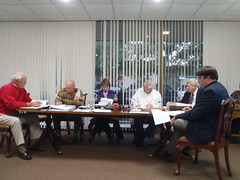
Interesting that a meeting was held after the work session. I was at the work session, camera in hand, and you can see what transpired there with talk of the jail , the possibility of Sunday alcohol package sales, oh and the animal shelter all during the County Manager’s Reports.

Nothing has been said (in public) about solid waste disposal since the public meetings where the pubic was told by Chairman Rod Casey and County Manager Pritchard that the county staff had “examined every option” and there was nothing that the public could possibly suggest that hadn’t already been considered.

The proposed plan (VDT Article August 29, 2008 Lowndes County’s proposed solid waste plan in effect Jan 1) was basically curbside collection (where no vendor could meet the proposed price cap suggested by the county) and what we ended up with was pay for drop off permits (VDT Article May 13, 2009 Solid waste disposal permits now available).

Joe Pritchard remembers those meetings like this (Update 25 Sept 2013 to add reference, “Commissioners want Lowndes out of the trash business” by David Rodock in the VDT 24 May 2011):

“I went through eight public meetings, better described as floggings, where the public just vented every ounce of frustration they ever had relating to solid waste over that time period,” said Joe Pritchard, county manager. “That was not a pleasant process. Yes, we need to come up with a way of notifying the public, but I’m here to tell you, that public meetings is not it.”

So, the problem (disposing of garbage costs money) still exists and the county has known that for years. Yet, here we are on the cusp of a crisis again and Commissioner Raines says

“My mind’s made up and I’m willing to call an emergency meeting tonight if we need to”

Why hasn’t the county been soliciting input during these two years that they knew the system was out of balance? Why must everything be a crisis?

-Gretchen

Redistricting meeting tonight, and videos so far

Remember the redistricing meeting tonight, 5-7PM Tuesday 24 May 2011 in the Brooks Hall Conference Center of Wiregrass Georgia Technical College.

Videos of all the redistricting meetings are going up on legis.ga.gov shortly after they are taken. The one from Savannah is up now.

Those are the videos taken by the reapportionment committee itself. Any videos LAKE takes will go on YouTube as usual.

-jsq

PS: Location of the videos so far owed to RJ Hadley.

Why are these reports not on the desk of the sheriff? —Jane Osborn

This comment from Jane Osborn came in last night on County Animal Shelter Issues. A good place to ask such questions of public officials might be at this evening’s County Commission meeting, 5:30 PM, 327 N. Ashley Street. Sheriff Chris Prine is often in attendance. -jsq
Abuse of an animal is a criminal offense. The GA Dept. of Agriculture is a regulatory agency able only to issue fines, not pursue criminal investigations. Why are these reports not on the desk of the sheriff of Lowndes County for criminal investigation? Dismissing the allegations because the people whose testimony was taken might be biased does no service to the current or future animals that will pass through the shelter.

Reduce prison population —Supreme Court to California

Will Georgia keep packing them into prisons until this happens?

Don Thompson wrote for AP 23 May 2011, High court to Calif: Cut prison inmates by 33,000:

The U.S. Supreme Court ruled Monday that California must drastically reduce its prison population to relieve severe overcrowding that has exposed inmates to increased violence, disease and death.

We don’t need a private prison in Lowndes County. Spend that tax money on education instead.

-gretchen

County Animal Shelter Issues —Joe Pritchard @ LCC Work Session 23 May 2011

In his County Manager’s report at the work session this morning, Joe Pritchard reported on:
Issues that I think you’ve heard about… animal shelter.
Presumably the issues reported by David Rodock in the 15 May 2011 Valdosta Daily Times Animal shelter probed Use of drugs investigated; employees speak out and by Gabrielle Sarann for WCTV on 19 May 2011 Lowndes County Animal Shelter Probed: The Georgia Department of Agriculture is keeping an eye on an area animal shelter and has cited it for several violations
“I’ve seen a lot of the animals come in the shelter and not got vet care and sometimes that comes in the form of euthanasia,” says Susan Leavens, an animal control officer for Lowndes County.

This led several Lowndes County Animal Shelter employees to file a complaint with the Georgia Department of Agriculture.

It launched an investigation citing the facility for not providing humane care.

Joe Pritchard continued in his report:

August of 2010 the Department of Agriculture called me and asked for a meeting about issues of concern. They expressed those issues centered around maintenance of records … what was classified as humane treatment.
Mr. Pritchard referred to “specific castration of a pot-bellied pig”. He didn’t say whether he considered that inhumane treatment; he merely discussed it after referring to things “classified as humane treatment”.

He continued: Continue reading