Category Archives: Politics

Spectra to answer questions about pipeline @ LCC 2013-12-09

Received yesterday. Good first step. Will the Commission also have Spectra speak at the Regular Session, like they did ADS back in February? Will it make that a public hearing?
Update 11:30 AM: Pipeline meeting set: Commissioner gathers opposing views by Matthew Woody, front page of the VDT this morning. -jsq

From: Demarcus Marshall <marshall at lowndescounty.com>
Date: Friday, October 25, 2013 7:51 AM
To: Tim Bland
Cc: Matthew Woody
Subject: Sabal Trail Pipeline

Tim and Residents along the Proposed Sabal Trail Pipeline,

Brian Fahrenthold of Sabal Trail Pipeline contacted me yesterday and requested an audience with the Lowndes County Commissioners. I have submitted to the chairman a slot for him to address the commissioners at our December 09, 2013 work session. I am writing you to ask Continue reading

WCTV on the pipeline

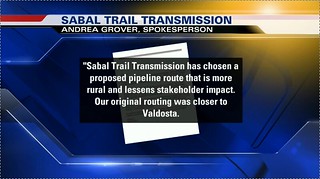
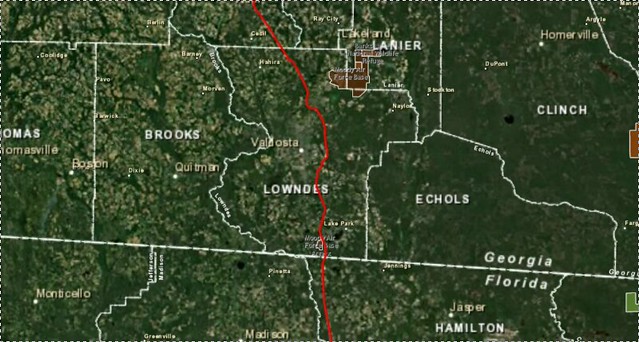
Spectra said “more rural” “lessens stakeholder impact”. What do you think about that, rural landowners whose land Spectra wants? County Chairman Bill Slaughter said the most positive thing he’s said so far, “we’re going to be looking out for the citizens of Lowndes County”, about this natural gas pipeline potentially ripping a 100 foot right of way through this county and many others in Georgia, Florida, and Alabama for the benefit of Florida Power and Light. And Valdosta, you’re not for sure out of the pipeline path: remember FERC could choose that Option B through Valdosta that is Spectra’s alternate route.

Option B by WCTV

James Buechele wrote for WCTV yesterday, Pipeline Would Cut Through Florida & Georgia, Continue reading

Pipeline complaints heard at Lowndes County Commission @ LCC 2013-10-22

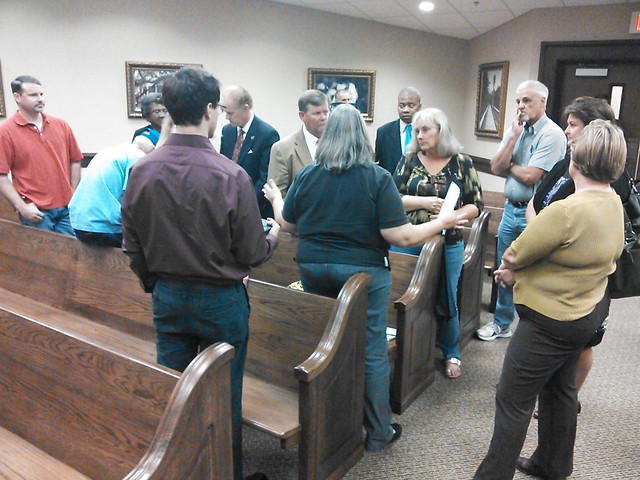
You don’t see this every day. After several citizens spoke in the Commission meeting against the proposed Sabal Trail pipeline and asked for the Lowndes County Commission to help them, four Commissioners stayed afterwards to listen to citizens:

Four Commissioners listening to citizens
L-R: Tim Bland, a citizen who spoke in the meeting, Joyce Evans (District 1), Matthew Woody (VDT), John Page (District 4), Bill Slaughter (Chairman), Carol Singletary, Demarcus Marshall (District 5), and other citizens.
Pictures by John S. Quarterman for Lowndes Area Knowledge Exchange (LAKE),
Valdosta, Lowndes County, Georgia, 22 October 2013.

Richard Raines (District 2) left quickly, saying he didn’t feel well.

Crawford Powell (District 3) spent the same time talking to County Engineer Mike Fletcher (who was at the Spectra meeting a week ago) about what could be done. There are things the county can ask for, and maybe get, that individual citizens cannot so easily accomplish.

Video of the Commission meeting will follow, including the citizens speaking.

-jsq

Videos, AAUW Candidates’ Forum @ AAUW 2013-10-15

Water was a popular topic, as you can see in these videos of the Candidates’s Forum by AAUW. Same location (VSU Continuing Education Building) as the one Chamber held, but this time the audience got to ask questions. Yes, Virginia, they do all live in their districts, and some of them have widely divergent views about what cities or school boards should do.

Local AAUW President Diane Holliman gave a welcome, and then Dr. Luke Fowler moderated. Here’s the list of qualified candidates. Here’s Matthew Woody’s writeup in the VDT.

Valdosta City Council District 2

John Hogan and Calvin Graham Sr. were present; Sandra J. Tooley was not.

John Hogan pointed out that a road issue could really be a drainage issue, so it’s necessary to look at context.

Calvin Graham Sr. said he was retired military, lived in the district, and had been spending a lot of time volunteering. He indicated the Continue reading

Fossil Free Valdosta

Fossil Free Valdosta, a facebook page just launched by members of S.A.V.E. (Students Against Violating the Environment), under VSU’s new solar canopy:

A student campaign calling on Valdosta State University to freeze any new investments in the fossil fuel industry immediately and divest within the next five years.

You can help divestment by signing their petition. That will help VSU stop wasting investments on fossil fuels while solar stocks skyrocket. And that will help undermine the political power of the fossil fuel industry. After all, all our investments are political, and there’s nothing neutral about investing in climate wreckage.

-jsq

Solar vs. fossil fuel stocks

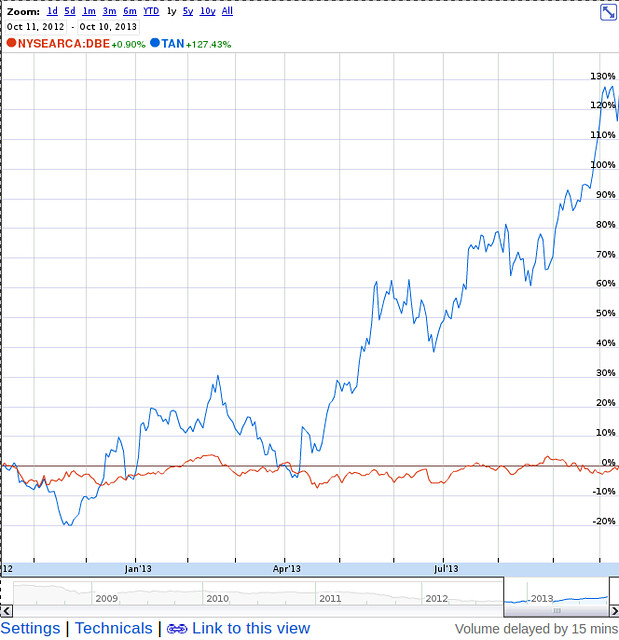
Should Harvard President Drew Faust worry that “Significantly constraining investment options risks significantly constraining investment returns”? Actually, if Harvard has been wasting investments in oil and gas for the past year, its endowment has lost a bundle. Ditto VSU.

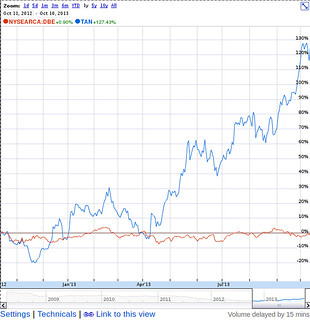
Let’s compare stock performance of Guggenheim Solar ETF (NYSE:TAN) which invests in solar stocks with the PowerShares DB Energy Fund (NYSEARCA:DBE), which invests in oil and natural gas companies. Yep, that’s 120% for TAN and 0% for DBE:

TAN solar v DBE oil and gas 1 year

Sure, if you go back farther, solar stocks continued to drop after 2009 until this year: Continue reading

Our investments are political –Divest Harvard to Drew Faust

Divest Harvard summed it up:

Our investments ARE political.

And that’s just as true at VSU.

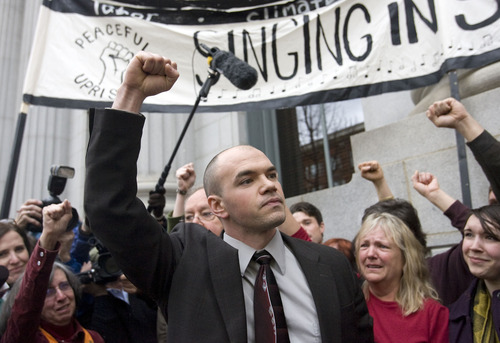
Not even Tim DeChristopher put it more pithily than that. Samantha Caravello wrote in the Harvard Law Record 7 October 2013, Pres. Faust, There’s Nothing Neutral About Investing in Climate Wreckage, noting that Pres. Faust’s excuses were actually in response to “an invitation from undergraduates to participate in an open forum on divesting Harvard’s $32 billion endowment from the top 200 fossil fuel companies.”

President Faust warned against using the endowment in ways that would position the university as a political actor, claiming Continue reading

Divestment is about undermining the political power of the fossil fuel industry –Tim DeChristopher

Answering Harvard President Drew Faust’s excuses,

Tim DeChristopher, who went to jail for directly opposing gas and oil drilling and is now a student at Harvard Divinity School,

To seriously suggest that any research will solve the climate crisis while we continue to allow the fossil fuel industry to maintain a stranglehold on our democracy is profoundly naive.

Wen Stephenson wrote for the Nation 4 October 2013, Tim DeChristopher: There Is No ‘Neutral’ in the Climate Fight, including DeChristopher’s statement:

Drew Faust seeks a position of neutrality in a struggle where the powerful only ask that people like her remain neutral. She says that Harvard’s endowment shouldn’t take a political position, and yet it invests in an industry that spends countless millions on corrupting our political system. In a world of corporate personhood, if she doesn’t want that money to be political, she should put it under her mattress. She has clearly forgotten the words of Paolo Freire: “Washing one’s hands of the conflict between the powerful and powerless means to side with the powerful, not to remain neutral.” Or as Howard Zinn put succinctly, “You can’t be neutral on a moving train.”

She touts Continue reading

Harvard excuses for not divesting from fossil fuels

Drew Faust wants us to believe Harvard can’t figure out how to power its own campus and vehicles on renewable solar, wind, wave, and tidal energy? Come on, pull the other one!

President Faust wrote that divestment would make Harvard appear “as a political actor rather than an academic institution”, that Harvard might not make enough money, that “Universities own a very small fraction of the market capitalization of fossil fuel companies”, and that “I also find a troubling inconsistency in the notion that, as an investor, we should boycott a whole class of companies at the same time that, as individuals and as a community, we are extensively relying on those companies’ products and services for so much of what we do every day.” The first three excuses would have applied just as much back in the 1980s when Harvard finally divested from companies dealing in apartheid in South Africa, a symbolic, and yes, political action that contributed markedly to the release of Nelson Mandela, the downfall of the apartheid regime, and later the election of Nelson Mandela as president of South Africa.

Harvard President Derek Bok, 18 May 1990, in a letter to students explaining the Unversity’s September 1989 decision to divest from tobacco companies, since completed:

In reaching its decision, the corporation was motivated by a desire not to be associated as a shareholder with companies engaged in significant sales of products that create a substantial and unjustified risk of harm to other human beings.

Harvard divestment was good enough for apartheid and tobacco.

In veritas, Harvard can have just as much or more influence by divesting from fossil fuels, and that cause is even more important for the whole world. In south Georgia truth, so can Valdosta State University in its own region.

Office of the President, Harvard, 3 October 2013, Fossil Fuel Divestment Statement; I added the links and images, all directly related to Harvard.

Dear Members of the Harvard Community,

Continue reading

Divest VSU of fossil fuels –petition

The divestment movement has come to VSU, thanks to Danielle Jordan and SAVE! -jsq

Petition: Divest Valdosta State From Fossil Fuels

To: VSU Administration and VSU Board of Trustees

We are asking Valdosta State University to:

  1. Disclose information on its investments
  2. To divest its holdings from fossil fuels within 5 years
  3. Freeze any new investments in the fossil fuel industry immediately

Why is this important?

As climate change progresses, we become more aware of the hazardous consequences that manifest in relation to a warming planet. We understand that in order to combat the issue, we have to alter our daily practices. However. the lobbying power of the major fuel companies has diminished the voices and power of individuals within our political system. Subsequently, policy has been written to favor the interests of the companies benefiting from the exploitation of our environment.

We are asking Valdosta State to distance itself from this industry and pursue alternatives, knowing that if we wish to address climate change, a collaborative effort must be made. By joining this movement, we can create a more ethical campus and move in the direction of sustainability.