Monthly Archives: September 2012

Wind second only to natural gas in 2011 added capacity

Looks like Southern Company (SO) bet on the wrong horse.

David Danielson wrote for DoE 14 August 2012, A Banner Year for the U.S. Wind Industry,

The report finds total U.S. wind power capacity grew to 47,000 megawatts by the end of 2011 and has since grown to 50,000 megawatts, enough to power 12 million homes annually — as many homes as in the entire state of California. And as wind energy capacity has grown, more and more wind turbines and components like towers, blades, gears, and generators are “Made in America.” Nearly 70 percent of all of the equipment installed at U.S. wind farms last year came from domestic manufacturers, doubling from 35 percent in 2005.
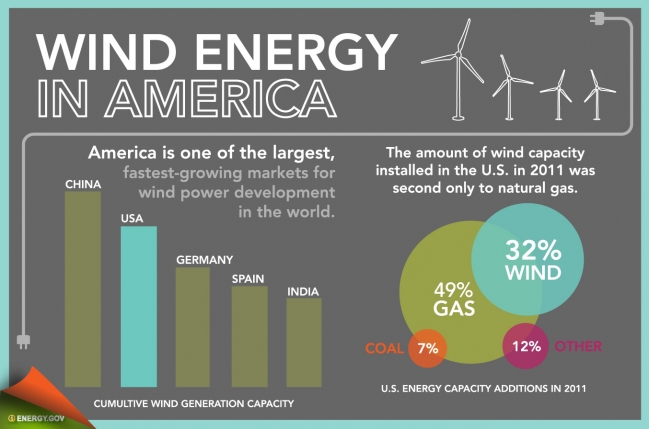
Why should SO worry? Wind only came in second in added capacity. Because of this:

In addition to strong gains in domestic wind manufacturing and capacity, the report finds that as wind technology improves, costs are coming down. Technological innovations are helping make longer and lighter wind turbine blades, while improving turbine performance and increasing the efficiency of power generation. At the same time, wind project capital and maintenance costs have continued to decline.

And wind doesn't even have Moore's Law going for it as much as solar does, plus solar is usable in more areas than wind. Add wind and solar and why do we need much natural gas? (Or any coal or nuclear?)

-jsq
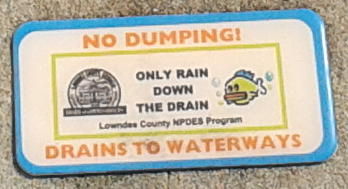
No dumping! Drains to waterways

No dumping Rainwater only Seen Saturday near old Pine Grove School. NPDES is National Pollutant Discharge Elimination System:

Water pollution degrades surface waters making them unsafe for drinking, fishing, swimming, and other activities. As authorized by the Clean Water Act, the National Pollutant Discharge Elimination System (NPDES) permit program controls water pollution by regulating point sources that discharge pollutants into waters of the United States. Point sources are discrete conveyances such as pipes or man-made ditches. Individual homes that are connected to a municipal system, use a septic system, or do not have a surface discharge do not need an NPDES permit; however, industrial, municipal, and other facilities must obtain permits if their discharges go directly to surface waters. In most cases, the NPDES permit program is administered by authorized states. Since its introduction in 1972, the NPDES permit program is responsible for significant improvements to our Nation’s water quality.

Yes, I know Valdosta also does this. I like it that in a subdivision in an unincorporated part of Lowndes County that the county does this.

-jsq

Save the Remerton Mill! —Ransom Gladwin

LTE in the VDT yesterday. -jsq

Part of my teaching load as a professor consists of supervising student teachers at schools throughout Valdosta State University’s 46-county service area. I have traveled many South Georgia back roads. What was once a charming rural landscape of unique little towns has slowly morphed into sameness. Chain-brand retail stores, fast food, and gas stations are interrupted by strip malls and storage units. The region’s character has receded in the face of nationalization and globalization. However, historical features, be they a restored courthouse or a crumbling tobacco barn, light this bleakness. They give character, history, and pride to communities. One such structure is Remerton’s Strickland Mill, now in danger of complete destruction.

As a member of the Save the Strickland Mill Committee of the Valdosta Heritage Foundation, we recently toured the mill, with the approval of the owners and accompanied by Remerton officials. The original mill is structurally solid. The 1899 structure reflects

Continue reading

Where would Georgia Solar Utilities Inc. get enough land for 80 MW solar generation?

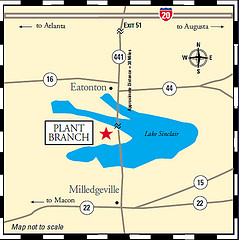
Plant Branch in Georgia Where will Georgia Solar Utilities Inc. get the 2,200 acres it says it needs to build 80 MW of solar generation? Well, it’s supposed to be “adjacent to Georgia Power Co’s coal-burning Plant Branch near Milledgeville, Ga.”, so let’s look there.

Plant Branch Location Map A brochure on Plant Branch by Georgia Power (undated, but last date mentioned is 1998, so I’m guessing 1999) says:

Located on 1,900 acres on Lake Sinclair in Putnam County between Eatonton and Milledgeville, Plant Branch was the first million-plus-kilowatt electric generating station to operate on the Georgia Power system. It is named for Harllee Branch Jr., former chairman of the board of Southern Company and president of Georgia Power. Construction on the plant began in 1961, and by the summer of 1969, Coal pouring onto pile four units were in operation. The 1,539,000 kilowatts generated by Plant Branch provides enough electrical power for 342,000 households.

And now Plant Branch will be among the first to close coal-generating units. According to Melissa Stiers for GPB News 12 July 2011, Georgia Power Closing Three Plants,

Two coal fired units at Plant Branch in Milledgeville will close in 2013. That’s a result of federal regulation tightening air pollution controls. The company has said it’s too costly to upgrade those units.

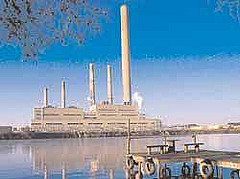
Plant Branch across Lake Sinclair As we know, Georgia Power’s parent The Southern Company claimed it was incompetent to deal with the new EPA regulations even though it had already announced the Plant Branch closures (amounting to about 770 MW), and later SO announced 4,000 MW of coal plant closures.

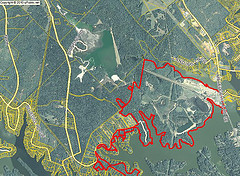
While the various news stories keep saying Plant Branch is in Milledgeville, actually, it’s on the other side of Lake Sinclair, closer to Eatonville, Plant Branch site in Putnam County qpublic map and in Putnam County. A quick glance at the Putnam County Tax Assessor database maps shows that the land parcel containing Plant Branch is 913.87 acres, much of which isn’t actually used by the plant. And Georgia Power owns a total of more than 3,000 acres adjacent to that site. So I’m guessing the 2,200 acres figure is simply around 3,100 total Georgia Power acres minus 913 acres for the present Plant Branch site.

Estimates for land needed for a megawatt of solar power generation range Continue reading

Sinkhole under the shed

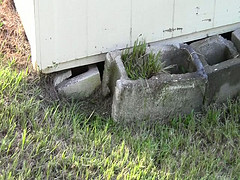
The sinkholes are not just in the garage and under the front steps, Michael McCormick walking towards his shed there’s one under Michael McCormick’s tool shed. He already jacked up the shed and put blocks under it after the ground sunk underneath it. With all these sinkholes on his lot (and more in the yard), how are they connected underground? How will they expand?

Here’s a video playlist:

Videos by Gretchen Quarterman and John S. Quarterman for Lowndes Area Knowledge Exchange (LAKE), Valdosta, Lowndes County, Georgia, 28 August 2012.

-jsq

Pass the Production Tax Credit for Georgia Jobs

At yesterday’s wind rally on Tybee Island, one spoke about passing the Production Tax Credit for wind jobs in Georgia.

More pictures and videos in the GA Sierra Club flickr set.

-jsq

PS: Owed to Seth Gunning.

Company to build 90 MW solar and become a utility

What to do if you can’t interest Georgia Power in building solar? Do it yourself, and do enough so you can be a utility yourself. That’s the loophole in the 1973 Electric Territorial Act that FPL and JEA use to burn coal at Plant Scherer in Georgia and export the power to Florida. Now Georgia Solar Utilities Inc. is using the loophole for a better purpose: building almost twice as much solar generation as Georgia Power’s meager 50 MW.

Georgia Solar Utilities Dave Williams wrote for the Atlanta Business Chronicle yesterday New Georgia utility pitches solar plant: A new utility is planning to build a $320 million solar power plant on 2,200 acres adjacent to Georgia Power Co’s coal-burning Plant Branch near Milledgeville, Ga.

Georgia Solar Utilities Inc. initially approached Georgia Power, a unit of Southern Co. (NYSE: SO), with a proposal to build the plant and sell it to Georgia Power through a power-purchasing agreement.

Georgia Power is retiring two coal-fired units at Plant Branch, part of a move to reduce the Atlanta-based utility’s reliance on coal.

But when Georgia Power officials declined to take part in the project last May, Georgia Solar Utilities executives decided to build the plant on their own and operate it as a new utility independent of Georgia Power.

Once cost prohibitive, solar energy has become competitive with fossil fuels because of the rising costs of coal and tighter government regulation of coal emissions, said Robert Green, founder of Georgia Solar Utilities.

“When you don’t have to buy coal or worry about environmental hangovers, it overwhelms the costs of fossil fuels, Green said Thursday after presenting the proposal to the Georgia Public Service Commission’s Energy Committee.

Some say the PSC can’t approve such a utility because of that 1973 law. I suspect that if they don’t approve this proposal, the next one will be even harder to turn down, and the next one, as they become even more competitive.

How competitive?

Continue reading