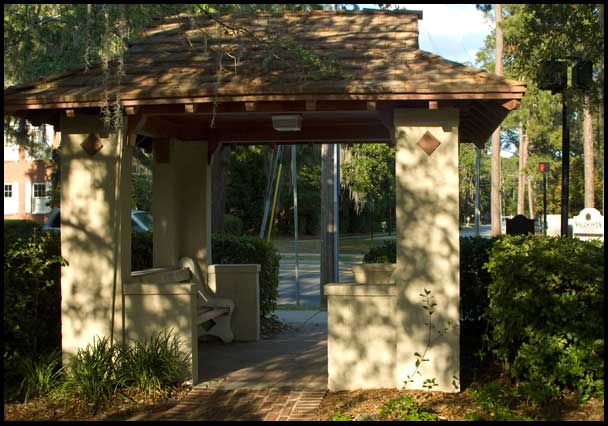
What’s that little shelter by the front gate of VSU?
It’s the last physical remnant of the Valdosta Street Railway,
an early 20th century streetcar
system, when Valdosta was the smallest city in the country to have one.
Valdosta had
5,613 people in 1900,
about twice as many as present-day Hahira.
You do know that Valdosta was the smallest city in the U.S.
that had a streetcar system, right?
Here’s a movie about what probably happened to it, like all the others,
followed by a movie about another mode of transportation: bicycles.
Public Event · By Valdosta State University Social Issues in Film Series
Wednesday, September 19, 2012
7:00pm
VSU University Center room 1171
DOUBLE-HEADER!
“Taken for a Ride” focuses on the Great American Streetcar Scandal
(or Conspiracy), in which major US companies deliberately bought-up
and dismantled the public light-rail streetcar lines in dozens of
American cities. The guilty companies? General Motors, Firestone
Tire, Standard Oil, Phillips Petroleum, and Mack Trucks—all
companies that wanted to replace the public streetcars with buses
and then private cars.
“Pedal Power!” is an inside look at the world’s growing cycling
movement and how bikes are pushing-up against a dominant car culture
in North America. From Critical Mass bike rides and “bike-to-work”
programs, to increasingly popular “public bike” programs, bicycles
are becoming an ever-important component of cities.
Co-sponsored with the Valdosta Community Cycling Center.
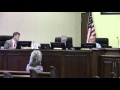
John Page, recent winner of the Republican Primary for
Lowndes County Commission District 5,
spoke as a citizen wishing to be heard in
yesterday’s Commission meeting.
He said he was resigning from his appointed post on the Planning Commission
effective 31 December 2012
because he sees it as a conflict with his upcoming elected position as a
County Commissioner, plus he said he does not have time to do both.
(Since there is no Democratic or other candidate for District 5,
Page will be the Commissioner.)
Page recommended
his primary runoff opponent Jody Hall
as his replacement on the Planning Commission.
Update 2012-09-20: Fixed video embedding.
Here’s
the video:
Resigning from Planning Commission; suggest appoint Jody Hall —John Page
Regular Session, Lowndes County Commission (LCC),
Video by Gretchen Quarterman for Lowndes Area Knowledge Exchange (LAKE), Valdosta, Lowndes County, Georgia, 11 September 2012.
I commend John Page for both of his decisions, and for announcing all this
in a public meeting in front of a video camera.
Maybe as a County Commissioner he will support transparency.
And I commend Jody Hall for being willing to serve on the Planning Commission.
Maybe as a Planning Commissioner he will support transparency.
In the medium term, the value of conventional gas is in providing
reliable baseload power to supplement unpredictable renewables,
which depend on the sun shining or the wind blowing.
Danish state-owned utility
DONG Energy, which has relied heavily on
coal-fired power generation, sees a combination of gas and
renewables as the way to go.
“We see gas-to-power and wind energy as the ideal mix, together
comprising clean and stable energy. Wind energy as the clean energy
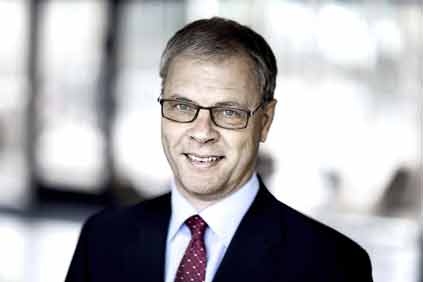
source, and gas-to-power as the balancing power,” Carsten Krogsgaard
Thomsen, DONG Energy’s acting CEO, said.
Yesterday morning’s County Commission Work Session
started on time!
In addition to the open records and open meetings items,
it included a report from KLVB, two rezonings, typo fixes and date changes
in the ULDC, a vanity road name change, an alcohol license and an
alcohol ordinance change, a USGS river gauge, surplus vehicles,
purchase of a new fire truck, and more!
They vote on all this tonight at their Regular Session, 5:30 PM.
Here’s
the agenda.
Lowndes County Emergency Management Director Ashley Tye
reported to the Lowndes County Commission at their
Work Session yesterday morning
that
after the floods of 2009, Lowndes County negotiated with USGS to put a
stream level monitor on the Withlacoochee Little River at the GA 122 bridge,
and the county typically renews that funding once a year.
We shall see whether they approve that this evening.
Lowndes County continuing funding for USGS HWY 122 Stream Gauge —Ashley Tye
Work Session, Lowndes County Commission (LCC),
Video by Gretchen Quarterman for Lowndes Area Knowledge Exchange (LAKE), Valdosta, Lowndes County, Georgia, 10 September 2012.
In
yesterday morning's Work Session,
County Finance Director Stephanie Black
proposed a letter of understanding
for Morgan-Keegan to act as underwriter for
approximately $17 million
to refund the original bonds done for this building as well
as the water-sewer bonds only if the terms are favorable and
the net value savings are at least 3%.
Current projections show a savings of
$1.2 million or a little over 7% at this time.
Chairman Ashley Paulk remarked that:
The bond market has changed drastically.
At least the county palace that former Chairman Rod Casey got
a former commission to approve at his last Commission meeting
now won't cost we the taxpayers quite as much as we thought.
They vote on this tonight.
County to renegotiate bonds for the county palace
Work Session, Lowndes County Commission (LCC),
Video by Gretchen Quarterman for Lowndes Area Knowledge Exchange (LAKE), Valdosta, Lowndes County, Georgia, 10 September 2012.
He gave a brief verbal report, which he said
was a summary of a report he submitted last week
(which we the taxpayers haven’t seen).
He said at their Rivers Alive event last year
they had a record number of sites cleaned: seven.
Great American Cleanup, KLVB’s signature event
used to be 1 day, but this year was 3 days.
Valdosta asked for help with a creek project.
Helped emergency management after the
tornadoes,
through
Ashley Tye and a group called Vision 388(?).
Traditional cleanup day in Valdosta, Lowndes County, and Lake Park.
Commissioner Richard Raines wanted to know how much time commitment was involved.
Answer: an hour per board meeting and helping out with events and committees.
Proponents of the state-forced charter school constitutional amendment
on the November ballot have a
website
that is full of bait and switch.
Most of it is about what they claim are the benefits of charter schools.
But that’s not what the referendum is about.
Local school boards can already authorize charter schools,
and many of them have.
The referendum would change the Georgia Constitution to authorize
an appointed state board to force charter schools on local elected school
boards that don’t want them,
granting more money per student than in public schools,
with
the difference to be made up from local property and sales taxes.
The most substantive thing I have found on the proponents’ website
says that last is not so, but unconvincingly.
One final, but important point, local school superintendents and
board members were adamantly against any local dollars going to
charter schools that were denied by a local school board. The final
version of HB 797 was negotiated to ensure that was the case —
the language is written right there into the law. So, to recap, they
insist on no local money going to state-approved charters, and then
get upset about the state money going to charters.
Yet another reason why we should take water into account in
any development plan:
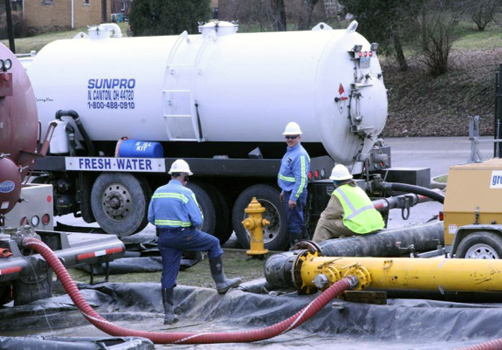
fracking for shale gas
uses huge amounts of water, competing with everything else,
maybe even using more than power plants and cities.
Recent studies examining potable water supplies on a global scale,
the current trends in American water consumption and the causes of
depletion of this essential resource are helping us to understand
that the footprint of shale gas development expands indefinitely
when measured in water….
Of the seven nations where the groundwater footprint is greatest,
the U.S. is one of the fastest speeding towards disaster. According
to Cynthia Barnett’s Blue Revolution, scientists say the 20th
century was the wettest in a thousand years and now drier times are
ahead.[3] This means that many of the management schemes we use
now—based on 20th C planning—need to be changed to avoid
catastrophe. So the 410 billion gallons of water America uses every
day will suck the nation dry if we don’t stop over-tapping nearly
every river and aquifer.
The biggest U.S. users are power plants and agriculture with private