Tag Archives: Transparency

Incumbents won Snapping Shoals EMC board election

Insurgents lost an EMC board election, but made their point anyway. Following up on the three locals running for the board of Snapping Shoals EMC, they lost, but remember Snapping Shoals EMC quit coal-pushing Power4Georgians when they announced they were running.

Crystal Tatum wrote for the Henry Daily Herald 26 July 2012, Morris, Snapping Shoals EMC incumbents win by landslide,

CONYERS — Members of the Snapping Shoals Electric Membership Corporation (EMC) have returned to office three incumbents in a rare contested election to the agency’s 11-member board of directors.

EMC board members set policies and oversee the finances and administration of Snapping Shoals. They serve staggered, three-year terms. The non-profit EMC is a consumer-owned cooperative in Covington, providing service to about 95,000 consumers in an eight-county area, including Henry County.

Gene Morris of Henry County, Walter Johnson of DeKalb County, and Anthony Norton of Rockdale, were being challenged because of their support to build the coal-fire power Plant Washington. Kaye Shipley, also of Henry County, Albert Roesel of Newton County, and Cheryl Mathis of DeKalb County form the group challenging the three. Voting took place at the cooperative’s annual meeting Thursday in Georgia International Horse Park in Conyers.

In the District 2 Rockdale post, 2,400 ballots were cast, with Norton beating Roesel 2,157 to 224. Nineteen ballots were voided. In the District 3 DeKalb County Post, Johnson garnered 2,099 votes to Cheryl Moore-Mathis’ 280. Twenty-one votes were voided. In the District 4 Henry County race, 2,392 ballots were cast, with Morris getting 2,082 votes to Shipley’s 300. Ten were voided. Newton County District 1 representative Pete Knox ran unopposed.

Amusingly, incumbent Gene Morris termed it a David and Goliath struggle with the incumbents as David. I’m not sure most people think of the power company as the little guy….

The story mentioned a post-election press release by the challengers, but didn’t link to it. No problem; Continue reading

ALEC behind Georgia charter school referendum

ALEC has been pushing charter schools in Georgia, both through “our state legislators” sponsoring bills and through the National Association of Charter School Authorizers (NACSA). We already got that private prison customer law HB 87 from ALEC; why would we want to approve an ALEC-sponsored law to let Atlanta siphon public school money to charter schools?

Salvatore Colleluori & Brian Powell wrote for MediaMatters 9 May 2012, How ALEC Is Quietly Influencing Education Reform In Georgia,

Georgia media have been silent as members of ALEC in Georgia’s legislature have successfully pushed through a version of ALEC’s Charter Schools Act, which would create a state-controlled board with the power to establish and fund charter schools over local opposition. A Media Matters analysis found that while Georgia media have frequently written about the bills, they have completely overlooked ALEC’s influence in the debate.

The article details how at least two of the statehouse sponsors of the relevant bills are ALEC members: Speaker Pro Tempore Jan Jones R 46 and Majority Whip Edward Lindsey R 54. Remember them, from the list of Georgia Legislators with ALEC Ties? You thought maybe that list was hypothetical and of little effect? Nope, these bills echo ALEC model charter school legislation, and these ALEC legislators actively pushed them into law. Plus look at the titles these two legislators have on their own legislative websites: Speaker Pro Tempore and Majority Whip. How close is that to our legislature being owned lock, stock, and barrel by ALEC?

But wait! There’s more…. Lee Fang wrote for Republic Report 14 May 2012, Charter School Lobby Group Quits ALEC Two Days After Being Identified By Republic Report,

Continue reading

Georgia would send much more money per student to charter schools than to public schools

An AJC columnist asked the state Department of Education to check figures from Herb Garrett, Executive Director of the Georgia School Superintendents Association, that the proposed charter school law would have the state send much more money per student to charter schools than to public schools. The DoE confirmed it. We can’t afford to have public schools sucked dry for Atlanta-picked charter schools. And yes, this is another ALEC boondoggle.

Maureen Downey wrote for the AJC today, Under new law, state will send more funds per child to state charter schools than local systems

Given this funding disparity, though, it would make far more sense now for aspiring charter schools to seek state approval rather than local.

We need the state to fund public schools determined by local school boards; we don’t need the state rigging the system to divert public school funds to Atlanta-chosen charter schools.

The Democratic primary ballot had an opinion item about charter schools:

Democratic Party Question 1: Should the Georgia Constitution be amended to allow the state to override locally elected school boards’ decisions when it comes to the creation of charter schools in your county or city?

Democratic voters said by 56% they don’t want the charter school law.

However, that primary question was non-binding. The real charter school referendum will be on the November general election ballot. Here’s yet another reason to vote it down.

-jsq

CWIP for SO’s Kemper Coal Plant in Mississippi

Southern Company (SO) is playing the CWIP game of charging customers for electricity they won’t for years with coal in Kemper, Mississippi, not just with nuclear at Plant Vogtle in Georgia. Maybe we should elect some new Georgia Public Service Commissioners so we won’t see the kind of behavior Mississippi’s PSC has turned to.

Cassandra Sweet wrote for Dow Jones and WSJ 25 July 2012, 2nd UPDATE: Southern Co. Second-Quarter Profit Up as Economy Improves,

The company is proceeding with construction of a $2.88 billion advanced-coal plant in Mississippi, despite a decision last month by state regulators to deny a $55 million rate increase the company requested while a related court case is pending. The company’s Mississippi Power unit has filed an appeal of that decision with the state Supreme Court, and argues that without the rate increase it won’t be able to cover certain project expenses that could boost its customers’ future costs.

Mississippi’s Public Service Commission actually denied that rate increase, partly due to opposition from AARP, Sierr Club, and other concerned organizations and citizens. Imagine Georgia’s captive PSC doing that! Mississippi Power took it all the way to the MS Supreme Court, challenged by MS Sierra Club, and that Supreme Court also denied the rate increase. According to MS Sierra Club:

Continue reading

The rest of the Brooks County Board of Elections meeting 17 July 2012

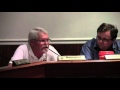
What happened before the Brooks County Election Supervisor was suspended? See for yourself, in this playlist of videos by George Boston Rhynes of the 17 July 2012 Brooks County Board of Elections. Here’s a list of who is who.

The rest of the Brooks County Board of Elections meeting 17 July 2012
Quitman, Brooks County, Georgia
Videos by George Boston Rhynes for bostongbr on YouTube and K.V.C.I.

-jsq

The Emperor’s New Clothes —Michael Noll

The VDT apparently declined to print this LTE submission. I added the links and images. -jsq

When I opened a recent “Sunday Business” section of the Valdosta Daily Times I was expecting to see a thorough discussion of the pros and cons of smart meters. After all, the headline read: “Smart Meters — Fact or Fiction?” What I found, however, was quite different. In case you missed it, here a summary of the highlights:

According to Georgia Power “concerns about smart meters are nothing more than myths.” These concerns range from health risks and increased bills to an invasion of your privacy and house fires started by electrical shorts. Myths or not, the best way to counter customers’ concerns would be to provide studies that, for example, show that smart meters are less dangerous than cellular phones or that electricity bills have not increased as a result of smart meters. However, customers only get assurances which, frankly, do nothing to dispel existing concerns.

Georgia Power also claims that it is using smart meters to be more environmentally

Continue reading

Professor unrepentant in latest fracking payola case

Apparently the natural gas industry pays professors to greenwash their polluting product, like back in the hey-day of radio record companies used to pay disk jockies to play their records. Remember: natural gas from fracking is the main thing Southern Company and Georgia Power are switching to from coal (not that they’re even abandoning coal, just rebranding it as “21st century coal”). That and their nuke boondoggle at Plant Vogtle. All approved by the Georgia Public Service Commission, all of whose members apparently accept massive direct or indirect contributions from the utilities they regulate. Two GA PSC Commissioners slots are up for election right now.

The professor most recently found to be in the pay of a fracking company when he reported on fracking is unrepentant. Terrence Henry wrote for State Impact Texas yesterday, Texas Professor On the Defensive Over Fracking Money

So the questions remaining are: Why didn’t Groat disclose this in the study? And did he fail to tell anyone at the University about it?

The professor would not agree to an interview, but in an email to StateImpact Texas he says the Public Accountability Initiative report is “a mixture of truths, half truths, and unfounded conclusions based [on] incorrect interpretations of information. I don’t want to discuss it.”

The University of Texas requires that financial conflicts of interest be disclosed by employees when it has “potential for directly and significantly affecting the design, conduct, or reporting of … research or is in an entity whose financial interest appears to be affected by that research.”

Dean Sharon Mosher of the Jackson School of Geosciences says that Groat submitted the financial conflict of interest form to her office in previous years, but that he had not done so this year. “I was not aware that he was still a member of the board,” Mosher tells StateImpact Texas. “Had I known he was still a member of the board and being paid, I would have insisted that he disclosed it.”

What report? Follow the links in here. Terrence Henry wrote for State Impact Texas 23 July, Fracking Company Paid Texas Professor Behind Water Contamination Study,

Earlier this year, a study led by Dr. Charles “Chip” Groat for the Energy Institute at the University of Texas at Austin made headlines for saying there was no link between fracking and groundwater contamination. (When we reported on the study in February, we noted that the study also found some serious issues around the safety and regulation of fracking that weren’t getting much press coverage.)

But according to a new report out today by the Public Accountablitiy Initiative (PAI), a nonprofit watchdog group, the conclusions in Groat’s report aren’t as clear cut as initially reported. And Groat himself did not disclose significant financial ties to the fracking industry.

Groat, a former Director of the U.S. Geological Survey and professor at the Jackson School of Geosciences at the University of Texas at Austin, also sits on the board of Plains Exploration and Production Company, a Houston-based company that conducts drilling and fracking in Texas and other parts of the country. According to the new report (and a review of the company’s financial reports by Bloomberg) Groat received more than $400,000 from the drilling company last year alone, more than double his salary at the University. And one of the shales examined in Groat’s fracking study is currently being drilled by the company, the report says.

Since 2007, Groat has received over $1.5 million in cash and stock awards from the company, and he currently holds over $1.6 million in company stock, according to the PAI report. (Update: we clarified with PAI, and that $1.6 million in stock comes from the stock awards over the years. PAI says Groat’s total compensation from the company is close to $2 million.)

And it gets worse from there: rough drafts published, unsubstantiated peer review claims, etc.

This isn’t an isolated case:

This isn’t the first time that academic studies of drilling have been called into question because of industry ties. In an earlier report on a State University of New York at Buffalo study on fracking’s environmental risks, Public Accountability Initiative found that it “suffered a number of critical shortcomings” and the “report’s authors had strong industry ties.”

And in today’s investigation from Bloomberg, they found other instances of industry influence and financial ties at Pennsylvania State University and University of Wyoming.

Do we want to trade air pollution by coal for groundwater pollution by fracking? When we have a better future already at hand through conservation and efficiency along with solar and wind power?

-jsq

Library Board selects out-of-state architect for local library @ LCC 2012-07-24

The Library Board says no local architect was as qualified as the one they picked in Tallahassee to design a new local library here. The same Lowndes County Commission that just a month ago reappointed three members of the Library Board votes tomorrow evening on this bid selection.

Brittany D. McClure wrote for the VDT today, Library board selects architects: New main branch to be located at Five Points development

Clemons Rutherford & Associates (CRA) was chosen by the library


View Larger Map

board as the firm that will lead the design team for the new main library branch that will be moving next to the new municipal auditorium at Five Points.

Lowndes County Commissioners will vote Tuesday on the selection.

“The selection committee felt that the firm that was selected was the most qualified for the project as well as had the lowest estimate,” said Chad McLeod, Lowndes County project manager.

Though the selection process for agencies was directed by Lowndes County, the library board had input in the selection.

“The process to build the library began nearly three years ago at the county’s urging,” said Kay Harris, Library Board chairman.

Requests For Proposals (RFP’s) were advertised for 30 days, with 35 RFP’s requested by various agencies and architectural firms. Ten completed RFP’s were submitted to the county.

And when do we the taxpayers get to see these ten completed RFPs? Not unless somebody files an open records request and somebody else makes them available: it’s the county way!

OK, so why was CRA selected?

Continue reading

Where are the traditional media about Brooks County Board of Elections?

Patrick Davis provided some explanation of what the suspension issue was at the Brooks County Board of Elections, and then asked a bigger question: where are the traditional media when sunshine is needed?

Patrick Davis wrote yesterday for the Macon Examiner.com, Brooks Co. Board of Elections addresses voter disenfranchisement at meeting

The main reason behind the suspension is centered around his alleged participation in qualifying and certification irregularities along with accusations of voter disenfranchisement of local citizens in regard to a sample ballot for the upcoming July 31 election.

Collins insists it is a misunderstanding, and Nancy Duncan, the chairperson of the Brooks Board of Elections, echoes those sentiments and urged the Board of Elections not to involve the Secretary of State and/or other authorities.

As you can see, he linked who the Brooks County Board of Elections are to what they were saying in George Rhynes’ videos.

Davis linked and discussed to the timed video snippet from my blog post of Thursday; the one that shows the chair demanding of George Rhynes, “What are you doing?”

Then he brought up the bigger sunshine issue:

Continue reading

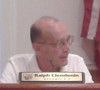
Who are the Brooks County Board of Elections?

Who are the Brooks County Board of Elections, who don’t seem to know Georgia sunshine laws, and about whom election qualifying issues have been raised?

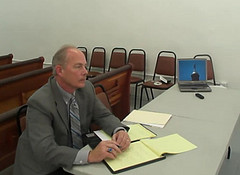
The man at the head of the table who was put on suspension by the board was Ken Collins, Election Supervisor, who has been in place for six months. According to the minutes of the 9 January 2012 Monthly Workshop and Regular Meeting of the Brooks County Board of Commissioners,

Commissioners present were: Mr. S. L. Jones, Chairman; Mr. Joe Wingate, Vice Chairman; Mr. James Maxwell; Mr. Howard Lawson, and Mr. Willie Cody. Others present were: Mr. Robert D. O’Barr, County Administrator; Ms. Patricia Williams, County Clerk; Mr. Vann Parrott, County Attorney; Mr. Mark Deatcher, Public Works Director; and various residents….

4. Election Supervisor – Emergency Selection

Due to an unforeseen illness, Mr. Johnny Spearman resigned as Brooks County Elections Supervisor which resulted in an emergency hiring of Mr. Kenneth Collins, previous applicant. Lowndes County Board of Elections has willingly offered their services for utilization during this transition due to time sensitivity with 2012 election events. Mr. Maxwell made the motion to hire Mr. Kenneth Collins as Brooks County Elections Supervisor, Mr. Lawson seconded. Vote was unanimous.

(That’s the most recent set of minutes listed on the Brooks County web page. Have the Brooks County Commissioners really not met since January?)

According to the Brooks County Commmissioners’ minutes of their Special Called Meeting of 13 July 2011:

On motion by Mr. Wingate, Board unanimously appointed Mr. Johnny Spearman as Elections Supervisor for Brooks County. Salary will be $32,000.00 annually.

OK, that’s the elections supervisor who resigned and was replaced by Ken Collins. But who are the Board of Elections?

Continue reading