Tag Archives: LAKE

Last Year’s Southern Company Stockholders Meeting —Steve Willis @ SO 2011-05-25

Received Thursday about last year’s Southern Company (SO) 2011 Annual Meeting of Stockholders. -jsq

Questions for Southern Company:

  1. Virtually all empirical evidence for decades indicates that climate disruption, related ocean acidification, sea rise and global warming are not only happening, but consistently occurring at the highest range of modeled projections. Events which were projected within 100 years twenty years ago, and within 50 years 10 years ago, are happening now. Instead of fighting a delaying, rear-guard action against big, dynamic change in energy production, wouldn’t it be better for our company to set the standard for transformation? It seems we have the most to lose, and, therefore, the most to gain.
  2. Unless there is some unexpected reversal in the climate change trends which have been occurring for decades, it seems inevitable that National Renewable Energy Portfolio Standards (RPS) will be legislated well before the end of this decade. Moody’s cited this likelihood in their recent credit downgrade of Southern Company. Since it seems highly unlikely that biomass and nuclear will be considered renewable energy sources under a RPS, where will Southern Company acquire mandated renewable energy — perhaps 20% or more of the total mix by 2020? And will the PSC allow us to load our full profits to rates for this energy on top of the big profits to the probable merchant suppliers, such as West Texas Wind?
  3. I have heard reports that Santee Cooper in South Carolina and

    This one has happened. -jsq
    Duke Energy in North Carolina are exploring the possibility of a joint venture to develop off-shore wind. Wouldn’t it be advantageous to ally with them in a joint venture? The Carolinas have a very long coast and very good wind resources, and a combined effort could reduce risk for all of us and significantly increase our combined political leverage. If we do not create some credible Georgia renewable energy resource, isn’t it possible that we will be forced to buy wind power from the Carolinas at an exorbitant rate within the next decade?
  4. Between the likelihood of carbon pricing and a National Renewable Energy Standard, it seems almost certain that Southern Company’s extreme reliance on coal fired power generation will be significantly reduced, voluntarily or by fiat, this decade. Nuclear seems more unlikely and expensive a salvation than ever. Isn’t it time we changed course and embraced proven and rapidly improving solar and wind technology before we are forced into them by National mandate?
  5. According to the information on your climate change Web site, Southern Company supports the target of an 80% reduction in carbon emissions by 2050. Can you tell us the approximate mix of nuclear, renewables, and efficiency that you envision to reach that goal?
-Steve Willis

Lowndes, Tift, and Ware donor counties and majority @ SGRC 2011-09-19

Someone asked:

If Lowndes, Tift, and Ware vote against it, and the other fifteen counties vote for it, that’s a majority.

Corey Hull:

As long as they reach 50% + 1 in voters.

Questioner:

Those three counties, which would probably be the three donor counties in this region… they could kill it for our region if it was a large turnout.

Roy Taylor:

A large county like we could kill it for everybody.

The referendum is still on for July (during the primary, with less turnout) not November (during the general election).

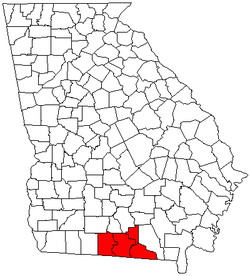
The eighteen counties are: Continue reading

How do we vote on T-SPLOST? — Gretchen Quarterman @ SGRC 2011-09-19

T-SPLOST regions are an intermediate level of government in which all the people in the region vote together, not by counties.

Gretchen Quarterman asked:

When the 18 counties vote, is it county by county, say Atkinson votes yes, and Lowndes votes no, and if there were 9 counties that voted yes and 9 counties that voted no, or is it the total of all the voters together, and then we say there were 400,000 voters and it’s a simple majority.

Corey Hull answered:

It’s a simple majority. It’s the latter of how you described it, it’s all the voters together.

Here’s the video:

How do we vote on T-SPLOST?
T-SPLOST Public Meeting, Southern Georgia Regional Commission (SGRC),
Corey Hull,
Nolen Cox, Gretchen Quarterman,
Valdosta, Lowndes County, Georgia, 19 September 2011.
Video by Gretchen Quarterman for Lowndes Area Knowledge Exchange (LAKE).

-jsq
Lowndes County donor county @ SGRC 2011-09-19

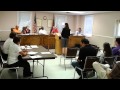
Lowndes County would be a T-SPLOST donor county: it would put more money into T-SPLOST than it would get back for projects.

Somebody (I think it was Robert Yost) asked whether Lowndes County would be a donor county for T-SPLOST. Corey Hull said yes, that was the case. Someone else noted:

Atkinson County that’s been coming over here spending our money all these years, gets a little of it back.

And the smaller counties get penalized a lot more if they vote against T-SPLOST, because they depend much more on LMIG. So T-SPLOST among other downsides is a scheme to pit smaller counties against larger ones in the T-SPLOST region.

Here’s the video:

Lowndes County donor county
T-SPLOST Public Meeting, Southern Georgia Regional Commission (SGRC),
Corey Hull,
Nolen Cox, Gretchen Quarterman,
Valdosta, Lowndes County, Georgia, 19 September 2011.
Video by Gretchen Quarterman for Lowndes Area Knowledge Exchange (LAKE).

-jsq

Nydia Tisdale returns to city council where she was thrown out for videoing

Remember Nydia Tisdale, who got illegally ejected from a Cumming City Council meeting for videoing an open meeting? She’s back, in the front row, videoing.

Previously we called Cumming someplace worse than here. But look at this:

A city of Cumming audio-visual recording policy sheet was available outside council chambers.

“Handheld audio and/or visual recording devices may be used from any location within the public seating area,” wrote Gerald Blackburn, city administrator. “No audio and/or visual recording device may be set up in the aisles.”

Hm, that’s better than the Lowndes County Commission, whose chair Ashley Paulk famously said,

Continue reading

ALEC loses 8 more, including Wal-Mart

Even Wal-Mart ditches ALEC! What about the Southern Company?

ALEC Exposed is keeping a list of Corporations Which Have Cut Ties to ALEC, and since the ten we last counted, eight more have jumped the sinking lobbying ship: Blue Cross Blue Shield, YUM! Brands, Procter & Gamble, Kaplan, Scantron, Amazon, Medtronic, and Wal-Mart. That’s right, even Wal-Mart. Jason Easley wrote for Politicus USA yesterday, Wal-Mart Dumps ALEC and Outs Them as Un-American,

In a statement, Wal-Mart representative Maggie Sans wrote, “Previously, we expressed our concerns about ALEC’s decision to weigh in on issues that stray from its core mission ‘to advance the Jeffersonian principles of free markets…We feel that the divide between these activities and our purpose as a business has become too wide. To that end, we are suspending our membership in ALEC.”

Wal-Mart claimed that ALEC was no longer as interested in Jeffersonian free market principles as they were other partisan political issues. Two of those unnamed political issues are most certainly voter ID and stand your ground laws.

When even Wal-Mart complains that ALEC isn’t “free market” enough, Wal-Mart, which Continue reading

T-SPLOST: stick or baseball bat? @ SGRC 2011-09-19

Corey Hull explained what the state of Georgia has in store for us if we vote down T-SPLOST:

If the voters do not approve the referendum, then all local governments must match their LMIG funds a rate of 30%. And then we have to wait 24 months to start the process over again. And when I say start the process over again, I mean start the process over to enact this tax.

Nolen Cox, Chairman of the Lowndes County Republican Party (LCRP), remarked:

Is that commonly called a stick?

Gretchen Quarterman, Chairman of the Lowndes County Democratic Party (LCDP), observed:

It looks like a baseball bat.

Now I doubt either were speaking in an official capacity, but I know from talking to them that both individuals oppose this tax, and I’m pretty sure most people in their local parties do, too.

Here’s a longer explanation of what happens, including what LMIG is, April 2011 LCDP meeting.

Here’s the video:

T-SPLOST: stick or baseball bat?
T-SPLOST Public Meeting, Southern Georgia Regional Commission (SGRC),
Corey Hull,
Nolen Cox, Gretchen Quarterman,
Valdosta, Lowndes County, Georgia, 19 September 2011.
Video by Gretchen Quarterman for Lowndes Area Knowledge Exchange (LAKE).

-jsq
 

Coal ash and political spending transparency shareholder resolutions defeated @ SO 2012-05-23

Defeated, but with increased shareholder support this year, two shareholder transparency resolutions have been introduced year after year at Southern Company (SO), one on coal ash and the other on political spending. Here’s video of the political spending resolution being presented at the meeting, and here’s the text of the resolution. This year as usual the SO board opposed both resolutions, and as you can hear SO CEO Thomas A. Fanning announce in this video, both were voted down, with these percentages:

The reasons the board gave for opposing the political spending transparency resolution include that SO claims it is already disclosing everything it needs to. Much of that disclosure started in 2006 due to shareholder and outside pressure to do so. Center for Political Accountability press release 5 April 2006,

McDonald’s (NYSE: MCD) and Southern Co. (NYSE:SO) agreed to disclose and have their directors oversee soft money political contributions made with corporate funds, shareholder activists announced today. The groups, Washington-based Center for Political Accountability (CPA), socially responsible investment firm Trillium Asset Management Corp., and the Central Laborers’ Pension Fund, are part of a nationwide campaign to bring transparency and accountability to company political spending.

In its own 2012 statement of opposition, the SO board noted shareholder pressure is having an effect on transparency:

Continue reading

Strickland Mill in Remerton —Emily Foster

Received yesterday. -jsq

FYI: The Strickland Mill in Remerton is being threatened with demolition. Remerton City Council will meet to discuss this situation on Monday, June 4th at 5:30pm during their work session, and on Monday, June 11th at 5:30pm to vote on the matter. The public is invited to both of these meetings to express opinions on the possible demolition of the Mill. As you all are aware, this mill complex dates to 1899 and is one of the few surviving textile mills in our region. This is an important community landmark and was very influential to the development of Valdosta, not to mention integral to Remerton's existence.

Emily Conklin Foster

For the 99% Chernobyl, water and Plant Vogtle –Stephanie Coffin @ SO 2012-05-23

What about renewable clean energy such as wind off the coast instead of a water-sucking nuclear plant? Stephanie Coffin for the 99% asked Southern Company (SO) CEO Thomas A. Fanning. She also mentioned Chernobyl, and said more than once that he hadn’t addressed these questions either in the Q&A section or in his earlier performance.

CEO Fanning once again didn’t address those questions, instead enumarating the points he’d told me (scale, financial track record, and operational credibility). He did refer to SO’s Chief Environmental Officer, Chris Hobson.

But he liked the water point:

I think frankly water, more than air, is the issue of the future.

Here in the south Georgia protracted extreme drought with groundwater at historically low levels, water is the issue not just of the future, but already for years now.

He continued:

One of the things we should be very proud about Southern Company is that we are a company that is engaged in offering solutions, not just rhetoric. We remain the only company engaged in proprietary research and development. We’re the only company in America today that has a 1600 person engineering and construction service. So we have the credibility to do whatever our words say.

He also talked about carbon capture research (for DoE, in Alabama), about gassifying coal to “strip out 65% of the CO2” to make it comparable to natural gas (which is what SO mostly uses now to generate energy), and about using the CO2 in oil recovery.

He finally got around to water:

Continue reading