What jobs and businesses can we
build out of local agriculture and VSU and Wiregrass Tech and GMC
and SGMC and Moody? Build like the way Silicon Valley grew out of
Stanford and HP and Intel, but different, drawing on our local strengths?
Various things, no doubt, but the companies
the VDT listed in its
agricultural heartland article
suggest maybe Wiregrass Alley:
When you factor in businesses such as South Georgia Pecan, PCA, the
Langdale Company,
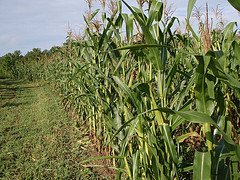 Shiloh Farms, Dupont, Arizona Chemical, ERCO
Worldwide, Coggins Farms, Carter and Sons, and the additional
farmers represented by Farmer Browns, the impact of agriculture in
Lowndes County alone is one of the largest private, non-governmental
industries. Across the region, ag and forestry sustain the economies
of a number of counties.
Shiloh Farms, Dupont, Arizona Chemical, ERCO
Worldwide, Coggins Farms, Carter and Sons, and the additional
farmers represented by Farmer Browns, the impact of agriculture in
Lowndes County alone is one of the largest private, non-governmental
industries. Across the region, ag and forestry sustain the economies
of a number of counties.
Many of those are obviously agricultural, but Dupont, Arizona Chemical,
and ERCO?
OK, I’ll buy
Arizona Chemical
which turns pine products into adhesives and smells.
But DuPont?
Sure, they make chemical fertilizer,
but that’s like listing Chevron as a home heating company.
And what’s this
ERCO Worldwide, which provides chemicals like caustic soda for PCA?
ERCO Worldwide’s other name hereabouts is
Sterling Pulp Chemicals.
That’s right, the VDT listed Sterling Chemicals as an agricultural company!
Well, that’s hard to deny, because,
according to
FundingUniverse,
Sterling Chemicals
“was founded in 1986 to acquire and operate Monsanto Co.’s petrochemical plant in Texas City, Texas.”
Nobody can say Monsanto isn’t agricultural, when 90+% of corn, soybeans,
cotton, and peanuts grown hereabouts are grown from Monsanto seeds.
Which is why we have so many chemical fertilizers and poisonous
pesticides being used around here.
Is that really the direction we want to go?
What if we turn the VDT’s list around,
 and start with the “additional farmers”
represented by Farmer Brown and Carters?
You know, the ones who sell at Valdosta Farm Days?
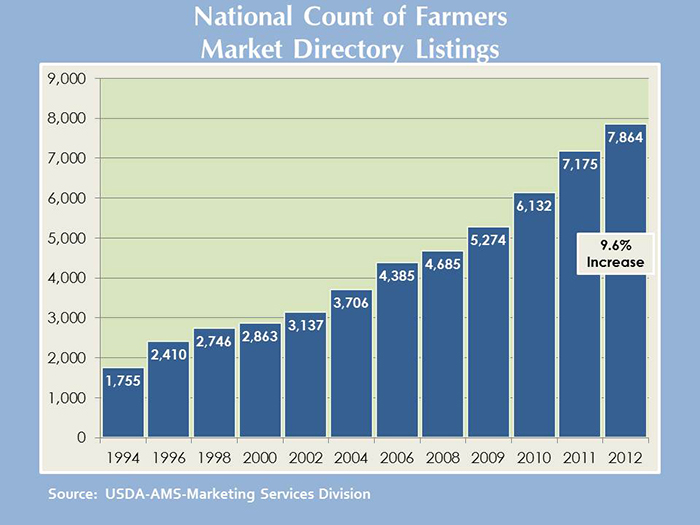
Farmers markets have
increased 6% on average for the past decade.
Why is that?
Partly because of
the conversations and community
at a farmers market.
Anybody who has gone to Valdosta Farm Days or Hahira Farm Days can attest to that.
And it’s not just anecdotal:
there is
research to demonstrate that in farmers markets compared to supermarkets:
and start with the “additional farmers”
represented by Farmer Brown and Carters?
You know, the ones who sell at Valdosta Farm Days?
Farmers markets have
increased 6% on average for the past decade.
Why is that?
Partly because of
the conversations and community
at a farmers market.
Anybody who has gone to Valdosta Farm Days or Hahira Farm Days can attest to that.
And it’s not just anecdotal:
there is
research to demonstrate that in farmers markets compared to supermarkets:
On average, the sociologists found, people were having ten times as
many conversations per visit.
Another reason farmers markets are spreading so fast is
people are paying attention to the increasing number of scientific
reports that “conventional” agriculture is poisoning us,
such as
the recent one that demonstrates that even the inert ingredients
in Roundup are poisonous
or the one that links the active ingredient, glyphosate,
to Parkinson’s disease.
Maybe they’ve heard about Monsanto
being sued for “devastating birth defects” and chemical poisoning.
And most farmers market customers seem to like fresh local foods that
taste good and that support local farmers.
 So what if we started with those “additional farmers”
that sell at Farmer Brown and Carters and Valdosta Farm Days?
They are the ones already starting in a different direction.
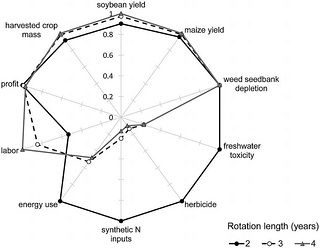
A direction that is actually
more profitable,
in addition to healthier (and less flooding and more wildlife).
Crop rotation takes more thought and more labor (more jobs!)
than just spraying,
but it also takes a lot less expense on patented seeds and chemicals,
for a net financial profit.
So what if we started with those “additional farmers”
that sell at Farmer Brown and Carters and Valdosta Farm Days?
They are the ones already starting in a different direction.
A direction that is actually
more profitable,
in addition to healthier (and less flooding and more wildlife).
Crop rotation takes more thought and more labor (more jobs!)
than just spraying,
but it also takes a lot less expense on patented seeds and chemicals,
for a net financial profit.
Which could help explain why
the USDA says:
Consumer demand for organically produced goods has shown
double-digit growth for well over a decade, providing market
incentives for U.S. farmers across a broad range of products.
The USDA is talking certified organic, which has so many hoops
to jump through that most local producers are not certified, yet many
 also aren’t using a lot of chemical inputs and are using
crop rotation and other organic techniques.
Techniques which many old-timers around here will recognize,
because they used to use them a half century ago,
but with new wrinkles such as computerized records and
recent research that may make them even more effective.
That’s right:
modern organic and local agriculture is a knowledge-based industry.
also aren’t using a lot of chemical inputs and are using
crop rotation and other organic techniques.
Techniques which many old-timers around here will recognize,
because they used to use them a half century ago,
but with new wrinkles such as computerized records and
recent research that may make them even more effective.
That’s right:
modern organic and local agriculture is a knowledge-based industry.
What has all this got to do with the colleges and SGMC and Moody?
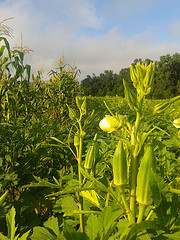 Moody could be a big customer for local agricultural produce,
as could the local K-12 schools; VSU already is.
Wiregrass Tech can (and already is) help teach people how to grow
organic or with fewer manufactured inputs.
VSU and GMC can study how that’s working out,
in conjunction with SGMC, which eventually will have fewer
cases of some kinds of diseases to deal with.
How many cases, of what kinds of diseases?
There’s a field of research we could lead,
along with the agricultural industry to cause such improvements in health:
healthy jobs from planting to PhDs!
Moody could be a big customer for local agricultural produce,
as could the local K-12 schools; VSU already is.
Wiregrass Tech can (and already is) help teach people how to grow
organic or with fewer manufactured inputs.
VSU and GMC can study how that’s working out,
in conjunction with SGMC, which eventually will have fewer
cases of some kinds of diseases to deal with.
How many cases, of what kinds of diseases?
There’s a field of research we could lead,
along with the agricultural industry to cause such improvements in health:
healthy jobs from planting to PhDs!
And if we do want other kinds of knowledge-based businesses and workers
(which is where Silicon Valley usually gets mentioned),
I think we’ll find they like a place that produces local healthy foods.
-jsq
 Lowndes County Commissioners had a small amount of open discussion about
the proposed changes to the zoning code related to Moody Air Force Base
at
their Work Session this morning.
However, most of the discussion was not about the changes currently proposed,
which the County Planner once again explicitly linked to a rezoning case
on the same agenda.
At least they discussed tabling the zoning code changes
until there could be more discussion.
They did not, however, say they would make drafts available to the public
or invite the public to discuss those drafts.
Lowndes County Commissioners had a small amount of open discussion about
the proposed changes to the zoning code related to Moody Air Force Base
at
their Work Session this morning.
However, most of the discussion was not about the changes currently proposed,
which the County Planner once again explicitly linked to a rezoning case
on the same agenda.
At least they discussed tabling the zoning code changes
until there could be more discussion.
They did not, however, say they would make drafts available to the public
or invite the public to discuss those drafts.