In memory of Armistice Day, the eleventh hour of the eleventh day of the
eleventh month, when World War I ended,
let’s help the military get us off of oil
and to deal with climate change so fewer people will die in wars.
John M. Broder wrote for NYTimes 9 November 2012,
Climate Change Report Outlines Perils for U.S. Military,
Climate change is accelerating, and it will place unparalleled strains on
American military and intelligence agencies in coming years
by causing ever more disruptive events around the globe,
the nation’s top scientific research group said in a
report
issued Friday.The group, the National
Research Council, says in a study commissioned by the
C.I.A. and other intelligence agencies that
clusters of apparently unrelated events exacerbated by a warming climate
will create more frequent but unpredictable crises in water supplies,
food markets, energy supply chains and public health systems.
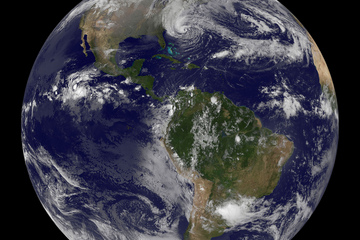
Hurricane Sandy provided a foretaste
of what can be expected more often in the near future, the report’s
lead author, John D. Steinbruner, said in an interview.“This is the sort of thing we were talking about,” said
Mr. Steinbruner, a longtime authority on national security. “You
can debate the specific contribution of global warming to that storm. But
we’re saying climate extremes are going to be more frequent, and
this was an example of what they could mean. We’re also saying it
could get a whole lot worse than that.”…
Climate-driven crises could lead to internal instability or international
conflict and might force the United States to provide humanitarian
assistance or, in some cases, military force to protect vital energy,
economic or other interests, the study said.

This is in addition to the even more obvious
connection between war and U.S. dependence on foreign oil
which the veterans in Operation Free want to fix
by helping us shift to clean renewable energy.
“In Iraq… the lines would stretch up to ten miles long under
the hot sun, under constant risk of attack by extremists. I realized
then just how vulnerable it makes any country to be dependent on
oil, especially the United States, which uses nearly a quarter of
the world’s supply.”
We also heard last year from
Col. Dan Nolan (U.S. Army ret.) that the Marines in Afghanistan
realized
the value of solar power as a way to avoid long convoys
of petroleum to run air conditioners in the desert.
That got the military thinking about energy security
as assured access to mission-critical energy.
Not just for the military: for the U.S. as a country,
for both transportation fuel and electricity.
Most fossil fuel (and nuclear and biomass)
electricity production can be replaced by solar and wind energy
distributed through a smart grid.
In case anybody has forgotten,
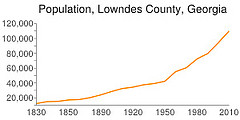
Moody Air Force Base caused much of the population growth in Lowndes County
and is still the largest employer.
Moody is
moving ahead with solar energy,
working to meet an Air Force requirement of 25%
of facility energy use from renewable energy
(efficiency, conservation, solar, and wind) by 2025.
National security isn’t really about wars.
That’s what we have to do when real national security fails.
We can get on with
a real national security strategy
which would start with education, continue with diplomacy,
and build on sustainable renewable energy and agriculture.
We must recognize that security means more than defense,” they
write. After ending the 20th century as the world’s most powerful
country, “we failed to recognize that dominance, like fossil fuel,
is not a sustainable form of energy.”
As Senator James Webb
said 3 June 1990,
The first is one our leaders should carry next to their breasts, and
contemplate every time they face a crisis, however small, which puts
our military at risk. it should echo in their consciences, from the
power of a million graves. It is simply this:You hold our soldiers’ lives in sacred trust.
When a citizen has sworn to obey you, and follow your judgment, and
walk onto a battlefield to defend the interests you define as worthy
of his blood, do not abuse that awesome power through careless
policy, unclear objectives, or inflexible leadership.”
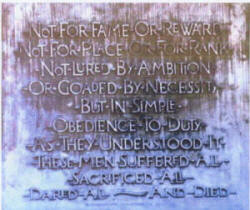
A real national security strategy starts at home, with education,
health care, and sustainable renewable energy and agriculture.
If we beat some swords into solar panels and plowshares,
we won’t need to fight nearly as many wars, and fewer people will die in them.
-jsq
“Most fossil fuel (and nuclear and biomass) electricity production can be replaced by solar and wind energy distributed through a smart grid.”