Here is the complete
playlist for yesterday’s (8 September 2011) Lowndes County Lunch and Learn,
in which County Manager Joe Pritchard reviewed the county’s budget process.
County Clerk Paige Dukes said she would also send the slides for posting.
County Manager Joe Pritchard presents the budget process
Lowndes County Lunch and Learn 8 September 2011
Videos by Gretchen Quarterman for LAKE, the Lowndes Area Knowledge Exchange
Here’s a
video playlist
for the whole meeting: teacher hiring, board member training,
and a statement against school consolidation, with additional
comments by many citizens.
Many of these videos have already been published in the
VBOE 29 August 2011 category in this blog.
Videos of entire VBOE 29 August 2011 meeting
education, referendum, consolidation, statement,
Work Session, Valdosta Board of Education (VBOE),
Valdosta, Lowndes County, Georgia, 29 August 2011.
Videos by John S. Quarterman for LAKE, the Lowndes Area Knowledge Exchange.
The playlist also includes other video material,
such as
Continue reading →
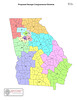
Georgia has gained enough population in the past ten years to add
a congressional seat. This means redrawing the Congressional
district lines not only to balance population, but to also add
another representative in Congress. Lowndes County has been split
between the first and second districts, and all spring rumors of
where we might end up were circulating. Eventually we saw a draft
map that had Lowndes completely in the 8th District,
along with
other counties along Interstate 75. That map made some sense south of Macon.
Some communities of interest were preserved (most of the Lowndes-Valdosta
MPO was in the same district) and the hospitality corridor of I-75
was in one district, along with the rural farms that surround it.
Valdosta to Macon is easier to traverse than Valdosta to Savannah,
or Valdosta to Columbus.
But then Congressman Jack Kingston stuck out his green tongue.
This is the clearest statement of the football argument I’ve heard.
This is the same speaker who already mentioned
quality of education, property taxes, and property values,
so this is just one argument among many.
The speaker is associated with FVCS, and if I went to VHS,
I’d know his name right away; I’m an LHS graduate.
The first thing they’ll do is sell that stadium.
They’d be crazy not to do….
They’re not going to pay upkeep on two stadiums.
Look at Tallahassee, Macon: all the schools play at one stadium….
…
Don’t let those people run the show.
Don’t let them take the power away from us.
…
If one day it makes good economic sense for y’all to
make the decision to sell that property to Valdosta State
and build another stadium and we can come out ahead,
I think that’s a great idea.
Like my granddaddy said, if it ain’t broke, don’t fix it.
By “those people” I don’t think he means the Lowndes County Board
of Education; I think he was referring to CUEE.
Research quality of education, property taxes, and property values
after school consolidation, and you’ll find down, up, and down,
said this speaker.
Didn’t get his name; sorry.
I don’t have kids, but I have plenty of friends that do.
that are in Valdosta city school system,
and they like the direction that the school system is going.
They like the quality of education that their children are getting at this time.
My grandfather used to say, if it ain’t broke, don’t fix it.
It ain’t broke, so why are we going to let them try to fix it?
Do the research; I’ve done the research.
Do the research on other communities that have consolidated two systems.
When you get a big huge system, the quality of education goes down.
Check it out. Research it.
Property taxes go up.
Property values go down.
Do the research.
If it ain’t broke, don’t fix it @ VBOE 29 August 2011
education, referendum, consolidation, statement,
Work Session, Valdosta Board of Education (VBOE),
Valdosta, Lowndes County, Georgia, 29 August 2011.
Videos by John S. Quarterman for LAKE, the Lowndes Area Knowledge Exchange.
This is the same method used in 2003 when former Mayor
James H. Rainwater died before the election.
Council appointed David Sumner interim mayor.
According to the VDT 31 August 2011:
At that time, Councilman David Sumner assumed the role of mayor, but had
to resign his council seat to do so. He had already qualified to rerun
for his seat in the November 2003 election, was re-elected to his seat
and stepped down as mayor at the end of 2003, re-assuming his duties as
a newly elected councilman at the beginning of 2004.
If they don’t appoint Vickers interim mayor tomorrow,
the Valdosta City Council will probably appoint somebody else.
According to the VDT today:
Vickers is among those being considered for appointment by council,
along with Dexter Sharper and David Sumner, who are also former council
members. Vickers pointed out that he did not submit his name for
consideration, but rather it was mentioned in conversations with other
council members.
Classrooms are festooned with college pennants. Hallway placards proclaim:
“No Excuses!” Students win prizes for attendance. They start classes
earlier and end later than their neighbors; some return to school on
Saturdays. And they get to pore over math problems one-on-one with newly
hired tutors, many of them former accountants and engineers.
If these new mores at Lee High School, long one of Houston’s most
troubled campuses, make it seem like one of those intense charter schools,
that is no accident.
In the first experiment of its kind in the country, the Houston
public schools are testing whether techniques proven successful in
high-performing urban charters can also help raise achievement in regular
public schools. Working with Roland G. Fryer, a researcher at Harvard who
studies the racial achievement gap, Houston officials last year embraced
five key tenets of such charters at nine district secondary schools;
this fall, they are expanding the program to 11 elementary schools. A
similar effort is beginning in Denver.
Charter schools were supposed to be pilot projects, so why not
adopt what works there in public schools?
However, this still seems to be all about test scores.
Maybe some public schools could look farther afield,
Continue reading →
The First Court of Appeals has reached a decision that would allow the
general public to video-tape police officers while they are working. This
decision comes right after several well-known public cases have come to
light involving citizens being arrested for video-taping police.
This specific case in question was Simon Glik vs.The City of Boston
(and several police officers), in which a teenage Simon Gilk was arrested
after videotaping Boston Police abusing a homeless man. While Mr. Gilk was
not interfering with the police, he was arrested on wiretapping charges.
The ACLU had sued on his behalf, even when the charges were dropped,
noting that there was a growing epidemic of citizens in the United States
being arrested by police for videotaping, even when documenting police
brutality and abuse.
The First Court Agreed with the ACLU that this should be legal, and wrote
that: “The filming of government officials engaged in their duties in a
public place, including police officers performing their responsibilities,
fits comfortably within these principles [of protected First Amendment
activity].
Private prison company CCA, which in conjunction with ALEC promotes laws in dozens of states and nationally that lock up more people for CCA’s private profit at taxpayer expense, really doesn’t like
community opposition to siting private prisons in their communities.
Hm, why would CCA hate community opposition so much, unless it works?
Question:
There are Web sites and blogs that are adamantly opposed to your company
and industry, and they provide negative information about you. Why?
Hm, you mean like some of the material on this blog?
Answer:
CCA and all corrections companies recognize the ongoing efforts
of local, loosely formed grassroots groups and national, well-funded
associations that jointly oppose the establishment of partnership
prisons, many for self-serving reasons. Such groups go to great lengths
to attack, criticize and misrepresent the entire industry. They make false
allegations and often rely on hearsay and unreliable sources. Regrettably,
these biased groups often resort to misinformation and inflammatory
rhetoric to turn isolated incidents into broad generalizations about
the corrections industry as a whole.
Well-funded? Har! OK, not this blog.
That plus we provide evidence, like
Continue reading →
If TV cameras show up for football, why don’t they show up
“when the people come together on issues such as this,
not just black folk, not just white folk, but all Americans
are here tonight because of our concern”?
 Here is the complete
playlist for yesterday’s (8 September 2011) Lowndes County Lunch and Learn,
in which County Manager Joe Pritchard reviewed the county’s budget process.
County Clerk Paige Dukes said she would also send the slides for posting.
Here is the complete
playlist for yesterday’s (8 September 2011) Lowndes County Lunch and Learn,
in which County Manager Joe Pritchard reviewed the county’s budget process.
County Clerk Paige Dukes said she would also send the slides for posting.