Tag Archives: Georgia

Lunch and Learn —Joe Pritchard @ LCC 26 July 2011

New program for the public to learn about Lowndes County government.

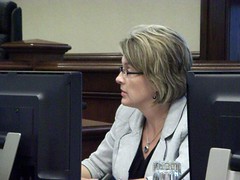
In his County Manager report, Joe Pritchard announced the first first lunch and learn, which will be a discussion of general government, noon ’til 1PM, 11 August 2011, second floor of administrative complex.

“The lunch and learn program will take various topics, and allow the public to meet for an hour, ask questions, interact on those particular topics.”
County Clerk Paige Dukes will be conducting this first meeting.

Commissioner Crawford Powell asked Continue reading

Let’s put Lowndes County on the Clean Economy Map!

Look where those clean economy jobs are:
Among regions, the South has the largest number of clean economy jobs though the West has the largest share relative to its population. Seven of the 21 states with at least 50,000 clean economy jobs are in the South. Among states, California has the highest number of clean jobs but Alaska and Oregon have the most per worker.

A per-county map is included, on which you can see North Carolina and Atlanta, but nothing in south Georgia. Let’s put Lowndes County on the clean energy map!

The gigaom article recommends:

To help boost the clean energy economy even more, the Brookings report suggests that Congress could pass a national clean energy standard, put a price on carbon, use the government as a chief customer of cleantech goods (Obama has been strong on this), find more ways to help proven clean technologies pass the so-called Valley of Death, as well as increase funding for basic science and early-stage high risk projects (like the Department of Energy’s ARPA-E program).
That’s good stuff, but we don’t have to wait for the feds. The Wiregrass Solar plant sets a precedent that we can build on. That plant is readily expandable to an additional megawatt. It can also be used to attract financing for other projects, projects that can use local labor, for example solar electricity and hot water like the example in Quitman.

Lots of places have forged ahead into real clean energy on their own, such as Birmingham, England and San Antonio.

Sure, we’re not nearly as big as those places, or so local “leaders” remind me. So let’s find some projects of our scale that we can do, and let’s do them! A real leader might say, as Mayor Julian Castro of San Antonio did, that renewable energy is

“…the nexus between sustainability and job creation. Every now and then, perhaps once in a generation, there presents itself a moment, an opportunity, for those cities that are willing to seize it, to truly benefit the region for generations to come.”
That opportunity is right here in south Georgia, waiting for us to seize it.

-jsq

April Duncan APWA Employee of the Year for Georgia —Robin English @ LCC 26 July 2011

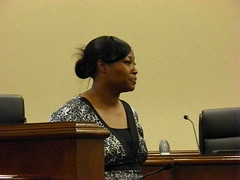
April Duncan was named 2011 Employee of the Year for the State of Georgia by the American Public Works Association, and acknowledged by her employers, the Lowndes County Commission. She was nominated by Public Works Director, Robin English, who reads the nomination in this video. Continue reading

Where is law enforcement? —Jane Osborn

Received 27 July on Shouldn’t the people running the facilities … be held accountable? -jsq
And I continue to ask, since my email of a couple of months ago to the Sheriff never received an answer, where is law enforcement when there clearly are illegal acts of animal cruelty occurring here? We made a big deal (appropriately) several years ago about a dog that was intentionally set on fire by local people, but these violations are all the more difficult to understand since they appear to be happening at the hands of the very people sworn to protect our county’s animals.

-Jane Osborn

CCA and The GEO Group have been accused of human rights abuses —United Methodist Church

Methodists lobby private prison companies CCA and GEO as shareholders about human rights issues. Seems like this doesn’t help with the 2008 United Methodist Church Resolution 3281, Welcoming the Migrant to the US, which advocated the “elimination of privately-operated detention centers,” but at least they’re doing something. I expect what they’ll accomplish by such lobbying is to demonstrate that private prison companies have no intention of addressing human rights issues, because that would cut into their profits.

Published by General Board of Pension and Health Benefits of The United Methodist Church July 2011, Faith-Based Investors Take a Closer Look at Private Prisons,

In 2011, members of the United Methodist Interagency Task Force on Immigration approached the General Board of Pension and Health Benefits (General Board) with concerns about two private prison companies in the General Board’s investment portfolio: Corrections Corporation of America (CCA) and The GEO Group, Inc. The United Methodist Interagency Task Force on Immigration was created following the General Conference of 2004. Membership includes representatives from the General Board of Global Ministries (GBGM), the General Commission on Religion and Race, the General Board of Church and Society (GBCS), Methodists Associated to Represent the Cause of Hispanic Americans (MARCHA) and two bishops. In addition, GBCS has shared its concern that CCA and The GEO Group have been accused of human rights abuses of young people, immigrants and people of color.

CCA and The GEO Group are the two largest private prison companies in the U.S., operating and/or owning, respectively, 111 and 118 correctional, detention and/or residential treatment facilities. In 2010, CCA earned nearly $1.7 billion; The GEO Group, $1.3 billion.

Investor Engagement with Private Prisons

Continue reading

Quitman 10 host organization of NAACP in Brooks County

The Quitman 10 started out as activists, and now they’re taking it a step further: they hosted an organizational meeting for an NAACP branch in Brooks County. George Boston Rhynes was there and made this video of students singing about education, not incarceration:


Education, not Incarceration
Organizational Meeting, Brooks County NAACP,
Quitman, Brooks County, Georgia, 18 July 2010
Videos by George Boston Rhynes for K.V.C.I.

George videoed the whole meeting and posted it on his blog. He wrote in his introduction to this series of videos: Continue reading

Strikes inside Georgia prisons

David Slavin wrote for BayView 21 January 2011, Georgia prisoners staged a STRIKE, not a riot or a protest:
Inmates are the largest single workforce in Georgia. THEY ARE PAID NO WAGES. To anyone who is familiar with Doug Blackmon’s “Slavery by Another Name,” this forced convict labor system should come as no surprise. It is part of the “New Jim Crow” mass incarceration system that reincarnates the Old Jim Crow in the first half of the 20th century.
So some inmates decided to do something about it.
This action by the inmates was a STRIKE, not a riot or a protest. It was an action by workers TO WITHHOLD THEIR LABOR by refusing to leave their cells. The risks they have taken are enormous. Refusal to work gets you a “Disciplinary Report,” which can affect parole and your “privileges” in prison.

The demands they presented were for

Continue reading

School consolidation report: can cause irreversible damage

People ask me: why do the NAACP and the SCLC oppose school consolidation? Well, here’s some recent research that backs up their position, followed by their positions. My summary: because it caused great damage last time, and this time would be no different.

Craig Howley, Jerry Johnson, Jennifer Petrie wrote 1 February 2011, Consolidation of Schools and Districts: What the Research Says and What it Means:

…the review of research evidence detailed in this brief suggests that a century of consolidation has already produced most of the efficiencies obtainable. Research also suggests that impoverished regions in particular often benefit from smaller schools and districts, and they can suffer irreversible damage if consolidation occurs.
Isn’t such irreversible damage what Rev. Floyd Rose got Mrs. Ruth Council to admit?
Rev. Rose: “…we were told about the world, where we came from, how we got here.”

Mrs. Council: “I think we did receive a better education.”
They are referring to black schools before desegregation in the 1960s.

Rev. Floyd Rose is president of the local SCLC, and here is a statement by Leigh Touchton, president of the local NAACP: Continue reading

Tres the special needs cat —Melissa K. Alderman

Received 26 July 2011. -jsq
This is Tres a special needs cat pictured above. Tres was abandoned and left to fend for herself. She has been living under the office of a local law firm where the employees have been feeding her and taking care of her. Because of her disability we were afraid that Tres would not be able to take care of herself or fend off other animals if left outside. It’s apparent that Tres once belonged to someone, she is a very sweet and affectionate cat once she gets to know you. It’s very sad to know that someone abandoned this sweet cat and left her outside to take care of herself with her disability.

Tres has been examined by a vet and the vet says

Continue reading

Disparity in Criminal Justice

Is a private prison “good clean industry” as a local leader once told me?
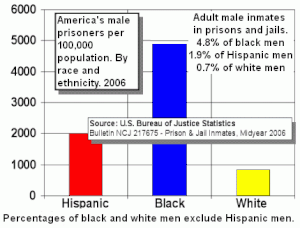
According to the CRF [Constitutional Rights Foundation], over 25 percent of black males and 16 percent of Hispanic males spend time in prison, while only 4 percent of white males do so. Blacks make up only 12 percent of the United States population.
Why? Continue reading