People ask me: why do the NAACP and the SCLC oppose school consolidation?
Well, here’s some recent research that backs up their position, followed
by their positions.
My summary: because it caused great damage last time, and this time would be no different.

Craig Howley, Jerry Johnson, Jennifer Petrie wrote 1 February 2011,
Consolidation of Schools and Districts: What the Research Says and What it Means:
…the review of research evidence detailed in this brief suggests that
a century of consolidation has already produced most of the efficiencies
obtainable. Research also suggests that impoverished regions in particular
often benefit from smaller schools and districts, and they can suffer
irreversible damage if consolidation occurs.
Isn’t such irreversible damage what
Rev. Floyd Rose got Mrs. Ruth Council to admit?
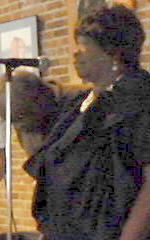
Rev. Rose: “…we were told about the world, where we came from, how we got here.”
Mrs. Council: “I think we did receive a better education.”

They are referring to black schools before desegregation in the 1960s.
Rev. Floyd Rose is president of the local SCLC,
and here is a statement by
Leigh Touchton, president of the local NAACP:
What NAACP has advocated for is cultural competency from our teachers, this is not necessarily a black or white issue.
…
Consolidation won’t be the magic bullet that solves these problems,
there aren’t even any CUEE representatives speaking to these issues. To
most of our members, we think these issues will get worse rather than
better if the two systems were to merge.

As former Valdosta School Superintendent
Sam Allen spelled out,
he doesn’t think consolidation would help the children,
and it would definitely hurt current Valdosta teachers and staff.
As
Leigh Touchton pointed out,
lots of people remember that desegregation resulted in many more

black teachers being let go than white teachers.
“Right now, Valdosta City Schools probably has
fewer black administrators that at any time since integration.”
Consolidation seemed like a good idea back when it was called integration,
but it didn’t work.
Instead, it produced different forms of segregation,
while destroying local cultural competence.
It’s not just a black thing, by the way.
One reason so many people regretted the old
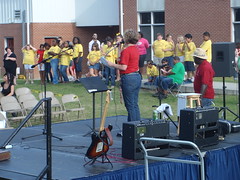
Pine Grove Elementary closing
was because it was the last vestige of local schools in northeast Lowndes County.
Once upon a time it used to be a high school, and it’s not clear to many people
that the current overly-consolidated situation is better.
Apparently it’s not even clear to the Lowndes County School Board,
which plans to split Lowndes High School into two high schools.
We don’t need to repeat a failed consolidation non-solution.

Sam Allen of
Friends of Valdosta City Schools (FVCS)
summed it up:
“It’s not about the children. It’s about somebody’s ego. They want to
consolidate these schools, and to take over our government.”
Karen Noll of FVCS
followed those dots:
“The end game is consolidating the governments of the county and the city.”

Come on, CUEE, let’s hear you rebut that!
CUEE has failed to carry the burden of proof for unification, or consolidation,
or integration, or whatever they’re calling it this week.
Let’s see if they can even bother to try to carry the burden of proof
about what they’re really up to, since it obviously isn’t education.
As for me, I prefer
to actually do something about education:
-
Let’s invest in early childhood education,
which has been proven to improve
“educational attainment, socioeconomic status, job skills, and health insurance coverage as well as lower rates of substance abuse, felony arrest, and incarceration”. -
Let’s stop locking so many people up.
With
1 in 13 Georgia adults in jail, prison, probation, or parole,
the great majority of them black,
we need to end this
new Jim Crow so parents can be at home helping their children learn. -
and let’s promote real industry such as solar for jobs
in distribution, installation, architecting, and college research
for parents and for children so they don’t have to go to Atlanta to find a job.
Those things would actually improve education.
We know how to do them.
Let’s do them.
-jsq