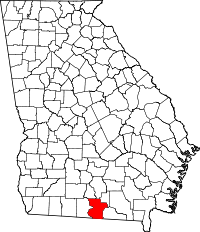
According to the calendar for the Lowndes County Commission, there are two meetings scheduled Monday morning, 11 June 2011. There's no agenda posted for either of them.
Lowndes County Work Session (6/11/2012)
Lowndes County Board of Commissioners 327 N. Ashley St – Commission Chambers, 2nd Floor Administration Building Valdosta, GA 8:30 a.m.
This is the first time in a long time there's been no agenda up less than a day before a County Commission Work Session. Rumor has it that they're going to talk about one of the most contentious and ill-planned issues around: solid waste disposal. Is rumor how we the citizens and taxpayers should hear about that?
The other meeting on the calendar for tomorrow is about SPLOST; see other post.
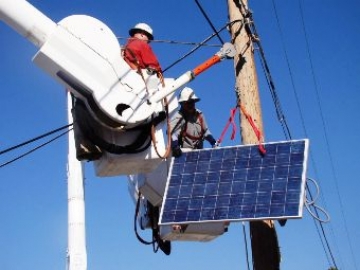
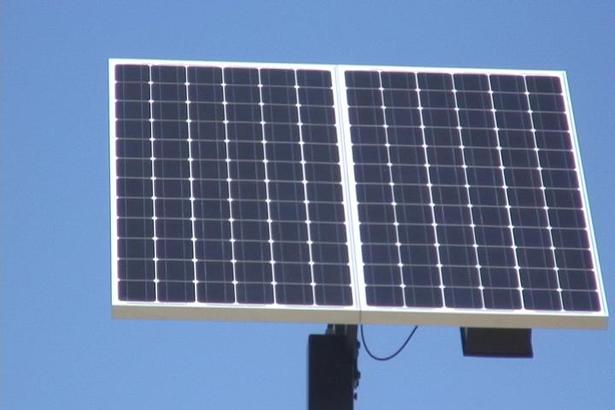
Schools can’t do this in Georgia, because of the Territoriality Law. They can’t have a company finance and install solar panels on their property and lease the power from them at a fixed rate. You can’t, either, not even on your own private property. Does that seem right to you?
A 100-year old private school, Lawrenceville School, in Lawrenceville, N.J., installed a 6.1 megawatt ground-mounted system on 30 acres of school-owned farm land. The system features 24,934 SolarWorld solar panels, manufactured at the company’s U.S. headquarters in Hillsboro, Oregon. KDC Solar leased the land for the project from the school and owns and maintains the solar equipment. Through a power purchase agreement, the Lawrenceville School will buy electricity produced by the array over the next 20 years.
The Lawrenceville School Solar Farm consists of a nearly 30-acre, net metered, 6.1 megawatt solar facility, and honey-producing bee hives, which ring the perimeter of the array. The nearly 900,000 resident honey bees are nourished by a special wildflower mixture planted among and around the solar panels. The Farm offsets 6,388 metric tons of CO2 annually, the equivalent of taking 1,253 cars off the road annually.
The 24,934 solar panels generate six megawatts of energy, covering 90 percent of the School’s needs. During the day, the array can produce nearly twice the amount of energy needed by the School. The excess is imported to the local electrical utility, Public Service Electric & Gas (PSE&G) and credited to the School. The School will draw excess energy and all other required energy from PSE&G after sundown.
Here are videos of the entire 30 April 2012 Regular Session of the Greater Lowndes Planning Commission, which actually discusses cases when there are points to be clarified or positions to be debated. Here’s the agenda.
GLPC had four cases to be decided 10 May 2012 by the Valdosta City Council:
In a rezoning case we heard the de facto motto of the Lowndes County Commission:
“I’m really trying to develop the property as full as it could be.”
This was in discussion about REZ-2012-07 McNeil Property, 6888 & 6870 McNeil Road, Hahira, on the agenda for the Greater Lowndes Planning Commission meeting of 30 April 2012. According to the tax assessors’ database, they spelled it wrong: it’s McNeal Road. This rezoning was for lot width, such as would have to happen for the Gloria Dave property to be subdivided. Nathan Smith spoke for, representing multiple people. There was concern among the GLPC board that the rezoning would permit more houses than were currently being requested.
This was the only case in that meeting with speakers against. Elizabeth Daniels, lives nearby (I think she said across the road), pointed out that four lots on one section would permit 4 lots on another section, and that would be a problem on that narrow road.
Donya Rigal, 6840 McNeal Road, the property next door, pointed out dust from traffic and other problems. McNeal Road is a county road, 35 feet wide.
“They did actually reserve 12 and a half feet of each of these properties in anticipation of improvement, but I don’t know that that’s on any list for improvement any time soon”
On questioning about whether further subdivision would be possible with the requested rezoning, he pointed out that
Continue reading →
The president of the Georgia Solar Energy Association Solar Energy
Industries Association says the solar train is leaving the station nationwide, but Georgia remains enmeshed in tangled legislation. We could have changed that last year with SB 401 if Georgia Power and Southern Company’s vested interested in new nuclear plants at Plant Vogtle hadn’t gotten in the way. We can change it next year with a similar or better law. The time to contact your Georgia legislator or candidate is now, while election season is on.
Update 14 June 2012: Fixed Rhone Resch employment attribution.
There are now more than 100,000 Americans employed at over 5,600 solar businesses in all 50 states. Many of these are small businesses that have been hit hard by the recession, but they are finding new opportunity for growth in the solar industry.
In Georgia, there are more than 80 companies in the solar value chain including Suniva, MAGE Solar, Inc. and Enfinity Corporation.
I will be joining representatives of each of these fine companies — and many others — at the Southern Solar Summit on June 15 in the Georgia Tech Research Institute Conference Center in Midtown Atlanta
to talk about the strides solar is making, and what remains to be done.
These companies are leading rapid innovation — across the entire value chain, from manufacturing improvements to new financing and sales mechanisms, that are allowing more and more Americans to go solar.
He points out that more solar was installed in 2011 than the total installed in 2008 and 2009, which shows that Moore’s Law continues to work for solar: the price per watt continues to go down, causing demand to go up. He projects forward:
The U.S. is on pace to install nearly 3,200 megawatts of new solar capacity this year with an annual growth rate of 30 percent through 2016.
At that rate, the United States would add more than 25,000 megawatts of new solar capacity between now and 2016. That is roughly the size of 25 coal-fired power plants and represents a significant opportunity for states that aggressively move to obtain a share of this exponentially growing market.
Hm, at Plant Vogtle the operating nuclear reactors produce about 2,430 megawatts and the two new ones under construction are supposed to produce about 2,200 megawatts. So that 25 gigawatts of new solar capacity by 2016 would be about 20 nuclear plants, a number that may be familiar from what Germany has already deployed. Somebody remind me again: why are we building any new nukes? How about if we end the nuke boondoggle and get on with clean green jobs for community and profit?
The South Georgia Regional Commission held a public hearing on Wednesday June 6th to give an overview of the current Implementation Phase draft of the Joint Land Use Study (JLUS) for Moody Air Force Base and surrounding communities.
Todd Miller, the project coordinator, gave a power point presentation. When asked if the presentation could be made available on the SGRC web site, he said yes (and then called to make sure I could find it).
The complete draft implementation phase documents are available at http://www.sgrc.us/JLUS/implementation.htm and the comment period is open until the end of June. Comments should be sent to Todd Miller at tmiller (at) sgrc.us.
JLUS Transparency and Videos Public Hearing, Southern Georgia Regional Commission (SGRC), Todd Miller, Valdosta, Lowndes County, Georgia, Fri, 8 Jun 2012 10:21:39 -0400. Videos by Gretchen Quarterman for Lowndes Area Knowledge Exchange (LAKE).
And finally, beware! Most of the discussion in these videos is about specific lists of non-discretionary projects. There’s also 25% of the T-SPLOST money that could be spent on discretionary projects, which are already being specified by the local governments,
and which may include many of the same projects that were on the original unconstrained project list but got bumped off the constrained list.
Videos T-SPLOST Public Meeting, Southern Georgia Regional Commission (SGRC), Corey Hull, Travis Harper, Valdosta, Lowndes County, Georgia, 19 September 2011. Video by Gretchen Quarterman for Lowndes Area Knowledge Exchange (LAKE).
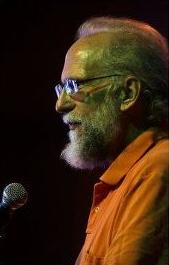
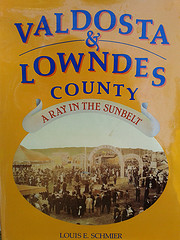
VSU professor and student publish book chapter about films of Lowndes County. You, too, can submit a film about changes in local culture for the whole world to see.
The goal is simple: to get all of us who live in Lowndes County, Georgia,
to ponder some of our casual habits and to seek better ways of doing things here. The hope is that the collective wisdom and creativity of various community members can stoke our collective imagination—maybe even our “collective conscience”—and generate improvements in our way of life. The hope is that the collective wisdom and creativity of various community members can stoke our collective imagination—maybe even our “collective conscience”—and generate improvements in our way of life. Our somewhat quixotic reasoning is that change has to start somewhere, so why not initiate it right now, right here “in our own backyard”?
Do you have a cause? If so, please make your own 90-second mini-documentary and we’ll see you in Valdosta the weekend between the Martin Luther King holiday and the Superbowl.
Larry Hanson, Valdosta City Manager, asked for the regional council to reconsider aviation projects, especially considering that the tax was supposed to be for projects of regional significance. Then he pointed out
Out of that $503 million about 40% of it or $212 million is projected to be generated here in Lowndes County. And when you look at what's being returned, for instance to the city of Valdosta, it's $47 million. It is certainly one thing to be a donor, but that's a pretty substantial donor.
He said he appreciated all the other counties, but much of the money would go to counties that are not contiguous to Lowndes County and are not part of the Valdosta Metropolitan Statistical Area (MSA), which includes the four counties of Lowndes, Brooks, Lanier, and Echols. He continued:
Lowndes County is about 26% of the region's population and we generate about 38% of the revenue, and we're not quite getting that back in terms of the distribution.
You may wonder why a City of Valdosta official was speaking for Lowndes County. County Manager Joe Pritchard was there at the start of the meeting, and I think County Engineer Mike Fletcher was, as well. County Chairman Ashley Paulk came in late and summoned Pritchard and Fletcher outside the glass doors of the meeting room. They stood there for quite some time, peering in, and then vanished.
Aviation Projects, and Valdosta is a substantial donor –Larry Hanson @ T-SPLOST 2011-09-19 T-SPLOST Public Meeting, Southern Georgia Regional Commission (SGRC), Corey Hull, Valdosta, Lowndes County, Georgia, 19 September 2011. Video by Gretchen Quarterman for Lowndes Area Knowledge Exchange (LAKE).
Today I received an invitation from the Industrial Authority to attend a focus group interview for input to their Competitive Assessment and their Economic Development Strategy. So, dear readers, what do you think I should say to them? Don’t worry; I have some ideas already, but I’m all ears for more.
Invitation from Valdosta-Lowndes County Industrial Authority (VLCIA) to a focus group interview 20 June 2012 Wiregrass Georgia Technical College, Valdosta, Lowndes County, Georgia, 1 June 2012. Scanned by John S. Quarterman for Lowndes Area Knowledge Exchange (LAKE).