It’s not that we’re saying we don’t have broadband.
We have connectivity; that’s not the issue.
We have great partners that help us with that.
Well, local “leaders” need to learn to say it:
“we don’t have broadband!”
Many of the people of Lowndes County and even more in the surrounding
counties
can’t afford Internet access at all, as Idelle Dear told the Lowndes County
Commission.
And the “great partners” Ms. Schruijer bragged about will never provide
it for us without a lot of prodding, because AT&T and Verizon
and Sprint and Comcast and Mediacom don’t think anything outside the
Atlanta beltway has enough population density to bother with,
and even in Atlanta all people get is U.S.-style low-speed low-reliability
Internet connectivity that would never even be on sale in Japan or France
or Korea or Finland or even Estonia.
Tom Call illustrated my point when he
talked about a residential project
where a provider installed cable and claimed they were providing voice, TV, and Internet access, but then didn’t actually have the capacity for Internet
when people started using it.
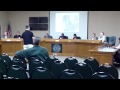
Mary Gooding spoke up for VSU at
the Industrial Authority 19 February 2013,
saying that
VSU President McKinney was
in Athens (as was President Perrin of Wiregrass), but he and
VSU:
We too believe that this is a huge strategic initiative for our community.
And we were thrilled after the meeting that we attended that
the city, the county, both educational institutions, the Industrial
Authority, everyone there, the hospital for sure, all agreed
that this had to be a significant incentive.
At Valdosta State it’s becoming one of our biggest road barriers to
online degrees, to online classes.
That’s again more bandwidth that’s needed to be able to deliver
degrees and classes online.
That’s all good, but where were the superintendents and school boards
of the two K-12 school systems?
Where were library
Continue reading →
It’s definitely a priority for us….
Only 14% of our citizens have a college degree
and we need 70% to have a college degree within ten years.
To be able to accomplish that we’d better have
…certainly one of the most important recruiting tools that we’re
going to have to figure out in this community how we can get it. To
be honest with you, it’s a wide open question. Do you have the
infrastructure? How much will the infrastructure that we currently
have support? We’re going to have to find a way to get with the
professional providers and find out just exactly what these
capabilities are in our community…. I see that as the big
question. We’ve got to figure out where to start with it.
I think it is probably in my opinion one of the number one issues
that this community is going to have to address from the standpoint
of where we go with economic development in the future for this
community not only for new economic development but for existing
businesses as well. As a business begins to grow,
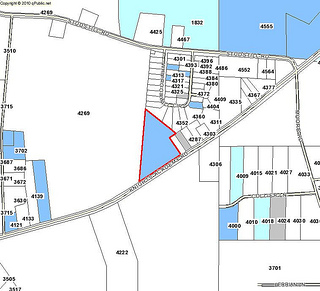
After
massive public opposition
just fought off
a subdivision near Moody’s gate,
do we want telephone cell towers popping up in Moody’s flight lines?
Trying to outlaw municipal broadband isn’t the only thing telecom
companies and ALEC are up to in the Georgia legislature:
they’re also pushing a bill for higher cell towers with less
local government control over height or siting.
Do you want one next to you without even an opportunity for a local government hearing?
Here’s what ACCG says about
HB 176,
renamed from ‘Advanced Broadband Collocation Act’ to
‘Mobile Broadband Infrastructure Leads to Development (BILD) Act’:
HB 176 passed a House Energy, Utilities and Telecommunications
Sub-Committee on Thursday. Representatives from ACCG, Cobb County,
Gwinnett County, GMA and several cities expressed concerns on the
impact this legislation will have on local cell tower siting
ordinances. This bill significantly preempts local governments in
reviewing and approving applications for both the modification of
existing cell towers and structures (collocation) and the
construction of new cell towers and structures local communities. As
HB 176 is the top priority of the wireless industry this session and
is being backed by many other influential groups including the
Americans for Prosperity and the Georgia Chamber of Commerce, it has
very strong momentum. Please have your county staff review the bill
and inform your House members of any negative implications it has on
your local zoning, land use or tower/equipment application review
processes. This legislation will likely be heard on the House floor
soon.
A Georgia Senate committee needs to take it up
a bill that would greatly ease financing
solar power for your housetop or business roof.
Sen. Jack Murphy is the chair, and you can contact him today.
Another bad idea from ALEC already passed in SC and NC and is now in the GA
legislature, getting coverage in several national technical
and political blogs:
HB 282, which would effectively forbid
municipal broadband if any commercial carrier offers 1.5Mbps.
It's up for a hearing this week: time to call your state rep.
Incumbent broadband providers are pushing legislation that would
restrict Georgia towns from building municipal broadband networks.
Under the proposal, if a single home in a census tract has Internet
access at speeds of 1.5Mbps or above, the town would be prohibited
from offering broadband service to anyone in that tract.
State-level restrictions on municipal broadband networks are
Received Friday. April Huntley also sent it to the Lowndes County Commissioners.
I have added a few links and pictures. -jsq
Dear Editor,
I’m not sure if people know or care that there is
another Dollar
General about to pop-up in Lowndes County. This time it will be in
Naylor. I’m not sure if this will be an improvement or not.