Tag Archives: probation

Human rights and war on drugs incompatible —LEAP

While the
local CCA private prison contract expired
(yay!),
the U.S. still has


5% of the world’s population and 25% of the world’s prisoners
,
which is

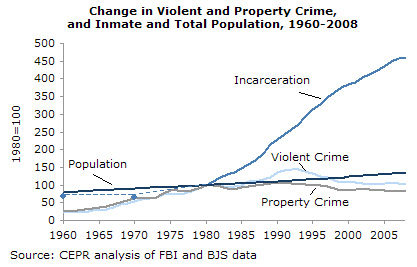
seven times our incarceration rate of 40 years ago,

while the crime rate is about the same,
and Georgia has

1 in 13 adults
in the prison system (jail, prison, probation, or parole.
We can’t afford that.
The money we waste locking people up could be sending people to college
or paying teachers.
And the root cause is still the

failed war on drugs,

which is also one of the biggest problems with human rights around the world.

LEAP wrote 16 March 2012,

Human Rights is a Foreign Concept in the UN’s “War on
Drugs”


“Fundamentally, the three UN prohibitionist treaties are
incompatible to human rights. We can have human rights or drug war,
but not both,” said Maria Lucia Karam, a retired judge from
Brazil and a board member of Law Enforcement Against Prohibition
(LEAP).

Richard Van Wickler, currently a jail superintendent in New
Hampshire, adds, “I suppose it’s not shocking that within the
context of a century-long bloody ‘war on drugs’ the idea of human
rights is a foreign concept. Our global drug prohibition regime puts
handcuffs on millions of people every year while even the harshest
of prohibitionist countries say that drug abuse is a health issue.
What other medical problems do we try to solve with imprisonment and
an abandonment of human rights?”


Good point.

We don’t lock up people for drinking.
We only lock them up for endangering other people while drinking.
And we tax alcohol sales and generate revenue for the state.
Let’s do the same with drugs:
legalize, regulate, and tax.
That’s what we did with

alcohol in 1933
,
and it’s time to do the same with other drugs.

-jsq

“I want him in my jail, not a private jail.” —Sheriff Chris Prine

Last week Sheriff Chris Prine volunteered his opinion of private prisons:

You were talking about the private jail system.
I’d like to voice my opinion of that.
The private jail from our study so far, the cost….
I’m going to use a figure of around 800 inmates;
we’re pretty close to 900 in our jail now.
We figure around maybe $36 a day to feed the inmate,
counting of course the food and our employment.

And looking at the private jail sector.
And of course I’m responsible for the inmate whether he is in a private
jail or in my jail.
If I’m going to be responsible for that inmate, I want him here;
I want him in my jail, not a private jail.

[applause]

Another thing is the cost factor.

Continue reading

I have become a Fan of Very Supervised Probation —Robert Nagle

Received yesterday on

Save money by streamlining the state penal code
. -jsq

My darling 22 year-old daughter wound up with a second DWI, because


the first one was a wrist-slap. Don’t hate me as a parent because of
it. But she went to DWI Court in Austin. The year of intense supervision
and no-nonsense attitude and her willingness to not fight it (much)
has turned her attitude and Life around. Did it suck for her? Why,
yes. But, who knows but what it saved someone else’s life? And maybe it
saved her own. I have become a Fan of Very Supervised Probation. If
she’d gone to jail for six months, I suspect she’d have just come out
hating society and gone right back to what put her there.

-Robert Nagle

Presumably this was for driving while intoxicated (DWI) with alcohol.
We tried Prohibition for alcohol back in the 1920s, and repealed it
in the 1930s, because it produced criminal gangs while failing
to stop people from drinking alcohol.
So instead we criminalized the misuse of alcohol such as while driving
and legalized, regulated, and taxed purchase of alcohol.
And now we mostly don’t actually lock people up for DWI:
we put them on supervised probation.

It’s time to do the same for other drugs.
We can’t afford to continue to spend more taxpayer dollars on
locking people up than on education.

-jsq

How to end the epidemic of incarceration

There are historical reasons for why we lock up so many people,
some going back a century or more, and some starting in 1980 and 2001.
Knowing what they are (and what they are not)
lets us see what we can do to end the epidemic of
incarceration that is damaging education and agriculture in Georgia.

Adam Gopnik wrote for the New Yorker dated 30 January 2012,

The Caging of America:
Why do we lock up so many people?

More than half of all black men without a high-school diploma go


to prison at some time in their lives. Mass incarceration on a scale
almost unexampled in human history is a fundamental fact of our country
today—perhaps the fundamental fact, as slavery was the
fundamental
fact of 1850. In truth, there are

more black men in the grip of the
criminal-justice system—in prison, on probation, or on
parole—
than were in slavery then.


In Georgia,

1 in 13 of all adults is in jail, prison, probation,
or parole:
highest in the country (1 in 31 nationwide).
Georgia is only number 4 in adults in prison, but we’re continuing
to lock more people up, so we may get to number 1 on that, too.


Over all, there are now more people under
“correctional supervision” in America—more than
six million—than
were in the Gulag Archipelago under Stalin at its height. That city of
the confined and the controlled, Lockuptown, is now the second largest
in the United States.

The accelerating rate of incarceration over the past few decades is just
as startling as the number of people jailed: in 1980, there were about


two hundred and twenty people incarcerated for every hundred thousand
Americans; by 2010, the number had more than tripled, to seven hundred
and thirty-one. No other country even approaches that. In the past two
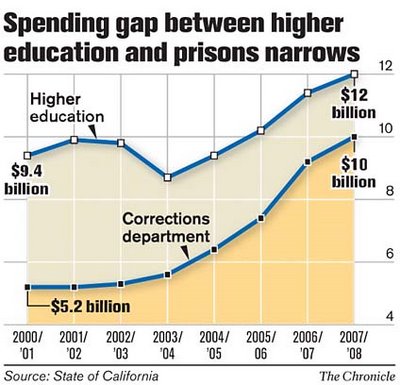
decades, the money that states spend on prisons has risen at six times
the rate of spending on higher education.

And we can’t afford that, especially not when we’re cutting school budgets.
That graph of education vs. incarceration spending is for California.
Somebody should do a similar graph for Georgia.

The article does get into why we lock up so many people:

Continue reading

Time to divest from private prison companies

It’s time to stop private prison profiteering by refusing to take
their profit: divest private prison company stock from personal,
pension, and church funds.

There’s no need to speculate that private prison companies have
incentive to keep more people locked up: CCA says so.
Kanya D’Almeida wrote for IPS 24 August 2011,

‘Profiteers of Misery’: The U.S. Private Prison Industrial Complex
:


CCA’s 2010 annual report
states categorically that, “The demand for our
facilities and services could be adversely affected by the relaxation
of enforcement efforts, leniency in conviction or parole standards
and sentencing practices or through the decriminalization of certain
activities that are currently proscribed by our criminal laws — for
instance, any changes with respect to drugs and controlled substances
or illegal immigration could affect the number of persons arrested,
convicted, and sentenced, thereby potentially reducing demand for
correctional facilities to house them.”

CCA continues, “Legislation has been proposed in numerous jurisdictions
that could lower minimum sentences for some non-violent crimes and
make more inmates eligible for early release based on good behaviour,
(while) sentencing alternatives under consideration could put some
offenders on probation who would otherwise be incarcerated. Similarly,
reductions in crime rates or resources dedicated to prevent and enforce
crime could lead to reductions in arrests, convictions and sentences
requiring incarceration at correctional facilities.”

What’s this got to do with Georgia?

Continue reading

Disparity in Criminal Justice

Is a private prison “good clean industry” as a local leader once told me?


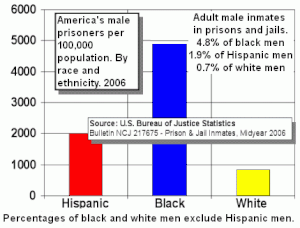
According to the CRF [Constitutional Rights Foundation], over 25 percent
of black males and 16 percent of Hispanic males spend time in prison,
while only 4 percent of white males do so. Blacks make up only 12 percent
of the United States population.

Why?

Continue reading

Interview with an architect of Portugal’s successful drug decriminalization

One of the architects of Portugal’s successful drug decriminalization policy
says,
“to make
demands of addicts who are enslaved by their addiction is senseless.”
Well, it makes sense to those who profit by it, such as private prison
companies.
And Georgia is now proposing

to make field slaves
out of them,
for

failing a drug test.

Inês Subtil wrote for communidad segura 11 May 2009,

Portugal: Success in harm reduction
:


In 1999, Portugal broke new ground by enacting legislation that
decriminalized all drug use. Ten years later, the results are there
for all to see, results of a change that João Goulão, president of
the do Instituto da Droga e Toxicodependência (The Drugs and Chemical
Addiction Institute) IDT, believes show the law has been instrumental in
solving the problem of drug abuse, and crucial for bringing legislation
into harmony with practices and people.

A family doctor, Goulão was condecorated by the president of the
Portuguese Republic, but he says he is always ready for to roll up
his sleeves and get out in the field. At 55, he is a candidate for the
Presidency of the European Drugs Observatory, but that has not clowded
his sobriety about the work at hand.

In an exclusive interview to Comunidad Segura, Goulão discusses the
workings and the structure of the institution that he presides over, that
has set a world-wide example of success. For him, drug use is closely
associated to self-esteem. “If we could restore drug addicts their
human dignity, we would be able to demand something in return. But to make
demands of addicts who are enslaved by their addiction is senseless,”
he said.

Now that makes a lot of sense.
And Portugal demonstrates that it works.

He has more sensible things to say in the interview, including this:

Continue reading

1 in 13 Georgia adults in the prison system —Pew Center on the States


Georgia is number 1 in something: locking people up,
1 in 13 of adults,

according to the Pew Center on the States.


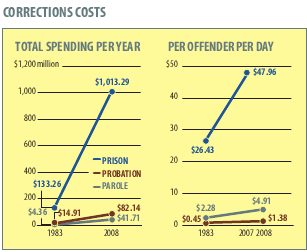
That costs us more than a billion dollars a year in tax money,
5.9% of the state budget.
That’s up from $133.26 million in 1983, increased by more than a factor of seven.


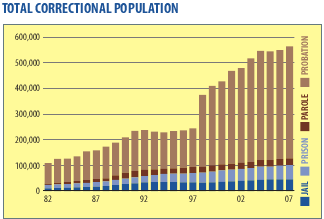
Meanwhile, the correctional population swelled from around 100,000 in 1982 to more
than 550,000 in 2007.
And while other states have started decreasing their prison populations,
Georgia’s continues to increase.
The state is even coming up with new ways to lock people up,
such as kicking them out of mental institutions.
We seem headed back towards

plantation slave labor

and

prison road gangs

in for minor drug infractions.

How about we reverse this trend?

Continue reading

Eligible for prison road labor

In for a drug offense?
Got out but failed a drug test?
You may be eligible for a prison road gang!

AP wrote 4 July 2011,

GA parolees & road maintenance


Georgia is expanding a pilot program that sanctions some parolees by
putting them to work rather than returning them to prison.

The program began in Milledgeville, Gainesville, Columbus and Dalton. This
summer it will be expanding to communities across Georgia.

Parolees are eligible if they have committed low-level violations of
their supervision requirements, such as the onetime failure of a drug
test or curfew violations.

How long will it take before these prisoners are sent to work in fields?

Wouldn’t it make more sense to stop wasting taxpayer dollars
on locking up people for minor drug offenses?

Or maybe prison slave labor is a good way to celebrate July 4th.

-jsq

PS: Gretchen got this item from Dwight Rewis of Echols County.

Many rural farmers are taking notice of HB 87 —Patrick Davis

Patrick Davis points out from Macon that HB 87 is producing
Lowndes County farm employment problems, and maybe local farmers
should take that into account when they vote.

Patrick Davis wrote,

Rural Republicans in Georgia can’t have it both ways on immigration reform


With the law passed and ready for implementation, many rural
farmers—especially in Central and South Georgia—are taking notice to
the exodus of migrant workers and immigrants which has left some farmers
without workers to pick crops.

Many of these same farmers that are hurting economically and losing
crops in these rural counties had voted Republican for years.


Valdosta’s Ellis Black who represents parts of Lowndes County as a
state representative helped to pass Gov. Nathan Deal’s conservative
and punitive agenda and consequently it has contributed to drive an
increasing number of migrant workers out of the Peach State.


Black has continued to justify his HB-87 vote and attempt to support
Gov. Deal’s ridiculous assertion in regard to the use of probationers
as a solution.

That last link is to

Parolees to replace migrants?
Gov. Deal says put probationers in fields

by David Rodock in the VDT 15 June 2011, which included:

Continue reading