Tag Archives: Politics

Arrogance of (Georgia) Power —Michael Noll

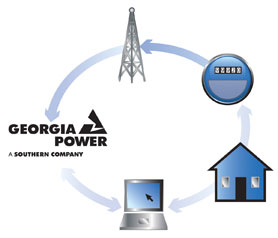
Received yesterday on Smart Metering in Finland Compared to Georgia Power; also as a facebook note. -jsq

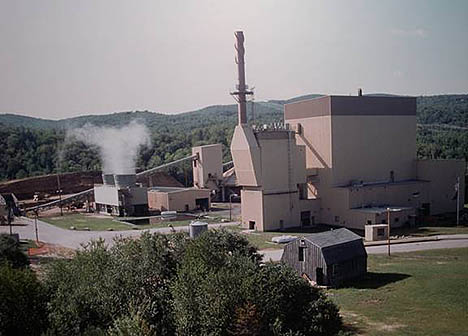
ONLY a monopoly like Georgia Power can proclaim to be “environmentally responsible” yet operate some of the worst coal power plants in the nation. Its Scherer Plant near Macon even leads the pack in regard to greenhouse gas emissions. Do they not understand the reality of global warming? Do they not notice ongoing drought conditions throughout the country (see http://droughtmonitor.unl.edu/)? And why, in the context of these drought conditions, are they still investing in technologies (e.g. coal, nuclear, biomass) that need enormous amounts of water for cooling purposes?

ONLY a monopoly like Georgia Power can claim to “care” for the well being of our society when they operate the nation’s largest biomass incinerator, run the nation’s worst coal firing plant, and are pushing for new nuclear power plants. Have they not heard of Fukushima, Chernobyl, and Three Mile Island? How can they still ignore the mounting evidence in regard to the side-effects of the vast pollution coming from their coal and biomass plants (see http://www.wiregrass-ace.org/linked/second-opinion.pdf)?

ONLY a monopoly like Georgia Power can pretend to “respect” its customers when it forces them to pay for the construction of nuclear power plants nobody wants, or when it chooses intimidation as a tool to push through “smart meters”. The notion that you can’t have electricity without “smart meters” is not only ludicrous but reminds one on “leadership qualities” you expect to find in North Korea but not in the US. By the way, one should note that states like California have given their customers the possibility (dare I say right?) to “opt out” (see http://www.treehugger.com/clean-technology/more-california-utilities-required-let-customers-opt-out-smart-meters.html ).

by Michael Noll on Thursday, July 26, 2012 at 12:33pm ·

PS: In case anyone wonders, I am not differentiating between Georgia Power and the entity that controls it: Southern Company.

The Emperor’s New Clothes —Michael Noll

The VDT apparently declined to print this LTE submission. I added the links and images. -jsq

When I opened a recent “Sunday Business” section of the Valdosta Daily Times I was expecting to see a thorough discussion of the pros and cons of smart meters. After all, the headline read: “Smart Meters — Fact or Fiction?” What I found, however, was quite different. In case you missed it, here a summary of the highlights:

According to Georgia Power “concerns about smart meters are nothing more than myths.” These concerns range from health risks and increased bills to an invasion of your privacy and house fires started by electrical shorts. Myths or not, the best way to counter customers’ concerns would be to provide studies that, for example, show that smart meters are less dangerous than cellular phones or that electricity bills have not increased as a result of smart meters. However, customers only get assurances which, frankly, do nothing to dispel existing concerns.

Georgia Power also claims that it is using smart meters to be more environmentally

Continue reading

Professor unrepentant in latest fracking payola case

Apparently the natural gas industry pays professors to greenwash their polluting product, like back in the hey-day of radio record companies used to pay disk jockies to play their records. Remember: natural gas from fracking is the main thing Southern Company and Georgia Power are switching to from coal (not that they’re even abandoning coal, just rebranding it as “21st century coal”). That and their nuke boondoggle at Plant Vogtle. All approved by the Georgia Public Service Commission, all of whose members apparently accept massive direct or indirect contributions from the utilities they regulate. Two GA PSC Commissioners slots are up for election right now.

The professor most recently found to be in the pay of a fracking company when he reported on fracking is unrepentant. Terrence Henry wrote for State Impact Texas yesterday, Texas Professor On the Defensive Over Fracking Money

So the questions remaining are: Why didn’t Groat disclose this in the study? And did he fail to tell anyone at the University about it?

The professor would not agree to an interview, but in an email to StateImpact Texas he says the Public Accountability Initiative report is “a mixture of truths, half truths, and unfounded conclusions based [on] incorrect interpretations of information. I don’t want to discuss it.”

The University of Texas requires that financial conflicts of interest be disclosed by employees when it has “potential for directly and significantly affecting the design, conduct, or reporting of … research or is in an entity whose financial interest appears to be affected by that research.”

Dean Sharon Mosher of the Jackson School of Geosciences says that Groat submitted the financial conflict of interest form to her office in previous years, but that he had not done so this year. “I was not aware that he was still a member of the board,” Mosher tells StateImpact Texas. “Had I known he was still a member of the board and being paid, I would have insisted that he disclosed it.”

What report? Follow the links in here. Terrence Henry wrote for State Impact Texas 23 July, Fracking Company Paid Texas Professor Behind Water Contamination Study,

Earlier this year, a study led by Dr. Charles “Chip” Groat for the Energy Institute at the University of Texas at Austin made headlines for saying there was no link between fracking and groundwater contamination. (When we reported on the study in February, we noted that the study also found some serious issues around the safety and regulation of fracking that weren’t getting much press coverage.)

But according to a new report out today by the Public Accountablitiy Initiative (PAI), a nonprofit watchdog group, the conclusions in Groat’s report aren’t as clear cut as initially reported. And Groat himself did not disclose significant financial ties to the fracking industry.

Groat, a former Director of the U.S. Geological Survey and professor at the Jackson School of Geosciences at the University of Texas at Austin, also sits on the board of Plains Exploration and Production Company, a Houston-based company that conducts drilling and fracking in Texas and other parts of the country. According to the new report (and a review of the company’s financial reports by Bloomberg) Groat received more than $400,000 from the drilling company last year alone, more than double his salary at the University. And one of the shales examined in Groat’s fracking study is currently being drilled by the company, the report says.

Since 2007, Groat has received over $1.5 million in cash and stock awards from the company, and he currently holds over $1.6 million in company stock, according to the PAI report. (Update: we clarified with PAI, and that $1.6 million in stock comes from the stock awards over the years. PAI says Groat’s total compensation from the company is close to $2 million.)

And it gets worse from there: rough drafts published, unsubstantiated peer review claims, etc.

This isn’t an isolated case:

This isn’t the first time that academic studies of drilling have been called into question because of industry ties. In an earlier report on a State University of New York at Buffalo study on fracking’s environmental risks, Public Accountability Initiative found that it “suffered a number of critical shortcomings” and the “report’s authors had strong industry ties.”

And in today’s investigation from Bloomberg, they found other instances of industry influence and financial ties at Pennsylvania State University and University of Wyoming.

Do we want to trade air pollution by coal for groundwater pollution by fracking? When we have a better future already at hand through conservation and efficiency along with solar and wind power?

-jsq

Library Board selects out-of-state architect for local library @ LCC 2012-07-24

The Library Board says no local architect was as qualified as the one they picked in Tallahassee to design a new local library here. The same Lowndes County Commission that just a month ago reappointed three members of the Library Board votes tomorrow evening on this bid selection.

Brittany D. McClure wrote for the VDT today, Library board selects architects: New main branch to be located at Five Points development

Clemons Rutherford & Associates (CRA) was chosen by the library


View Larger Map

board as the firm that will lead the design team for the new main library branch that will be moving next to the new municipal auditorium at Five Points.

Lowndes County Commissioners will vote Tuesday on the selection.

“The selection committee felt that the firm that was selected was the most qualified for the project as well as had the lowest estimate,” said Chad McLeod, Lowndes County project manager.

Though the selection process for agencies was directed by Lowndes County, the library board had input in the selection.

“The process to build the library began nearly three years ago at the county’s urging,” said Kay Harris, Library Board chairman.

Requests For Proposals (RFP’s) were advertised for 30 days, with 35 RFP’s requested by various agencies and architectural firms. Ten completed RFP’s were submitted to the county.

And when do we the taxpayers get to see these ten completed RFPs? Not unless somebody files an open records request and somebody else makes them available: it’s the county way!

OK, so why was CRA selected?

Continue reading

Austin Energy’s Biomass Buyer’s Remorse

Georgia Power’s parent Southern Company (SO) is bragging about selling a 100 MW biomass plant to Austin Energy. Funny how SO’s press release doesn’t mention Austin Energy’s buyer’s remorse. Let’s see why Austin Energy should regret buying biomass.

SO PR 18 July 2012, Southern Company brings nation’s largest biomass power plant on line: Nacogdoches facility contributes to Austin Energy renewables goal

Southern Company SO announced today that the nation’s largest biomass plant is putting electricity on the grid in Texas. Southern Company President, Chairman and CEO Thomas A. Fanning joined state and local dignitaries today at the company’s Nacogdoches Generating Facility to mark commercial operation for the 100-megawatt unit.

Austin Energy is receiving energy from the plant through a 20-year power purchase agreement.

The PR goes on about local jobs and taxes, which could have been produced through building solar or wind generation. How much did that biomass plant cost Austin Energy? Funny how that’s not in the PR!

The City of Austin owns Austin Energy, and the Mayor and City Council are its Board of Directors. Vicky Garza wrote for the Austin Business Journal 20 July 2012, Austin Energy’s buyers remorse for biomass,

Austin City Council Member Mike Martinez wouldn’t mind a do-over on the $2.3 billion, 20-year energy contract the council approved in 2008.

The contract calls for Austin Energy to buy the entire output from the Nacogdoches Generating Facility, a 100-megawatt wood-waste-fueled biomass power plant.

“When the contract was initially brought to Council, it appeared to be a good deal to help us reach our adopted goals for renewables,” Martinez said.

It seemed like a good idea at the time.

$2.3 billion for 100 MW is about $23 per Watt. How does that compare to the 30 MW Webberville solar farm Austin Energy opened this year? Continue reading

It is time to finally put the pieces of a larger energy puzzle together —Michael Noll

Seen today on the WACE facebook page: an online comment the VDT declined to let appear. It was on Natural gas use expanding; station planned for Valdosta by Kay Harris, VDT, 22 July 2012. -jsq

There are some major problems with this article, but let’s first begin with the points one can agree with:

Mr. Putnam is correct when he says that natural gas is a much cleaner source of energy than coal and oil. It is also true that natural gas is a “bridge fuel” which can buy us time to develop new technologies. However, here are the points that are missing (or were glanced over) simply because we are, again, looking for a quick fix to our dependence on foreign oil, while doing little to address issues that really matter:

  1. Neither Mr. Putnam nor the VDT seem to fully understand or recognize the environmental damage fracking does. This new technology is not only responsible for our nation’s current natural gas surplus, but also comes at an enormous price to both people and the environment.
  2. Time and again we are talking about the need to become independent of foreign oil, yet little attention is paid to the need to conserve. Instead we continue to ‘live it up” and consume more energy per capita than any other western nation. If you are addicted to a “drug” (as in an overly consumptive lifestyle) hopping from marijuana to heroin won’t help your general problem.

It is time to finally put the pieces of a larger energy puzzle together because at the end of the day natural gas, too, is a finite source. But how will we ever get there when a) entities like Southern Company (i.e. Georgia Power) refuse to embrace truly clean sources of energy production like solar and wind, when b) people like Mr. Putnam and papers like the VDT only present a one-sided view of an important and complex issue, and when c) we, the consumers, refuse to accept our responsibilities in this whole mess as if we had a God given right to be wasteful?

-Michael Noll

4 of 5 incumbent GA PSC Commissioners accept massive utility campaign contributions

Could contributions produce influence? Neither of the incumbent Public Service Commissioners showed up for last night’s GPB debate, just as they didn’t show up for the previous weekend’s GIPL debate. Saturday the AJC examined the incumbents’ campaign finance and regulatory records, and let’s look a bit into how they’ve acted as regulators towards their biggest indirect contributors: Georgia Power.

Kristi E. Swartz wrote for the Augusta Chronicle or AP 21 July 2012, Donors to Georgia Public Service Commission members vested in decisions,

Four of Georgia’s utility regulators have accepted at least 70 percent of their campaign contributions from companies and people that could profit from the agency’s decisions, a review of five years of campaign finance records by The Atlanta Journal-Constitution revealed.

The fifth member of the state Public Service Commission, Tim Echols, campaigned on the promise that he wouldn’t take money from employees or lobbyists for businesses regulated by the agency.

Even so, nearly one in five dollars in Echols’ contributions came from people or companies whose business is affected by PSC decisions, the review found.

Together, the PSC commissioners took in nearly $750,000 in the last five years, records show. Two of them — Stan Wise and Chuck Eaton — are seeking re-election this year to their $116,452-a-year posts.

Wise and Eaton would be the two incumbents who can’t be bothered to show up for debates. Doesn’t make them look very responsive to the people, does it? Who do they respond to, then?

A review of major decisions that have come before the PSC in the past five years shows utilities have received much — but not all — of what they have asked for.

Georgia Power donors

In the past five years, for example, Georgia Power’s rates have risen 24 percent, although they dipped in June. The PSC must sign off on the company’s rate changes.

Current and former employees of Georgia Power, its parent Southern Co. and its law firm, Troutman Sanders, poured $52,650 into the campaign coffers of four of the sitting PSC members.

A Georgia Power spokeswoman argued that including Troutman Sanders and other company vendors in an analysis of spending “is false.” But critics say including them is critical to capturing the full influence of the utilities on the PSC.

Influence like this? Melissa Stiers wrote for GPB News 19 July 2011, PSC Nixes Vogtle Cost Check,

Continue reading

Invent batteries to the price point of the electricity market —Donald Sadoway

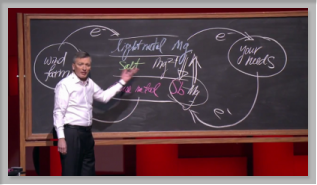
MIT Prof. Donald Sadoway thinks he’s found a way to build electric-grid-scale batteries out of dirt.

Electric utilities complain solar and wind power are not baseload, capacity, energy sources because they are intermittent. You know, if they weren’t busy running up cost overruns that could easily exceed the entire annual budget of the state of Georgia, maybe the utilities could solve this problem. Meanwhile, Prof. Sadoway, instead of looking for the snazziest coolest most efficient new method of energy storage, defined the problem in terms of the market:

the demanding performance requirements of the grid, namely uncommonly high power, long service lifetime, and super low cost. We need to think about the problem differently. We need to think big. We need to think cheap.

Then he set parameters on the solution:

If you want to make something dirt cheap, make it out of dirt. Preferably dirt that’s locally sourced.

He cast about for possible precedents and found aluminum smelting gave him some ideas for using low density liquid metal at the top, high density liquid metal at the bottom, and molten salt in between. Choosing the right metals is the trick, which he thinks he’s found: magnesium at the top, and antimony at the bottom.

Is Sadoway right? Will his battery work at grid scale? I don’t know. But he’s asking the right questions, and it’s worth a try.

As Kyle Sager wrote for Heliocurrent 4 May 2012, Renewable Storage: Leave it to MIT,

Has Dr. Sadoway achieved the holy grail of renewable energy? Judge for yourself. Our attention is compelled by the degree of his certainty and the seeming simplicity of the approach. Watch MIT’s Donald Sadoway explain his vision here (link).

Seems to me there are at least two major approaches:

Continue reading

I think voting on a Saturday is super extra great and convenient —Gretchen Quarterman

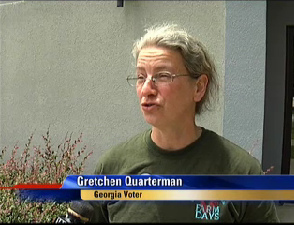
Gretchen reminded us to vote early yesterday. She got on TV to do that.

Greg Gullberg wrote for WCTV yesterday, Voting On Saturday For First Time In Ga. History

For the first time ever, Georgia voters statewide were able to cast their ballots on a Saturday. And for some it was their best chance.

Gretchen on WCTV “I think voting on a Saturday is super extra great and convenient,” said Gretchen Quarterman, Georgia voter. “To vote on Saturday is particularly convenient. You can just fit it in your errands.”

“It gives the opportunity for voters to get out and vote for those who have to work and it’s an inconvenience for them during the week,” said Sarah Stewart, Georgia Voter.

The extra day comes after the Georgia legislature shortened the early voting period for the Primaries. They took it down from 45 days to only 21.

In Lowndes County, plenty of people are taking advantage of early voting.

So what was Gretchen doing there?

Continue reading

Where are the traditional media about Brooks County Board of Elections?

Patrick Davis provided some explanation of what the suspension issue was at the Brooks County Board of Elections, and then asked a bigger question: where are the traditional media when sunshine is needed?

Patrick Davis wrote yesterday for the Macon Examiner.com, Brooks Co. Board of Elections addresses voter disenfranchisement at meeting

The main reason behind the suspension is centered around his alleged participation in qualifying and certification irregularities along with accusations of voter disenfranchisement of local citizens in regard to a sample ballot for the upcoming July 31 election.

Collins insists it is a misunderstanding, and Nancy Duncan, the chairperson of the Brooks Board of Elections, echoes those sentiments and urged the Board of Elections not to involve the Secretary of State and/or other authorities.

As you can see, he linked who the Brooks County Board of Elections are to what they were saying in George Rhynes’ videos.

Davis linked and discussed to the timed video snippet from my blog post of Thursday; the one that shows the chair demanding of George Rhynes, “What are you doing?”

Then he brought up the bigger sunshine issue:

Continue reading