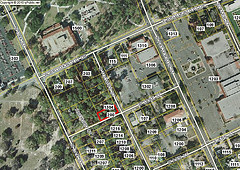
A rezoning for well and septic,
Bevel Creek is back with a lift station pump repair,
and something about an Alapaha waterline:
water, water, water.
Plus a beer license, refunding revenue bonds, and
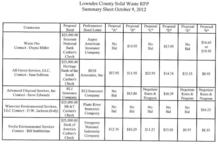
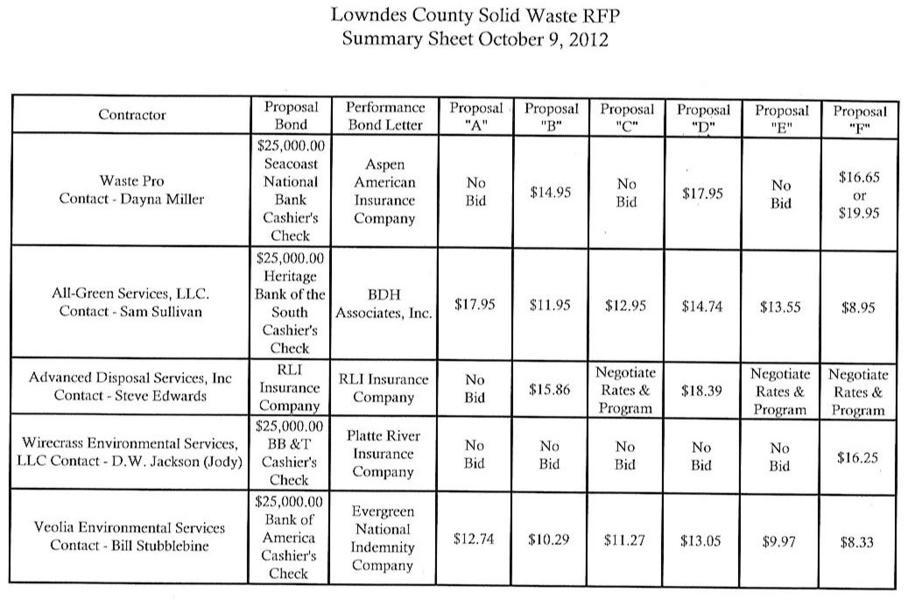
the long-awaited waste management RFP.
And an employee health fair, whatever that is,
and apparently this is community planning month.
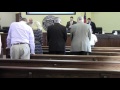
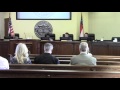
All that at the Lowndes County Commission, Monday morning
and Tuesday evening.
LOWNDES COUNTY BOARD OF COMMISSIONERS
PROPOSED AGENDA
WORK SESSION, MONDAY, OCTOBER 8, 2012, 8:30 a.m.
REGULAR SESSION, TUESDAY, OCTOBER 9, 2012, 5:30 p.m.
327 N. Ashley Street — 2nd Floor
Southern California Edison bet on big baseload nuclear, and
has been out two units for eight months and counting.
Big baseload turns quickly from 24/7 to 0/7.
Tentative plans are forming for a restart, which will take
many more months, if ever.
Wouldn’t distributed solar and wind be quicker and smarter?
In Georgia, as well as California?
The company announced plans to repair and restart one of two damaged
reactors, Unit 2, at reduced power to hopefully halt vibration that
has caused excessive wear to scores of tubes that carry radioactive
water. The outlook for its heavily damaged sister, Unit 3, appears
grim and no decision on its future is expected until at least next
summer.
The Nuclear Regulatory Commission is expected to take months to
review the plan, and there is no timetable to restart the plant.
There are a few signs that the eventual outcome is dawning on some utility people.
Plans are already taking shape that envision lower output from San
Onofre at least into 2013.
“Whenever you lose generation, it has implications,” said San Diego
Gas & Electric spokeswoman Jennifer Ramp.
Well, yeah, and losing big blocks of power is one of the implications
of depending on a few big baseload plants in the first place.
Distributed
solar
and
wind wouldn’t have this problem.
“Renewable (energy sources are) going to have a sliver,”
Bowers said of fuels to create electricity. “Is it going to be
2 or 4 percent? That’s yet to be determined. Economics will drive
that. But you always remember (that renewable energy is) an
intermittent resource. It’s not one you can depend on 100 percent of
the time.”
One time you can depend on it is hot summer days when everybody is
air conditioning, which is why
Austin Energy flipped in one year
from spouting such nonsense to deploying the most aggressive solar rooftop
rebate program in the country.
Austin Energy did the math and found those rebates would cost
about the same as a coal plant and would generate as much energy.
And when it is needed most, unlike the fossilized baseload grid,
which
left millions without power in the U.S. in June
and
hundreds of millions without power in India in July.
A captive Public Service Commission that
rubber-stamps costs for Plant Vogtle.
In case there was any doubt as to the PSC’s role in legitimizing those new nukes,
the very next day Fitch reaffirmed Southern Company’s bond ratings.
Southern Company’s regulated utility subsidiaries derive predictable
cash flows from low-risk utility businesses, enjoy relatively
favorable regulatory framework in their service territories, and
exhibit limited commodity price risks due to the ability to recover
fuel and purchased power through separate cost trackers.
A pressure group for privatizing schools is the origin of the jargon
in the charter school referendum on the November Georgia ballot.
And yes, it’s tied to ALEC.
Provides for improving student achievement and parental
involvement through more public charter school options.
Where else is that wording found?
Combinations of the three phrases “student achievement”, “parental involvement”,
and “charter school” actually are not very common, according to google.
But the Parent Trigger wrote in
Empowering Parents,
Policy initiatives that empower parents are likely to increase
parental involvement and satisfaction and raise student achievement
by inviting parents into the process.
What process?
The designers of the California Parent Trigger made a grave mistake
by leaving tepid reform modules in the bill and allowing districts
to override the parents’ reform choice.
The Georgia constitutional amendment wouldn’t leave school districts
any ability to decide anything.
To get a decent deal on streetlights, a small Georgia city may have
to help change the Georgia Public Service Commission.
Or, an energy concern in Hahira happened to coincide with
a visit by PSC candidate Steve Oppenheimer.
Ralph Clendenin, City Council member, is looking into converting
Hahira's streetlights to LEDs or maybe solar.
He has discussed that with Georgia Power, which will do it for
$250,000 up front.
At a savings of $1,000 a month, that would take quite a while to pay back:
more than 20 years.
Just like you're looking at options the city might do for better choices for lighting
in terms of serving the people and meeting your budget, as Georgians we need that, too.
He indicated that there are more solutions than we're being told.
To me what's improtant are homeowners rights,
and we get control over the power rates,
because our residential rates and small business rates have gone up about 31% in five years.
What it comes down to is people like you in this room in the small communities
figuring out what pieces do we put together to make our community better for tomorrow.
Afterwards in the entranceway,
Ralph Clendenin showed Steve Oppenheimer how
he'd figured out that Georgia Power was charging about 73% maintenance
above the electricity cost of the streetlights.
Oppenheimer said there were many options.
Clendenin suggested one:
The option I see right now is, the Commission somehow, has got to change the rules
on how Georgia Power… structures payments.
Oppenheimer suggested a way to get there:
We need a commission with some new leadership,
with some separation from industry, that doesn't have the
apparent conflicts of interest.
Ralph summed it up pithily:
Ralph Clendenin: 73% is that forever payment to Georgia Power.
Steve Oppenheimer: It's a great deal, if you're on the right end of it.
[laughter]
What say we change the end of the stick we the taxpayers are getting from the PSC?
Work Session, Hahira City Council, Hahira, Lowndes County, Georgia, 1 October 2012.
Videos by John S. Quarterman for Lowndes Area Knowledge Exchange (LAKE).
In the same month, both the Lowndes County Democratic Party
and the Valdosta Tea Party
had speakers explaining how bad the charter school amendment is.
Neither group took a vote, but it seemed pretty clear most of the
attendees at both meetings were against that referendum on the November ballot,
and mostly for the same reason: nobody wants an unelected state committee
taking away local control and local tax revenue.
Parental choice is one thing, and charter schools are another,
but nobody seemed to like Atlanta taking away local control.
This isn’t a Democrat vs. Republican debate.
Legislators voted across party lines to put the constitutional amendment on the ballot.
Republican and Democrat voters must defeat it together.
You can watch for yourself.
Here are the two presentations:
A local middle school teacher spelled out problems with the
charter school referendum: no local control over creation or operation
of the charter schools it would authorize; money siphoned off from
existing local schools; and charter schools actually perform
worse than traditional public schools anyway.
Christie Davis, a teacher at Hahira Middle School,
speaking at the Lowndes County Tea Party monthly meeting Thursday,
pointed out it’s not just the
preamble
to the referendum that’s misleading.
The actual wording of the referendum is also misleading:
Shall the Constitution of Georgia be amended to allow state or local approval
of public charter schools upon the request of local communities?
She remarked:
It sounds very good that we should say yes.
It’s very misleading.
And the reason why it’s misleading is totally purposeful.
It says something about local communities.
We already have that right in our local community, our local boards, to go ahead
and implement a charter school, if we see the need.
However, they put it in there so that voters that don’t really know
what’s going on think they’re helping our local schools by voting yes.
However, by voting yes, it will be funding a parallel state school system
that we have no control over.
A parallel state school system that we have no control over. —Christie Davis
Video by John S. Quarterman for LAKE, the Lowndes Area Knowledge Exchange,
Valdosta, Lowndes County, Georgia, 27 September 2012.
Thanks to Diane Cox, President, Lowndes County Tea Party, for the invitation.
Lowndes County Schools Assistant Superintendent Troy Davis
gave his personal opinion:
“it’s about control”.
The charter school amendment on the November ballot is not about
charter schools, which any community in the state can create now.
It’s about control by the state of local schools and resources.
Dr. Davis pointed out Georgia already has 350 charter schools, up from
160 three years ago.
All but 19 were established and agreed upon by local communities.
There’s a successful one in Berrien County, established by the
Berrien County school board.
The process to create more is in place in every community.
If we wanted one in Lowndes County, all it would take would be for
one of the two school systems (Lowndes or Valdosta)
to approve one.
He suggested looking at the sources of funds for Families for Better Schools,
which is backing the amendment.
Top of the list is a Wal-Mart heir.
(It’s
Alice Walton.
Dr. Davis deferred to Al Rowell for that information,
and that’s also where I heard about Alice Walton.
And as I discovered,
the Walton Family Foundation put in much more
than that last year.)
He noted the bulk of the rest comes from for-profit school operators.
(They include
K12 Inc. of Virginia.)
He noted that the state of Georgia just passed this fiscal year
the third largest budget
in the history of Georgia, $19.1 billion.
Yet the public schools have been cut $6.6 billion (apparently since 2002).
And the Lowndes County school system lost nearly $8 million last year,
and $43 million in the past 10 years.
So he asked:
Keep in mind that this company is based in Virginia, so our tax
dollars from say, South Georgia meant for our school teachers,
administraters, supplies, and educating our students, would go to
bolster the economy in Virginia and line the pockets of the very
rich. Meanwhile we have to raise taxes to simply educate the
students attending our public schools. This is clearly NOT a plan to
‘improve academic achievement’ as the preamble boldly lies.
The preamble is boldly inaccurate and completely biased. The wording
added to the question on the ballot implies that the amendment would
improve student achievement and parent involvement. My stars, what
breathing individual doesn’t want those things.
Facts are that by some measures charter schools perform 3% worse
than traditional public schools. We would hope that schools where
parents have to sign a commitment of parent involvement would have
superior parent involvement. Might I just add that students can be
kicked out of charter schools and all students are educated in the
Traditional Public School setting as per our Georgia constitution.
The ‘biased and inaccurate’ wording in the preamble to the charter
schools question is not found in
HB 1162, the law that allowed this
question to be placed on the ballot. It is not in
HB 797, the law
thaw would be enacted should the amendment pass. NO the wording that
is on the preamble comes straight out of ALEC documents, which are
the equivalent of ‘legislation for Dummies’ with a particular slant
as you might imagine.