At an event this afternoon at UT-San Antonio, Mayor Julian Castro
announced a suite of green energy projects that he said would position
San Antonio as the nation’s “recognized leader in clean energy technology”
and help fulfill his aggressive environmental goals.
Most notably, Castro and leaders from CPS Energy, the city-owned utility,
pledged to shut down one of its coal-fired power plants 15 years ahead
of schedule. By 2018, the city would mothball the 871-megawatt J.T. Deely
Power Plant — a bold move in a growing state that’s seemingly addicted
to coal.
Thomas A. Fanning, chairman, president and CEO of Southern Company,
says his company is committed to communities, renewable energy, and
energy efficiency.
So
helping finance municipal refitting and solar projects
should be a natural for Southern Company!
Fanning also emphasized a continued commitment to the communities the
company serves and stressed the need for a national energy policy and
a robust research and development initiative.
“Southern Company keeps customers at the center of every decision
we make,” said Fanning. “We remain committed to providing reliable,
affordable energy for our customers and to do that we need to maintain
a diverse fuel mix as well as stay focused on developing the newest
technologies.”
Referencing a diverse fuel mix, Fanning highlighted the company’s
commitment to nuclear energy, including building the nation’s first new
units in 30 years. He also discussed the importance of preserving coal –
America’s most abundant energy resource – as well as the role of natural
gas, renewable energy and energy efficiency in meeting its customers
energy needs.
“Furthermore, we are the only company in the industry that is doing
it all. We’ve committed more than $20 billion to these efforts,”
Fanning said.
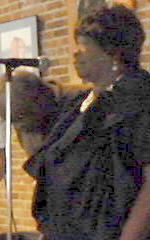
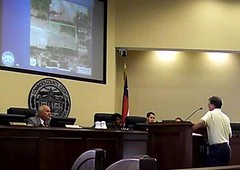
Leigh Touchton, president of the Valdosta-Lowndes NAACP,
says the local and state NAACP are opposed to the biomass plant
because the community that is most affected is the minority community.
She referred to her previous presentation of a letter from
Dr. Robert D. Bullard.
She also brought up an incident with Brad Lofton and recommended
that VLCIA hire an executive director who wouldn’t act like that.
And she said she deals with VSEB all the time:
I’ve taken men through there, I’ve signed them up.
She referred to me when she said that, so what I said before
is appended after the video.
The health of the community is way more important than the job —Leigh Touchton
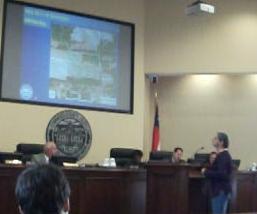
Regular Meeting, Valdosta-Lowndes County Industrial Authority (VLCIA),
Norman Bennett, Roy Copeland, Tom Call, Mary Gooding, Jerry Jennett chairman,
J. Stephen Gupton attorney, Allan Ricketts Acting Executive Director,
Valdosta, Lowndes County, Georgia, 17 May 2011.
Videos by John S. Quarterman for LAKE, the Lowndes Area Knowledge Exchange.
What I actually recommended regarding VSEB, in response to
a specific request from Leigh Touchton for recommendations,
was maybe schedule a meeting with Roy Copeland to talk about
VSEB and solar job opportunities:Continue reading →
I beg to differ with Mr. Pritchard’s opinion regarding “malicious
intent”.
Lowndes County Manager Joe Pritchard says, “I don’t believe through
our investigation, nor through any info we received from the Department
of Ag, are able to indicate any malicious intent.”
Mr. Pritchard should understand that it matters not if this was done
with “malicious intent” or not. “Malicous intent” should be
determined by the investigating criminal agency, not a county manager.
“Malicious Intent” is only important in determining whether the
crime should be filed as a felony, or a misdemeanor.
The law is crystal clear regarding the denial of necessary medical care,
and/or humane euthanasia, for any animal deemed to be in need of such. Any
time a shelter impounds/houses a live animal, the shelter is required,
by law, to afford that animal with humane care – to include necessary
medical care or treatment.
The blogger then goes on to quote Georgia Code, which only brings
in the word “maliciously” for higher fines or imprisonment
for aggravated cruelty to animals.
Birmingham is to host the annual Solar Power UK Conference and
Exhibitionin October 2011. Over 3000 solar industry participants, 30% of
which will be overseas visitors, are due to descend on the city during
the conference following sell out events in Munich and London in 2010,
generating a predicted £4.15m for the city.
That’s about $6.7 million U.S. dollars.
It is the only time the event has been hosted outside of London in the
UK and the first time the conference will be lighting up the city. The
decision comes as Birmingham is increasingly recognised as a hub for the
developing UK solar industry…
So becoming a leader in solar netted Birmingham a major conference,
which brings income in addition to the jobs and energy generated
directly by the solar projects.
Banks and power companies can fund municipal solar projects;
cities and counties don’t have to wait for state or federal governments
to provide them grants.
Or at least Birmingham, U.K. has done it for public housing.
And
Quitman, Georgia did it last year, too.
Plans to fit power generating solar panels to council-owned properties
in Birmingham will be pushed forward this week after the council agreed a
“green new deal” scheme covering 10,000 homes.
In the biggest proposal for retrofitting houses through an energy
efficiency upgrade yet seen in the UK, the council agreed a £100m
proposal last week designed to create jobs and meet the city’s ambitious
targets for reducing carbon emissions.
The plan – Birmingham Energy Savers – will be jointly funded by
Birmingham council and investment from energy suppliers and commercial
banks, and follows two successful pilot schemes conducted in Europe’s
biggest local authority.
From: “Jane Osborn”
Date: Thu, 16 Jun 2011 15:32:19 -0400
Have you seen these proposed projects for our region if the transportation
tax is passed? A few meetings have been held in local cities, mostly
attended by elected officials with Ashley Paulk as the chair of our
committee. Committee members are listed and projects proposed for each
county in the region are outlined in great detail.
You may also notice Hannah Solar among GSEA’s sponsors. Hannah Solar knows quite a bit about incentives; their CEO Pete Marte was at the governor’s signing of the recent expansion of state incentives. More about
HB 346.
It might be worth talking to Georgia Power. Their new CEO claims
to be “bullish on solar”, they just connected Wiregrass Solar’s
plant in Valdosta, and they’re doing various “experiments” and
“demonstrations”. Maybe they need to do a demonstration above Valdosta
City Hall’s parking lot….
City officials and staff gathered Wednesday night to discuss and review
the fiscal year 2012 budget. Public participation was advertised, but
no citizens presented any concern at the meeting. This is the first
budget hearing, with the final adoption of the budget taking place at
the upcoming regular City Council meeting on June 23 at 5:30 p.m.
That’s too bad, because among the items discussed was this:
Energy and fuel prices are a threat, since the private sector controls
the costs. Public Works, the Valdosta Fire Department and the Valdosta
Police Department use significant amounts of fuel.
And I bet the city spends significant funds air conditioning its buildings.
Costs that could be offset by investment in solar panels for those same
buildings.
Solar panels that would limit ongoing electrical expenditures,
and would also be a visible sign to residents and potential
investors that Valdosta means renewable and sustainable energy business.
According to Hanson, for every dollar spent by residents, $1.17 is spent
by non-residents.
And many of those non-residents would see those solar panels,
which would spread the green reputation of Valdosta back to whereever
they came from.