Tag Archives: Transparency

Lowndes County position on LOST negotiations @ LCC 2012 04 09

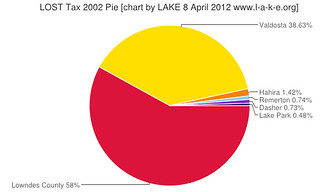
Lowndes County Clerk Paige Dukes handed out this document, Lowndes County’s Report for Initial LOST Negotiations: April 9, 2012, at that first LOST meeting yesterday. When I spoke to her later, I mentioned that I thought it was the very model of how to write such a document: clear, complete, pithy, and easily understandable. She did not have a readily-accessible electronic copy, so I’ve posted these scanned images on the LAKE website.

The document includes a summary of the negotiation procedure (60 days to negotiate, after which it goes to mediation, then Superior Court “baseball arbitration”), plus how and how much LOST can reduce property taxes.
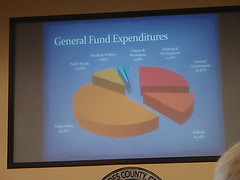
The rest of the document is the county’s position, which includes that the county provides services such as sheriff, courts, public health, and animal control that benefit the entire county, and the county could claim 72% of LOST. However, the county is only asking for the same 58% as negotiated in 2002.

A few things I did not know include that the dedicated millage for Parks and Rec (VLPRA 1.5mil) and the Industrial Authority (VLCIA 1 mil) come out of county property taxes, not out of any city property taxes. Also VLCIA’s millage started since 2002, before which VLCIA was funded out of hotel-motel taxes, including Valdosta hotel-motel taxes.

I also remarked to Paige Dukes that I wished the cities had prepared similar position statements. She said they may be depending on LOST negotiating documents by the Georgia Municipal Association (GMA), and that there were similar documents by the Association of County Commissioners of Georgia (ACCG), both which you can find linked in on the LAKE website.
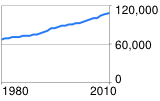
The ACCG guidelines include this interesting passage:

Continue reading
Four minute work session @ LCC 2012 04 09

As I walked in the door, a couple minutes late due to construction on the hospital parking lot, Commissioner Crawford Powell said,

John, you’re late!

They were milling about and looked like they were about to start. But no, they had started early and Chairman Paulk told me the meeting had lasted four minutes because there hadn’t been much to say. So there are no videos of this morning’s Lowndes County Commission Work Session.

I remarked that it had seemed like a fairly complicated agenda, but he didn’t think so.

I asked him about this mysterious item:

7.b. Request from LCSO — GOHS Grant #2013-TEN-0077-00 & #2013-GA-0040-00

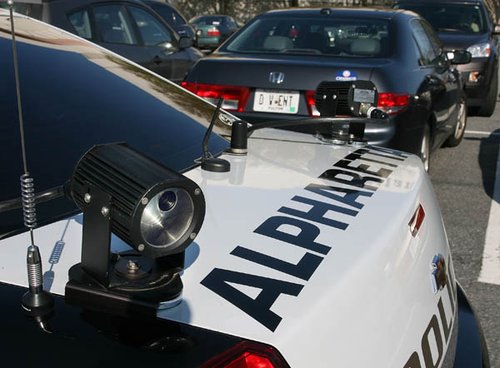
He said it is about some equipment to automate Sheriff’s deputies checking license plates against databases. I told him I had assumed they had already been doing that. He said they could do it by hand, but they’d get really tired trying to do as many as this device could do.

Presumably it’s similar to the Automatic License Plate Reader (ALPR) described by Doug Nurse in the AJC 20 March 2009, New police license plate scanner eyes criminals.

Alpharetta Police Officer John Allen said that a few weeks after the system became went online last August, he was driving home after a shift when the system alerted him that he had passed a stolen car. He wheeled around, and after a chase, arrested the thief.

“I never even saw the tag myself,” Allen said. “I would have just kept going. It catches things I would be unable to see.”

While I don’t know that I’m in favor of ALPR, it’s common enough elsewhere that I was actually surprised the famously drug-interdicting LCSO wasn’t already using it.

To the Chairman’s credit, as soon as I asked about the LOST meeting with the mayors, he said it was at 9:30 in the room next door, and the public was invited. I took videos of that LOST meeting, and they will appear soon.

-jsq

Shadowy LOST talks tomorrow morning among all the local elected governments @ LOST 2012 04 09

It’s great that the local cities and the county government think they can negotiate how to share Local Option Sales Tax (LOST) money this time without spending a lot of money suing each other like they did back in 2002. It’s not so great that they’re doing it at an unannounced time and place.

Kay Harris wrote Saturday in the VDT, LOST talks set to begin: County, cities to meet Monday,

As required by state law, Lowndes County issued a letter to the mayors of all the municipalities in the county, requesting they attend a renegotiation meeting Monday, April 9 to discuss LOST (local option sales tax) distributions.

“This has to be done and approved by the end of the year in order to stay in place, so we have to start the process now,” said Commission Chairman Ashley Paulk.

Well, that’s interesting. When is this meeting? Ah, the time of day wasn’t included in the article.

There’s a clue in David Rodock’s 31 March 2012 writeup about the Commission retreat, Continue reading

Alcohol, development, and a tank? @ LCC 2012-04-09,10

A somewhat complicated agenda at Lowndes County Commission Monday morning (Work Session) and Tuesday evening (voting Regular Session): adoption of infrastructure for Laurelbrooke Subdivision Phase II, four public hearings (a rezoning, a road abandonment, a beer and wine license, and a liquor license). And these cryptic items:
7.a. Seminole Circle Property
7.b. Request from LCSO — GOHS Grant #2013-TEN-0077-00 & #2013-GA-0040-00
Your guess is as good as mine about the Seminole Circle Property. If the Commission wanted we the public to know, they would have told us.

Update 2012 05 06: fixed the date in the title.

However, I believe that 7.b. alphabet soup translates as Lowndes County Sheriff’s Office (LCSO) — Governor’s Office of Highway Safety (GOHS). The TEN in the grant numbers makes me wonder if those grants are related to GOHS’s Georgia Traffic Enforcement Networks:

The Governor’s Office of Highway Safety in cooperation with state and local law enforcement agencies has organized regional Traffic Enforcement Networks around the State of Georgia. There are currently sixteen regional traffic enforcement networks servicing all 159 counties in Georgia. The regional networks are open to all sworn law enforcement officers and prosecutors and are designed to enhance traffic enforcement activities through networking, training and legislation. The networks serve as a catalyst for traffic enforcement officers to voice their concerns and share ideas with their counterparts from other agencies in their region. Guest speakers and panelists have included state and municipal court judges, prosecutors, legislators, MADD representatives, Public Service Commission, and ALS judges.
LCSO participates in this TEN:
Southern Regional Traffic Enforcement Network (SRTEN) Counties included: Atkinson, Lowndes, Berrien, Brooks, Clinch, Coffee, Cook, Echols, Irwin, Lanier, Ben Hill and Tift.
Or maybe they’re just buying another tank. Or will the Commission require that “surrounding counties could be persuaded to contribute” financially like they did when refusing an emergency vehicle grant?

I’m guessing the Commissioners won’t like me guessing what they’re up to. But, you know, if they told us, for example by putting board packet details online with the agendas, we wouldn’t have to guess.

Here’s the agenda.

-jsq

LOWNDES COUNTY BOARD OF COMMISSIONERS
PROPOSED AGENDA
WORK SESSION, MONDAY, APRIL 9, 2012, 8:30 a.m.
REGULAR SESSION, TUESDAY, APRIL 10, 2012, 5:30 p.m.
327 N. Ashley Street – 2nd Floor
Continue reading

The costs of coal on your neighbors’ health

We can’t afford the costs of coal on our health.

John Sepulvado wrote for CNN Radio 1 April 2012, A power plant, cancer and a small town’s fears,

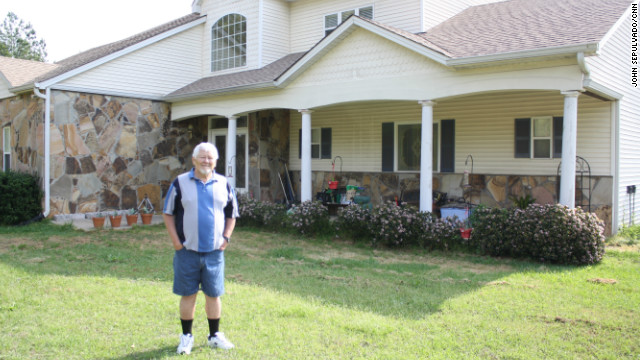
The two of them invested their life savings building their home. It’s a large ranch house on several acres, and the plan was the two of them would leave it for their sons and grandchildren. They gave up that dream after Maddox’s mother developed a rare form of ear cancer and died after living at the home for three years.

“I’m not going to bring my grandchildren up in this,” Maddox says. “Anybody who does would be a fool, I think.”

The problem, Maddox explains, is now he and his neighbors are getting sick. For Maddox, the first signs of trouble would come in the middle of the night, when he would wake up with nose bleeds mixed with clear mucus. Then his muscles started twitching, and then he got kidney disease, and then sclerosis of the liver.

Where does he live? Down the road from Plant Scherer in Juliette, Georgia: the nation’s dirtiest coal plant.

Georgia Power’s solution? Buy houses like his, cap the well, and raze the house.

Better solution? Get off of health-destroying moribund coal and get on with clean distributed wind and solar, for the profit (even to Georgia Power), for energy independence, for resilience, and yes, for our health.

-jsq

The socialized costs and privatized profits of waste disposal

In her response to my post about Commissioners panic about trash at undisclosed location, Barbara Stratton seems unfamiliar (like most people) with economic externalities. Here’s a definition:

A negative externality occurs when an individual or firm making a decision does not have to pay the full cost of the decision. If a good has a negative externality, then the cost to society is greater than the cost consumer is paying for it. Since consumers make a decision based on where their marginal cost equals their marginal benefit, and since they don’t take into account the cost of the negative externality, negative externalities result in market inefficiencies unless proper action is taken.

When a negative externality exists in an unregulated market, producers don’t take responsibility for external costs that exist—these are passed on to society.

Which is socializing the losses. A famous ongoing case of this is BP making record corporate profits while dumping huge amounts of oil into the Gulf of Mexico, continuing to destroy shrimping, wetlands, wildlife, and local people’s health.

And that’s what the County Commission is doing: privatizing the profits of trash pickup and socializing the losses onto landowners (who have to pay for fences and gates), onto the general public (who have to pay for law enforcement to catch dumpers), and onto those who can’t afford to pay for private dump fees (who will get stuck with fines instead). That is indeed, as Barbara says, “redistribution of wealth”: redistribution from the rest of us to the private waste pickup companies.

The Commission is ducking its responsibility to find an equitable solution that everyone can afford. Funny how they can deal with special tax lighting districts for subdivisions but they claim they can’t come up with a way to publicly fund waste collection. Could it be because all the voting Commissioners are town-dwellers who don’t understand that rural people don’t have exactly the same needs or resources as city people?

Barbara advocates,

Continue reading

Avoid crony capitalism or conflict of interest —Barbara Stratton

Received Monday on Commissioners panic about trash at undisclosed location. My response is in the next post. -jsq

There are many injustices of socialism and redistribution of wealth (or garbage) and I’m glad to see you recognize this in the shifting of illegal dumping costs to landowners. I am also glad to see that at least the county is talking about privatization and not public/private partnerships (so far). When Hahira almost succeeded in placing a regional waste transfer station on city owned property
REZ-2007-32 City of Hahira, 0028 027 6751 Union Road, 2 lots, R-21 to M-2, DRI
I was concerned that the county was complacent in this because the Lowndes Board of Commissioners November 2007 meeting minutes showed they agreed to rezone the property for the purpose of the transfer station against the recommendations of the county planner, Jason Davenport. That rezoning action replaced a DRI (Development of Regional Impact) request for waste transfer station rezoning so it was easy to assume the county and possibly the region had a mutual agenda for the transfer station. During a recent discussion on the dangers of regional government with Valdosta mayor, Larry Hanson, I asked if the transfer station was a regional interest. He assured me the City of Valdosta had no knowledge and no interest in that transfer station prior to articles in the Valdosta Daily Times. I’ve not had an opportunity to discuss the possibility of mutual agenda with the county and if it comes up again in the future I am assuming proper procedures will be followed which mandate public meetings and input into the planning before a third DRI is entered, not after.

I worked a contract for the IT of a Pensacola, FL software company that had waste management software contracts all over the US. It was my job to be

Continue reading

County quantifies some infrastructure payback times @ LCC 2012 03 31

Water and sewer take decades for return on investment, and roads and bridges probably aren’t any better. That’s worth remembering whenever solar, busses, or trains come up.

David Rodock wrote for the VDT Sunday, Commission wraps up annual retreat: Utility payments, road projects and waste disposal discussed

The cost of one mile of construction for water takes 23 years for a return on the initial investment; sewer takes 21.3 years.

The VDT didn’t specify the similar return times for road paving or bridge construction, but it’s a safe bet they’re at least as long. The farther water or sewer lines or roads or bridges are from population centers, the more they cost both directly in installation and indirectly in trips for fire and sheriff vehicles, and especially school busses. The county commissioned a report on that several years ago, as Gretchen reminded them last year. In the particular rezoning case on Cat Creek they were discussing then (Nottinghil), they made a decision to table which seems to have caused the developer never to come back with that particular sprawl plan. I congratulated the Commissioners at that time, and I congratulate them again on not promoting sprawl.

Sprawl costs the county, payback takes years, and longer the farther out it goes. What if we did something different? More on that later.

-jsq


Commissioners panic about trash at undisclosed location @ LCC 2012 03 31

The Lowndes County Commission continues to hide when it talks about waste disposal. The VDT got slightly more specific about the undisclosed location of the Lowndes County Commission Retreat, and much more specific about what they were doing, yet according to state law their minutes need to be still more specific. And it’s not clear why they’re panicking about waste disposal when the deficit on that public good has come down rapidly in recent years.

David Rodock wrote for the VDT Saturday, Commission tackles key issues: Waste management, tax lighting districts and SPLOST discussed at retreat,

Commissioners and staff from Lowndes County buckled down Friday at Chairman Ashley Paulk’s guest home to address issues such as waste management, special tax lighting districts, SPLOST negotiations and necessary expenditures for equipment and staff.

A LAKE roving reporter (not me) observed many vehicles at Shiloh Farms’ recent acquisition in Berrien County on the north side of GA 122 a bit east of Old Valdosta Road (Cat Creek Road), so that seems likely the undisclosed location.

By the end of the afternoon, Commissioners made decisions on a few key issues.

It’s good to hear our elected representatives were working, even though they do not appear to have followed state law about this open meeting. And we can look forward to the names of which of them voted for each decision, according to the recent Georgia Supreme Court decision.

Here’s one thing they were working on:
Solid waste management, which is currently handled with collection centers, has run at a deficit of over $300,000.

That’s less than the deficit it was running last time (23 May 2011) the Commission had a meeting at an undisclosed location with no agenda where they talked about waste disposal. According to David Rock in the VDT 24 May 2011, Commissioners want Lowndes out of the trash business,

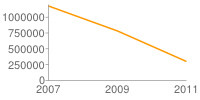
In total, the county is currently spending $782,058.34 each year for solid waste disposal, a reduction from $1,176,207.75 in 2007.

So that’s a rapid reduction in cost to less than a third of what it used to be, and less than half of what it was only a year ago. Back to Saturday’s VDT report:

County manager Joe Pritchard assured them the budget was in better shape than last year.

So why are they panicking about waste disposal?

Continue reading

Insurgents win majority on Cobb EMC board

According to the Cobb EMC board election results, even without two runoffs, four new members were elected yesterday, so added to the 4 new members elected in November, that’s 8 out of 10 members opposed to coal plants, opposed to corruption, and for transparency.

Kim Isaza wrote for MDJOnline today, Four new Cobb EMC directors elected,

Four more seats on the Cobb EMC board of directors are now in new hands, and two more will be settled in unprecedented runoff elections on April 21.

The winners are: Rudy Underwood, who was unopposed in Area 2; Kelly Bodner in Area 3; Bryan Boyd in Area 8; and Eric Broadwell in Area 9.

One runoff will be for Area 4, where Jim Hudson won 681 votes (42 percent) and David McClellan won 601 votes (37 percent). There were eight candidates competing in Area 4.

The other runoff will be for Area 5, where Tripper Sharp — one of the plaintiffs to the 2007 lawsuit against the EMC — got 775 votes (46 percent), and Charles A. Sevier got 502 votes (30 percent). Nine candidates were vying for that seat.

To quote from Rudy Underwood’s platform:

Continue reading