Tag Archives: Lowndes Area Knowledge Exchange

Videos: McDonald’s vs. Foxborough Sign Variance

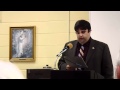
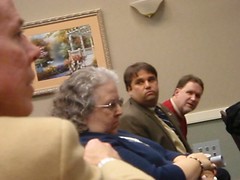
The corpulent corporate giant asked for a variance, and met with unexpected opposition, as well as unexpected results. The formal title of the item was VAR-2010-15 McDonald’s Corp. (4601 Foxborough Avenue), on the agenda of the Valdosta-Lowndes County Zoning Board of Appeals (ZBOA). McDonald’s was “Requesting a Variance to the maximum square footage allowed for drive-thru signage.” Lowndes County Zoning Administrator Carmella Braswell. introduced the case, and Chair Allan Strickland mentioned pictures of other fast food restaurants with signs within ordinance limits.

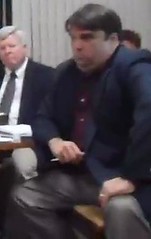
A McDonald’s employee and his lawyer presented their case, in which we learned that McDonald’s wants two signs for a large total variance and that McDonald’s doesn’t want to do custom signs.

Well-known local lawyer Gary Moser stepped up to speak for over 200 residents of the Foxborough neighorhood who don’t want a McDonald’s at their entrance. Continue reading

On What Basis Does ZBOA Decide?

How does the Valdosta-Lowndes County Zoning Board of Appeals (ZBOA) base its decisions? Well, its members are appointed by two different local governments, of the City of Valdosta and Lowndes County, and each government provides its own criteria. Here they are: Continue reading

Who is ZBOA?

The current members of the Valdosta-Lowndes County Zoning Board of Appeals (ZBOA) are:
City of Valdosta
Allan Strickland, Chair
Laverne Gaskins
Scott Orenstein, Vice-Chair
Nancy Hobby
Paul Alvarado
Lowndes County
Gretchen Quarterman
Dr. William Houseal
Dave Kirk
Here they are at their 14 Sep 2010 meeting:

Left to right: Laverne Gaskins, Gretchen Quarterman, Paul Alvarado, Allan Strickland (Chair), Scott Orenstein (Vice-Chair), and Dr. William Houseal. (Nancy Hobby and Dave Kirk were not present at that meeting.)

According to the city’s web page about them:

The ZBOA is a joint board consisting of eight appointed citizens, four each for the City of Valdosta and Lowndes County. Members are appointed for three year terms. City board members are appointed by the Mayor-Council based on their experience in land development, their familiarity with the City of Valdosta Zoning Ordinance, and their willingness to commit sufficient time to the board in order to be an effective board member.
What do they do? Continue reading

First Friday, Valdosta, 3 Sep 2010

Downtown Valdosta was bustling Friday night:

That’s Albert in the hat bending my ear.

There was food, there was blown glass and much other artwork, and bands. As previously mentioned, SAVE was educating people about the problems with biomass. More pictures in the flickr set.

First Friday, Valdosta, Lowndes County, Georgia, 3 September 2010, Pictures and videos by Gretchen Quarterman for LAKE, the Lowndes Area Knowledge Exchange.

-jsq

Proposed Solar Plants

OK, let’s look at “solar” in the online interactive map from Joel Achenbach’s story about The 21st Century Grid in the July 2010 National Geographic. It’s easy to count the proposed solar power plants in Georgia: zero. Yet there’s one in Virginia, one in Maryland, and at least three in Florida, adding to the currently largest solar plant in the country near De Soto, Florida. The map legend repeats the GEFA canard that
The Southwest is a solar-power hotbed. To supplement fossil fuel plants, long-distance transmission lines stretch from the Mojave Destert, which has plenty of sun.
Yes, that’s true, but what about this. At least three solar plants are proposed around San Antonio and Austin, which are not in the area of the southwest the map blurb is referring to. In fact, the largest solar plant in the country is proposed for Austin. Austin is one degree of latitude south of Valdosta, and has been leading the country in solar deployment for many years now. Texas in general almost doubled renewable energy generation between 2004 and 2006 while Georgia did nothing. Texas hasn’t stopped. When will Georgia start?

The Austin solar solution doesn’t require massive new power lines, either. It’s mostly been accomplished with solar panels on houses and business roofs; panels that wouldn’t show up on National Geographic’s map because they’re small and distributed. Which is the point: they generate power where it’s needed, and at peak times when it’s needed, namely when it’s hot and sunny out and air conditioners are running on max. There’s no reason Georgia can’t do the same.

I would continue this series by showing wind generation proposed for Georgia, but there isn’t any of that, either. There could be, off the coast.

Which makes more sense: polluting our air with more coal and biomass plants, or getting a move on with solar and wind?

-jsq

Proposed Biomass Plants

Let’s select “other” in the online interactive map from Joel Achenbach’s story about The 21st Century Grid in the July 2010 National Geographic. This map clearly shows the proposed Wiregrass LLC plant in Valdosta, as well as two plants proposed just to the south for Hamilton County, Florida, and one in Echols County, Georgia, which presumably would be the Oglethorpe Power alternative site. Several of the other plants shown are probably the other proposed Oglethorpe Power plants. Missing is Georgia Power’s Plant Mitchell in Albany, which is supposed to convert from coal to biomass. (Also if you select “nuclear”, the two Georgia Power proposed nuclear plants on the Savannah River are missing.) Apparently National Geographic edoesn’t have a complete list of proposed biomass plants. I wonder who does, if anybody?

Nonetheless, take this map of proposed biomass plants and combine it with the map of proposed new coal plants, plus the existing coal plants in Juliette, Georgia (dirtiest in the country) and Albany, and south Georgia is slated to become even more infested with polluting energy sources.

Does that seem like a good idea to you?

Next: proposed solar plants.

-jsq

Proposed Coal Plants

In the July 2010 National Geographic, Joel Achenbach writes about The 21st Century Grid. It’s mostly about how we need a smart grid and additional power lines to redistribute power better, but it does get into proposed power plants to generate new power.
Although everyone acknowledges the need for a better, smarter, cleaner grid, the paramount goal of the utility industry continues to be cheap electricity. In the U.S. about half of it comes from burning coal. Coal-powered generators produce a third of the mercury emissions in America, a third of our smog, two-thirds of our sulfur dioxide, and nearly a third of our planet-warming carbon dioxide—around 2.5 billion metric tons a year, by the most recent estimate.
Then it talks about how it’s hard to get stodgy electric utilities to invest in anything else. However, there is at least one way:
A California law requires utilities to generate at least 20 percent of their electricity from renewable sources as of this year.
OK, so what new energy plant are proposed for Georgia? The online interactive map lets you select different energy types. The map above shows four proposed new coal plants in Georgia, surrounding south Georgia (plus something nonrenewable in Florida near Tampa). I recognize the one in far southwest Georgia as the one proposed for Early County and fortunately still tied up in litigation. All four are in addition to the existing Plant Scherer at Juliett, GA, near Macon, the dirtiest coal plant in the country, and the one that generates 2/3 of our power for south Georgia (as well as selling a lot of power to Florida). Adding still more dirty coal plants does not look like progress.

Continued in next blog entry.

-jsq

Candidates, Lowndes County Commission, District 2, at LCDP BBQ

Every year the Lowndes County Democratic Party (LCDP) has a barbecue to which it invites candidates for public office. These include local candidates. Here we have the two Democrats running for Lowndes County Commission in District 2, in alphabetical order: Debra M. Franklin and John S. Quarterman. Notice the two candidates dining amicably side by side.

Debra M. Franklin: Continue reading

Nix on biomass plant in Traverse City, Michigan

Looking farther afield in Cadillac, Michigan than schools and realtors, there are some people who aren’t completely pleased with the local biomass plant:
Complaints are more frequent along Mary Street, a short stretch a few hundred yards south of the plant. Residents there deal with more intense noise and odors.

Craig Walworth’s home is among the closest to the plant. He walked up to his Jeep — a vehicle he cleaned the day before — and dragged his finger through a layer of film on the hood.

“Every morning, you have that to look forward to,” he said. “I clean my screens three times a year during the summer because they clog up.”

Nonetheless he didn’t say it affected his property values. However, that’s not the only issue.

Meanwhile, about an hour north on the edge of Lake Michigan, in Traverse City local activism caused cancellation of a proposed biomass plant: Continue reading

Cadillac, Michigan, biomass plant

Natasha Fast, Angela Manning, Allan Ricketts (Project Manager), Geraldine Fairell, Keisha Ferguson, Brad Lofton (Executive Director) In the VLCIA meeting with concerned citizens of 10 June 2010, one of the action items taken by the VLCIA was:
Obtain, if available, an analysis of the property value trends of residential/ commercial property adjacent to the Cadillac Michigan biomass electric generating plant.
Col. Ricketts has reported back on that action item.

Cadillac Renewable Energy LLC, Cadillac, Michigan

My transcription of what he said is rather long, so please follow the link.

Allan Ricketts’ summary: nobody could find a systematic analysis of property value trends. He did get various personal analyses (as above).

I agreed he’s made a good effort to find what he could find.

And that we would continue looking in other sources.

-jsq