Tag Archives: Law

A victory for transparency in government

Best to record those votes! So said the Georgia Supreme Court last month.

G.G. Rigsby wrote for SavannahNow 6 February 2012, Court ruling favors openness in government

The Georgia Supreme Court ruled Monday that votes taken in open meetings must be recorded, even if they are not roll-call votes.

The decision in Cardinale v. the City of Atlanta reverses a Court of Appeals ruling that the state’s open meetings law doesn’t require meeting minutes to reflect how members voted when the vote is not unanimous.

Matthew Cardinale filed a lawsuit against the City of Atlanta for failing to record how each city council member voted when a non-roll-call vote was taken at a February 2010 retreat.

Hm, the Lowndes County Board of Commissioners is

meeting in retreat this weekend.

Maybe they’ll keep good minutes.

Writing for the majority, Chief Justice Carol Hunstein said, “While the act provides for public access to agency meetings, it also fosters openness by, among other things, requiring agencies to generate meeting minutes that are open to public inspection so that members of the public unable to attend a meeting nonetheless may learn what occurred. …To adopt a contrary holding that agencies possess discretion to decline to record the names of those voting against a proposal or abstaining in the case of a non-roll-call vote would potentially deny non-attending members of the public access to information available to those who attended a meeting.”

Earlier this year, Effingham County’s commissioners took a secret ballot for vice chairman. At their next meeting, after questions from a reporter, they said how they voted so the information could be included in the minutes for the meeting.

The secret vote in Effingham was an indication that the case that was pending before the state Supreme Court was important, Cardinale said.

Effingham County… ah, yes! The county whose Industrial Authority fired Brad Lofton for non-transparent dealings.

Doubtless everything is on the up-and-up around here, so I’m sure all the local government bodies, elected and unelected, will have no problem recording how all their members vote.

-jsq

Barnes and Richardson against Georgia Power’s CWIP

Two former big-time politicos join the fight against CWIP.

Melissa Roberts wrote for CBS Atlanta yesterday, Unlikely duo challenges Ga. utility over rates,

The unlikely duo of ex-Democratic Gov. Roy Barnes and former Republican House Speaker Glenn Richardson are heading to court to challenge Georgia Power over a surcharge they say has cost ratepayers as much as $100 million.

They're going after Construction Work in Progress (CWIP)!

Jim Galloway in the AJC yesterday noted the irony,

The gentleman knows of what he speaks, and that is only one of the ironies here. The legislation that has allowed Georgia Power, for the last 15 months, to charge ratepayers for financial costs associated with the construction of two new nuclear power plants, was passed in 2009 during Richardson’s final session as the second- most powerful man in the Capitol.

Maybe he can help undo the harm he helped do. Ditto Roy Barnes, who got coal-plant-building Cobb EMC former head Dwight Brown off on a technicality.

Melissa Roberts wrote:

The lawsuit contends the utility is charging sales tax on the finance surcharge and the franchise tax paid to cities. Richardson said in a phone interview he and Barnes are two "Davids against the Goliath."

Add those two Davids to the two Davids of Savannah, Drs. Sidney Smith and Pat Godbey and their Lower Rates for Customers LLC. Add a few more thousand Davids around the state paying their CWIP in separate checks with objections.

New Hampshire banned CWIP and their nuke-building utility went bankrupt. Missouri banned CWIP. Iowa is working on banning CWIP. Georgia can ban CWIP, too. Watch out Goliath!

-jsq


Human rights and war on drugs incompatible —LEAP

While the
local CCA private prison contract expired
(yay!),
the U.S. still has


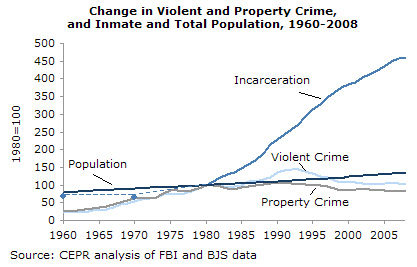
5% of the world’s population and 25% of the world’s prisoners
,
which is

seven times our incarceration rate of 40 years ago,

while the crime rate is about the same,
and Georgia has

1 in 13 adults
in the prison system (jail, prison, probation, or parole.
We can’t afford that.
The money we waste locking people up could be sending people to college
or paying teachers.
And the root cause is still the

failed war on drugs,

which is also one of the biggest problems with human rights around the world.

LEAP wrote 16 March 2012,

Human Rights is a Foreign Concept in the UN’s “War on
Drugs”


“Fundamentally, the three UN prohibitionist treaties are
incompatible to human rights. We can have human rights or drug war,
but not both,” said Maria Lucia Karam, a retired judge from
Brazil and a board member of Law Enforcement Against Prohibition
(LEAP).

Richard Van Wickler, currently a jail superintendent in New
Hampshire, adds, “I suppose it’s not shocking that within the
context of a century-long bloody ‘war on drugs’ the idea of human
rights is a foreign concept. Our global drug prohibition regime puts
handcuffs on millions of people every year while even the harshest
of prohibitionist countries say that drug abuse is a health issue.
What other medical problems do we try to solve with imprisonment and
an abandonment of human rights?”


Good point.

We don’t lock up people for drinking.
We only lock them up for endangering other people while drinking.
And we tax alcohol sales and generate revenue for the state.
Let’s do the same with drugs:
legalize, regulate, and tax.
That’s what we did with

alcohol in 1933
,
and it’s time to do the same with other drugs.

-jsq

News about CCA’s private prison Project Excel expected at Thursday’s VLCIA board meeting

Thursday’s Industrial Authority
retreat and board meeting are both open meetings, which the
public can attend.
And at the 2PM board meeting apparently there will be news about
Project Excel, CCA’s private prison.

VLCIA Executive Director Andrea Schruijer clarified on the telephone just now
that

Thursday’s 9AM-2PM board retreat

is an open meeting; the public can attend.


She said the agenda was made by the facilitator, and she had not seen it.
The purpose of the retreat is for board members to talk about their experiences
and roles as board members.
The retreat is not for discussing specific projects.

Regarding the 2PM board meeting Thursday, she said she thought the agenda
was on VLCIA’s web pages.
When we looked and found it wasn’t there,
she said apparently there was some confusion due to the rescheduling
of the meeting, and the agenda would be there soon.

I asked her whether the Project Excel

Project Excel, the CCA private prison,
she said the

Preliminary Specifications
(

see section 1.6.1
)
had been received.
She said they had been received,
and they were simply a site diagram, a copy of which was
hanging on VLCIA’s office wall.
From discussion with her, it appears to be this site plan:

Continue reading

Two VLCIA meetings Thursday: retreat and board 2012 02 23

This month’s
cancelled Industrial Authority board meeting
has been

rescheduled.

Not the usual date, not the usual time, not the usual place:


Notice: The Valdosta-Lowndes County Industrial Authority Regular Meeting
has been rescheduled for the month of February. The meeting date will be

Thursday, February 23, 2011, 2:00 P.M.

at 101 N Ashley Street.

Notice of the Valdosta-Lowndes County Industrial Authority Board Retreat,

Thursday, February 23, 2012, 9:00 AM- 2:00 PM

at 101 N Ashley Street.

Since I’m familiar with that location as the old closed pawn shop,
I called VLCIA’s new PR person, Meghan Duke, for clarification.


I congratulated her on her recent appointment, and repeated what I’ve
been saying for some time now, that VLCIA does many good things most
people don’t know about and with some PR maybe we would.
She said she was working on educating the public.

About the meeting location, she told me

Continue reading

There are some things only government should do: FL Senate ends prison privatization

There are just some things that only government should do.
And jailing for profit is not the public good.
That’s what the Florida Senate decided Tuesday,
ending an attempt to legislate privatization of prisons.

David Royse in wctv.tv yesterday,

Florida Senate Kills Prison Privatization
,

A bipartisan coalition of senators bucked the chamber’s Republican


leadership Tuesday and rejected a proposal to privatize several
prisons, but got warnings from leaders that it will have a cost in
further budget cuts.

In a dramatic showdown with Senate President Mike Haridopolos and
three other top leaders one of whom controls the Senate’s budget,
one who controls the calendar and one who will be the next president
opponents of the bill managed to kill it on a 19-21 vote.

The odd coalition that lined up against the bill included Republican
populists who have become occasional mavericks, Democrats and some
members of the GOP caucus that almost always vote with their party,
but come from areas laden with corrections officers who opposed the
idea.

Private prison proponents tried to sell it as cost savings.
If prison privatization really does save money, why did the
legislature previously try to hide it in a general budget bill,
which was

thrown out by a judge back in September?

This time, senators weren’t buying that baloney.

Continue reading

Help pass GA Senate Bill 401 to facilitate distributed power cogeneration

SB 401 intends to modernize Georgia law to make distributed power generation
easier.
You

can help.

Drs Sidney Smith and Pat Godbey
not only

have started Tabby Power,
which sells solar power directly to customers.
They also have an outfit called

Lower Rates for Customers
,
which is about generating solar power in one place and selling it in another.
There are various legal impediments to doing that.

Charlie Harper wrote for the Courier-Herald and Peach Pundit 9 February 2012,

A Little Sunshine On A Battle To Expand Renewable Energy
,

Essentially, customers with solar panels meter not only power coming


into their house from the existing grid, but also the amount of
power returned to the grid. The generating company — Georgia Power
in most of the state — is required to buy surplus power back based
on their state granted regulated monopoly status. Currently,
projects are limited in size to 10 Kw for residential customers and
100 Kw for business customers. SB 401 removes these caps.

More intricate details of the bill provide for private ownership of


these systems, as opposed to current law which requires the owner of
the property to also own the attached grids. This will allow for
manufacturers of solar grids or interested third parties to enter
into financing or lease agreements which pay for the systems long
term out of cost savings for the customer. By allowing for these
arrangements, many customers can access these systems with no money
up front, as opposed to the high initial capital costs which would
take years to recover.

Here are the

details and text of SB 401.

It has six cosponsors:

  1. Carter, Buddy 1st
  2. Chance, Ronnie 16th
  3. Carter, Jason 42nd
  4. Williams, Tommie 19th
  5. Rogers, Chip 21st
  6. Stoner, Doug 6th

We’ve seen Doug Stoner before,

at last June’s Southern Solar Summit
,
talking about renewable energy.
It looks like he and others are actually trying to do something about it.

You can help, by

signing this petition.

-jsq

I have become a Fan of Very Supervised Probation —Robert Nagle

Received yesterday on

Save money by streamlining the state penal code
. -jsq

My darling 22 year-old daughter wound up with a second DWI, because


the first one was a wrist-slap. Don’t hate me as a parent because of
it. But she went to DWI Court in Austin. The year of intense supervision
and no-nonsense attitude and her willingness to not fight it (much)
has turned her attitude and Life around. Did it suck for her? Why,
yes. But, who knows but what it saved someone else’s life? And maybe it
saved her own. I have become a Fan of Very Supervised Probation. If
she’d gone to jail for six months, I suspect she’d have just come out
hating society and gone right back to what put her there.

-Robert Nagle

Presumably this was for driving while intoxicated (DWI) with alcohol.
We tried Prohibition for alcohol back in the 1920s, and repealed it
in the 1930s, because it produced criminal gangs while failing
to stop people from drinking alcohol.
So instead we criminalized the misuse of alcohol such as while driving
and legalized, regulated, and taxed purchase of alcohol.
And now we mostly don’t actually lock people up for DWI:
we put them on supervised probation.

It’s time to do the same for other drugs.
We can’t afford to continue to spend more taxpayer dollars on
locking people up than on education.

-jsq

Attorney refuses to work with “tainted” town of Quartzite

Remember that

letter from the Arizona Attorney General to the Town Attorney of Quarzsite?

Well, there are alleged problems with the Town Attorney, as well.

Parker Live wrote 13 January 2012,

Attorney refuses to work with Town of Quartzsite
,

Local attorney Matt Newman is apparently refusing to do further
business with the Town of Quartzsite, “at any hourly
rate”, calling the current administration
“tainted.”

This comes after Public Defender Michael Frame refused to work on


cases involving the Town’s Attorney Martin Brannan, citing conflicts
of interest and what he believes are politically-motivated actions
against his clients by Brannan and the Town.

Newman adds his voice to this dissent in a Refusal of Appointment, saying:

It is my belief that the current administration of the Town has
created an inherent conflict of interest by appointing the Town
Prosecutor as the Town Attorney and Town Parliamentarian. It is also
my belief that the current administration is specifically targeting
certain individuals for prosecution due to their political views.

His letter continues, elaborating on why he doesn’t want to do business
with the town.
This wasn’t just a personal letter or a letter from his law firm, by the way,
it was a court motion.

So a Council can manage to get such a bad reputation that a lawyer
won’t do business with it.


-jsq

Quartzite Council cited by Arizona Attorney General

We haven’t looked in on the little town of 3,000 odd people of
Quartzsite, Arizona, lately.


Its goings-on continue to seem eerily applicable to our own county
of 100,000 odd people.

On 9 December 2011, the Attorney General of Arizona,
Tom Horne,
issued a statement

Re: Open Meeting Law Complaint against Town of Quartzsite Common Council (the “Council”)
,
saying that the town Council had violated the state Open Meetings Law (OML)
four times:


  1. by not warning Jennifer Jones before removing her on 28 June 2011;
  2. by holding a Council meeting on 10 July 2011
    in which they excluded the public by actually locking the doors of their
    meeting room;
  3. by failing to post minutes of the emergency meeting on

    its website

    as required by Arizona Law (yes, Arizona law,

    like Texas law,
    requires
    posting minutes on the web)
    and by not including a required statement of the emergency requiring
    the meeting;
  4. and by failing to post withing the required three working days
    minutes for the 10 July 2011 emergency meeting,
    nor for seven of its work sessions, nor for its 14 June 2011 regular session.

This one wasn’t a violation, but may be at least as important:

The purpose of the OML is to require public bodies to meet publicly
and openly so that al persons so desiring may attend and listen to the
deliberations and proceedings.

Why, I believe that’s

the same in Georgia!

It seems back-room meetings are bad:

Continue reading