Then there’s the regular session of the County Commission; agenda appended.
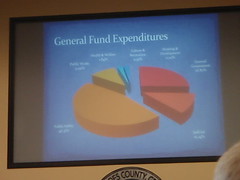
They plan to vote tonight to approve the budget they never published.
-jsq
LOWNDES COUNTY BOARD OF COMMISSIONERS
PROPOSED AGENDA
WORK SESSION, MONDAY, JUNE 27, 2011, 8:30 a.m.
REGULAR SESSION, TUESDAY, JUNE 28, 2011, 5:30 p.m.
327 N. Ashley Street – 2nd Floor
These are the open records that me and another animal control officer
sent to GDA
and I also have Amanda Jordans Statement if you would like
that. Please excuse some of the language in my statement she (pat smith
GDA inspector) told me to write it like it was said….
Vince Schneider warned county homeowners that it could happen to them, too:
To permit
the establishment of the Foxborough Avenue McDonalds, the county has
irreversibly established a most terrible precedence. You too can wake
up one morning to find a Fast food store being built in your front
yard.
Like many of us, he wondered what the county government is thinking:
I cannot comprehend how the county can possibly
benefit from allowing such an establishment to be built in a quite
county residential neighborhood. Is it because it provides unskilled
low paying jobs? Will this McDonalds look good on a resume? It was my
understanding that Valdosta and Lowndes County wanted to attract a more
skilled, professional work force. The real estate on Foxborough Avenue
the county permitted McDonalds to build on would have been, and is prime
real estate for just such a professional enterprise….
Residential home owners of Lowndes County take notice —Vince Schneider @ LCC 14 June 2011
Regular Session, Lowndes County Commission (LCC),
Valdosta, Lowndes County, Georgia, 14 June 2011.
Videos by Gretchen Quarterman for LAKE, the Lowndes Area Knowledge Exchange.
After Vince Schneider finished reading his letter,
Chairman Ashley Paulk handed him a paper, which was apparently
a communication from County Engineer Mike Fletcher.
Appended is the text of the letter Vince Schneider read to the Commission.
Continue reading →
ATLANTA, Georgia (AFP) – A controversial immigration law in the US
state of Georgia has brought unintended results, forcing farmers to
reluctantly turn to ex-convicts as Latin American manual workers flee.
Low-skilled, undocumented workers, who for years have formed the backbone
of this southern state’s farming economy, have bolted in the lead-up
to the law taking effect on July 1, fearing deportation if caught
working here.
The measure’s mainly Republican supporters argue that the state needs
to enforce immigration laws in the absence of effective federal action,
saying schools, jails and hospitals are overburdened by illegal aliens.
But as the full cost of the immigration reform emerges in the form of
an estimated millions of dollars worth of crops rotting in fields, it
could alarm other states that have passed or are considering similar
strict measures.
The story quotes the figure of 11,000 needed workers,
and quotes some farmers about that the state’s scheme to
send people on probation to work on farms:
Continue reading →
This comment from Karen Noll came in Sunday on
San Antonio promises to shut down a coal plant.
By “the city” I’m assuming she means Valdosta, although
there’s no reason any other municipality around here, including
Hahira, Lake Park, Remerton, Dasher, or Lowndes County,
couldn’t set similar goals.
SanAntonio has a solar Goal to reach by 2020. New Jersey also has such
a goal to reach by a similar date. We can move forward with just such
a comittment from the city to attain a reasonable goal.
Harrisburg City Council member Brad Koplinski is seeking to introduce a
resolution that will allow the council to prepare paper work that might
become necessary should a majority of the council decide to file for
Chapter 9 bankruptcy.
Koplinski said the urgency of being prepared escalated Thursday when
state Sen. Jeffrey Piccola introduced legislation that called for a
state takeover of Harrisburg should the distressed city fail to adopt
the Act 47 plan it was presented Monday.
It seems Harrisburg applied for Act 47, which is apparently a state
bankruptcy protection plan last October, but now:
Continue reading →
The VDT’s pan of HB 87 gets national notice.
Why we don’t need a law that puts south Georgia farmers out of business
while profiting private prison company CCA at taxpayer expense.
The economics here aren’t particularly complicated, and I’m sure they
won’t be new to the sophisticated readers of the Atlantic, but they are
useful to look at and consider explicitly when thinking about issues
like this.
It goes like this. If you’re not going to let illegal immigrants do the
jobs they are currently being hired to do, then farmers will have to
raise wages to replace them. Since farmers are taking a risk in hiring
immigrant workers, you can bet they were getting a significant deal
on wage costs relative to “market wages”. I put market wages here in
quotations, because it’s quite possible that the wages required to get
workers to do the job are so high that it’s no longer profitable for
farmers to plant the crops in the first place.
Yes, that would be the problem.
A law that benefits private prison company CCA at the expense of
Georgia taxpayers while putting Georgia farmers out of business.
Who could have forseen this?
Well, other than anyone who actually knows Georgia farmers.
And the VDT becomes thought leader to the world:
“Maybe this should have been prepared for, with farmers’ input. Maybe
the state should have discussed the ramifications with those directly
affected. Maybe the immigration issue is not as easy as &lquo;send them
home,&rquo; but is a far more complex one in that maybe Georgia needs them,
relies on them, and cannot successfully support the state’s No. 1
economic engine without them.”
Except of course HB 87 doesn’t just send them home:
it also locks up as many as it can catch, to the profit
of private prison company CCA, at the expense of we the taxpayers.
After enacting House Bill 87, a law designed to drive illegal immigrants
out of Georgia, state officials appear shocked to discover that HB 87 is,
well, driving a lot of illegal immigrants out of Georgia.
The Shelby County Commission is in the process of trying to privatize
our criminal justice system. Private prisons have a well-documented
history of inefficient security, poorly trained and underpaid workers,
high turnover rates, scant benefits and unprofessional and unsupervised
treatment of inmates.
The Coalition Against Private Prisons has been created to fight this
privatization plan. So far this coalition involves Grassroots Leadership,
the Mid-South Peace and Justice Center, the AFSCME local 1733, Shelby
County Corrections Officers, Women’s Action Coalition, Mid-South
Interfaith Network, educators, faith leaders, artists, and activists.
To address this we are working with our coalition partners and other
community organizations to educate Memphians about the dangers of
privatization, and to mobilize Memphians around the issue.