Tasty food, local community, and local economy, all on the grounds of the historic Lowndes County Courthouse: Downtown Valdosta Farm Days is here again this morning, from 9AM to 1PM.
-jsq
Tasty food, local community, and local economy, all on the grounds of the historic Lowndes County Courthouse: Downtown Valdosta Farm Days is here again this morning, from 9AM to 1PM.
-jsq
Quite likely you thought massive prison populations used as cheap labor were some sort of medieval tradition. Nope. Here’s an article that debunks that misconception and informs you about many other things I (and perhaps you) didn’t know about prisoners as cheap labor.
Locking Down an American Workforce Steve Fraser and Joshua B. Freeman wrote for TomDispatch 19 April 2012, Prison Labor as the Past — and Future — of American “Free-Market” Capitalism,
Penal servitude now strikes us as a barbaric throwback to some long-lost moment that preceded the industrial revolution, but in that we’re wrong. From its first appearance in this country, it has been associated with modern capitalist industry and large-scale agriculture.
So where and when did it come from?
As it happens, penal servitude — the leasing out of prisoners toprivate enterprise, either within prison walls or in outside workshops, factories, and fields — was originally known as a “Yankee invention.”
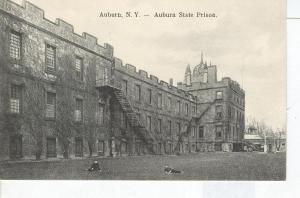
First used at Auburn prison in New York State in the 1820s, the system spread widely and quickly throughout the North, the Midwest, and later the West. It developed alongside state-run prison workshops that produced goods for the public sector and sometimes the open market.
A few Southern states also used it. Prisoners there, as elsewhere, however, were mainly white men, since slave masters, with a free hand to deal with the “infractions” of their chattel, had little need for prison. The Thirteenth Amendment abolishing slavery would, in fact, make an exception for penal servitude precisely because it had become the dominant form of punishment throughout the free states.
In case you’ve never read it or have forgotten, here is the Thirteenth Amendment (emphasis added):
Section 1. Neither slavery nor involuntary servitude, except as a punishment for crime whereof the party shall have been duly convicted, shall exist within the United States, or any place subject to their jurisdiction.
Section 2. Congress shall have power to enforce this article by appropriate legislation.
Got a population you don’t like? Continue reading
It’s a food festival Saturday in Valdosta!
Before, after, or during stocking up on local food at
Valdosta Farm Days at the historic Lowndes County Courthouse,
you can mosey up Patterson Street to Drexel Park for lunch, music, fun, and
education at Earth Day!
Drive, bike, or even walk; it’s only a little more than a mile.
|
|
Appended is the text of the announcement.
-jsq
Continue readingOcilla, about an hour north of here, took the private prison gamble, and now is scrambling to import enough prisoners to fill it.
Jim Galloway wrote for the AJC 11 April 2012, Importing illegal immigrants — into private Georgia prisons quoting Hannah Rappleye and Lisa Riordan Seville in The Nation 10 April 2012, How One Georgia Town Gambled Its Future on Immigration Detention,
Deportations have reached record levels under President Barack Obama, and demand for detention facilities has increased. Starting in 2002, ICE had funding for 19,444 beds per year, according to an ICE report. Today, ICE spends about $2 billion per year on almost twice the number of beds.
ICE’s reliance on facilities like the Irwin County Detention Center has put small rural towns at the center of one of today’s most contentious policy arguments—how to enforce immigration law. A yearlong investigation by The Nation shows how much politics has come to rule detention policy. Even as Georgia and Alabama passed harsh new immigration laws last year designed to keep out undocumented immigrants, documents obtained through the Freedom of Information Act reveal that politicians from both states were lobbying hard to bring immigrant detainees in. ICE succumbed to the pressure, sending hundreds of detainees to the financially unstable facility in Georgia that promised to detain immigrants cheaply. That promise came at the expense of the health, welfare and rights to due process of some 350 immigrants detained daily in Ocilla.
Marvelous. Pass a low to eject illegal immigrants, except it really locks up a bunch of them, but not enough to keep Ocilla’s private prison full, so import a bunch of them back in as prisoners.
Aren’t you glad we didn’t accept a private prison in Lowndes County, Georgia?
Ocilla and Irwin County didn’t just make that bad bet once, they doubled down on it:
Continue readingA $200 transaction can cost society $100,000 for a three-year sentence.It’s time to legalize, regulate, and tax drugs, taking tax money away from private prisons and police militarization, and freeing it up for education, health care, and rehabilitation.
George F. Will wrote 11 April 2012, Should the U.S. legalize hard drugs?
Amelioration of today’s drug problem requires Americans toWill-like, he ignores the real reasons we’re locking up so many people (corporate greed), but he does get at the consequences: Continue readingunderstand the significance of the 80-20 ratio. Twenty percent of American drinkers consume 80 percent of the alcohol sold here. The same 80-20 split obtains among users of illicit drugs.
About 3 million people — less than 1 percent of America’s population — consume 80 percent of illegal hard drugs. Drug-trafficking organizations can be most efficiently injured by changing the behavior of the 20 percent of heavy users, and we are learning how to do so. Reducing consumption by the 80 percent of casual users will not substantially reduce the northward flow of drugs or the southward flow of money.
Here’s a playlist of videos of Saxby Chambliss’ Farm Bill Forum in Tifton. It seems the Farm Bill is about big agro crops like corn and soybeans. Peanuts are considered a specialty crop. Fruits and vegetables are not really considered.
Some more videos will be added, but here is the first bunch:
Farm Bill Forum, Senator Saxby Chambliss,
Gary Black, Charles Hall, Robert Redding, John Maguire,
UGA Tifton Campus Conference Center, Tifton, Tift County, Georgia, 16 March 2012.
Video by Gretchen Quarterman for Lowndes Area Knowledge Exchange (LAKE).
-jsq
Garry Gentry from Tifton at Saxby Chambliss's Farm Bill Forum in Tifton wanted to know how much of food prices was due to Wall Street speculation.
Here's the video:
School lunches, speculators —Garry Gentry
Farm Bill Forum, Senator Saxby Chambliss,
Gary Black, Charles Hall, Robert Redding, John Maguire,
Tifton, Tift County, Georgia, 16 March 2012.
Video by Gretchen Quarterman for Lowndes Area Knowledge Exchange (LAKE).
-jsq
Gretchen Quarterman asked the first question at Saxby Chambliss' Farm Bill Forum in Tifton:
Bring our troops home.
That way we'd have more money for everything else.
Here's the video:
Bring our troops home —Gretchen Quarterman
Farm Bill Forum, Senator Saxby Chambliss,
Gary Black, Charles Hall, Robert Redding, John Maguire,
Tifton, Tift County, Georgia, 16 March 2012.
Video by Gretchen Quarterman for Lowndes Area Knowledge Exchange (LAKE).
-jsq
The only speaker that got applause at the Farm Bill Forum organized by Senator Saxby Chambliss in Tifton was Mr. Robinson from Brooks County:
If we don’t get the immigration thing solved, I don’t see a future for any of the farmers.
He didn’t like HB 87. Speaking of local immigrants he knows:
They worked hard for what they got, and I think they deserve a little bit more respect.
Saxby Chambliss said it was very complex and said the federal government should step up. Wait, which branch of the government is he elected to?
Here’s the video:
They worked hard for what they got —Mr. Robinson from Brooks County
Farm Bill Forum, Senator Saxby Chambliss, Gary Black, Charles Hall, Robert Redding, John Maguire,
UGA Tifton Campus Conference Center, Tifton, Tift County, Georgia, 16 March 2012.
Video by Gretchen Quarterman for Lowndes Area Knowledge Exchange (LAKE).
-jsq
Here are videos of “Local Heirloom Tomatoes and More”, the 22 March 2012 Lunch and Learn by Healthy Living Task Force, organized by Diane Howard (dhoward202@mchsi.com) and Traci Gosier (tqgosier@dhr.state.ga.us) 229.245.8758
The program has been grant funded and has had previous topics of:
The final session will be 26 April 2012, 12:00PM til 1:30PM at Valdosta City Hall Annex.
Here’s a playlist:
Local Heirloom Tomatoes and More,
Lunch and Learn, Healthy Living Task Force, (HLTF), Healthy Living Task Force,
Valdosta, Lowndes County, Georgia, 22 March 2012.
Videos by Gretchen Quarterman for Lowndes Area Knowledge Exchange (LAKE).
-gretchen