Category Archives: Water

Professor unrepentant in latest fracking payola case

Apparently the natural gas industry pays professors to greenwash their polluting product, like back in the hey-day of radio record companies used to pay disk jockies to play their records. Remember: natural gas from fracking is the main thing Southern Company and Georgia Power are switching to from coal (not that they’re even abandoning coal, just rebranding it as “21st century coal”). That and their nuke boondoggle at Plant Vogtle. All approved by the Georgia Public Service Commission, all of whose members apparently accept massive direct or indirect contributions from the utilities they regulate. Two GA PSC Commissioners slots are up for election right now.

The professor most recently found to be in the pay of a fracking company when he reported on fracking is unrepentant. Terrence Henry wrote for State Impact Texas yesterday, Texas Professor On the Defensive Over Fracking Money

So the questions remaining are: Why didn’t Groat disclose this in the study? And did he fail to tell anyone at the University about it?

The professor would not agree to an interview, but in an email to StateImpact Texas he says the Public Accountability Initiative report is “a mixture of truths, half truths, and unfounded conclusions based [on] incorrect interpretations of information. I don’t want to discuss it.”

The University of Texas requires that financial conflicts of interest be disclosed by employees when it has “potential for directly and significantly affecting the design, conduct, or reporting of … research or is in an entity whose financial interest appears to be affected by that research.”

Dean Sharon Mosher of the Jackson School of Geosciences says that Groat submitted the financial conflict of interest form to her office in previous years, but that he had not done so this year. “I was not aware that he was still a member of the board,” Mosher tells StateImpact Texas. “Had I known he was still a member of the board and being paid, I would have insisted that he disclosed it.”

What report? Follow the links in here. Terrence Henry wrote for State Impact Texas 23 July, Fracking Company Paid Texas Professor Behind Water Contamination Study,

Earlier this year, a study led by Dr. Charles “Chip” Groat for the Energy Institute at the University of Texas at Austin made headlines for saying there was no link between fracking and groundwater contamination. (When we reported on the study in February, we noted that the study also found some serious issues around the safety and regulation of fracking that weren’t getting much press coverage.)

But according to a new report out today by the Public Accountablitiy Initiative (PAI), a nonprofit watchdog group, the conclusions in Groat’s report aren’t as clear cut as initially reported. And Groat himself did not disclose significant financial ties to the fracking industry.

Groat, a former Director of the U.S. Geological Survey and professor at the Jackson School of Geosciences at the University of Texas at Austin, also sits on the board of Plains Exploration and Production Company, a Houston-based company that conducts drilling and fracking in Texas and other parts of the country. According to the new report (and a review of the company’s financial reports by Bloomberg) Groat received more than $400,000 from the drilling company last year alone, more than double his salary at the University. And one of the shales examined in Groat’s fracking study is currently being drilled by the company, the report says.

Since 2007, Groat has received over $1.5 million in cash and stock awards from the company, and he currently holds over $1.6 million in company stock, according to the PAI report. (Update: we clarified with PAI, and that $1.6 million in stock comes from the stock awards over the years. PAI says Groat’s total compensation from the company is close to $2 million.)

And it gets worse from there: rough drafts published, unsubstantiated peer review claims, etc.

This isn’t an isolated case:

This isn’t the first time that academic studies of drilling have been called into question because of industry ties. In an earlier report on a State University of New York at Buffalo study on fracking’s environmental risks, Public Accountability Initiative found that it “suffered a number of critical shortcomings” and the “report’s authors had strong industry ties.”

And in today’s investigation from Bloomberg, they found other instances of industry influence and financial ties at Pennsylvania State University and University of Wyoming.

Do we want to trade air pollution by coal for groundwater pollution by fracking? When we have a better future already at hand through conservation and efficiency along with solar and wind power?

-jsq

5.b. Emergency repairs on Cat Creek Road @ LCC 2012-07-23

Apparently Cat Creek Road is sinking, and the county has to fix it fast. At least for this latest engineering emergency they didn’t no-bid it: they actually took bids. They vote tomorrow night.

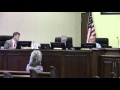
At this morning’s Lowndes County Commission Work Session, County Engineer Mike Fletcher described the Cat Creek Road project:

There’s an existing triple line of 36 inch storm drain that goes under Cat Creek Road between Radar Site and Vienna Church. These storm pipes are failing under the road, causing the pavement to sag over the pipes. The project will be to remove the existing pipes, headwalls, realign the new cross drains, skewed to be more in line with the natural run of the creek, install new cross drains and concrete headwalls, and then repave that section of Cat Creek Road.

If the repairs do not take place immediately, Cat Creek Roiad is toing to have to be closed. This repair is considred to be an emergency. Quotes were obtained in lieu of bidding the work. We had four people we had requested proposals from. Two proposals were turned in: one from Reames for $59,640 and one from Scruggs for $66,257. The other two bidders were nonresponsive.

Commissioners had no questions. At least for this latest emergency, the county didn’t just award a no-bid contract; it did at least request bids.

Here’s the video:

5.b. Emergency repairs on Cat Creek Road
Work Session, Lowndes County Commission (LCC),
Video by Gretchen Quarterman for Lowndes Area Knowledge Exchange (LAKE), Valdosta, Lowndes County, Georgia, 23 July 2012.

-jsq

Dear Southern Company: Green Energy Now! –Protesters

At yesterday’s Big Bets movie premiere, Southern Company doubled down and dug deeper in the hole.

Joeff Davis wrote for Fresh Loaf yesterday, Protesters picket utility’s Midtown film premiere, blast construction of new nuclear reactors

On the same day that tens of thousands of protesters rallied in Tokyo against the restart of Japan’s nuclear reactors, roughly 30 protesters chanted, marched, and handed out flyers today in Midtown to protest against Georgia Power’s construction of two new nuclear reactors in eastern Georgia. The two units, which are located about 175 miles from downtown Atlanta, are the first to be built in the United States in nearly three decades.

“Georgia Power is using our money to pay for something we don’t need, we don’t want and is killing us,” said Margie Resse as she handed out flyers outside the Fox Theatre. Southern Company, Georgia Power’s parent company, had reserved the historic Midtown venue to screen a documentary that it commissioned about the utility’s 100-year history for shareholders and executives.

The flyers claimed that Southern Company used “its notorious lobbying machine to

push a $2 billion rate hike” onto Georgia ratepayers to build “two risky nuclear reactors on the Savannah River,” which the groups say are months behind schedule and $900 million overbudget. The flyer urges ratepayers to refuse to pay a fee tacked on to utility bills that helps pay for the reactors’ construction.

Southern Company Spokesman Steve Higginbottom, standing just inside the Fox Theatre’s entrance and speaking barely above the protesters’ chants, said that Southern Company supports the rights of protesters but disputes their claims.

The “$900 million” figure cited by protesters, he said, has been alleged by Westinghouse, the manufacturer of the reactor, and Shaw, the project’s general contractor.

Um, Southern Company’s response is to talk about infighting among the consortium building the new nukes? SO could be digging themselves a hole deeper than the one the reactors sit in….

I do compliment Higginbottom and Southern Company on being consistently civil, however.

-jsq

Southern Company movie Big Bets at the Fox in Atlanta this afternoon

If you happen to be in Atlanta, there's a movie premiere this afternoon! Southern Company has made a movie out of its corporate biography, Big Bets, and is showing it today.

1:30 PM 16 July 2012
The Fox Theatre Atlanta
660 Peachtree Street NE
Atlanta, Georgia 30308

Oh, sorry, SO didn't send you a ticket? Well, I hear there will be people standing outside with signs starting around 1:30 PM. Maybe you'd like to join them. And if you're not in Atlanta, maybe you'd like to do something where you are.

Here's a preview of the movie, starring FDR: as the villain!

This appears to be the entire book online as a PDF. It starts in on FDR on page 100:

FDR had become known in utility circles as a “dangerous man” for advocating state ownership of power projects and denouncing the “sins of wildcat public-utility operators” and the “Insull monstrosity” with insinuations that all utilities were guilty of betraying the public's trust. He also proclaimed the rights of any community unhappy with its service to take over private utility operations and develop their own power sites—a “birch rod in the cupboard” to be used when good service was not provided by private companies.

Imagine that, generating your own community power! Imagine it, but you can't do it. Southern Company and Georgia Power fixed that in the 1973 Georgia Territorial Electric Service Act.

What you won't see in the movie or read about in the book, Big Bets, is much about the bet-the-farm risk of nuclear power (bond-rater Moody's phrase), or how much water nuclear uses, or the profit opportunity of renewable energy such as solar and wind power. You can see some shareholders ask SO CEO Thomas A. Fanning about some of those things in these videos from the shareholder meeting back in May. If you run into him at the movie premiere, maybe you can check in with him on whether any of his answers have evolved, for example, does he still think SO won't get to solar or wind power this decade? Or maybe you’d like to ask Southern Company some questions online.

-jsq

Fukushima children: 35.8% thyroid cysts (0.8% in control group)

ENENews reported today that Just 0.8% of children in 2001 Japanese control group had thyroid cysts or nodules — 36% in Fukushima study. Is that a risk we want in Georgia from the new nukes at Plant Vogtle? How about we deploy wind and solar instead, faster, cheaper, and on time, plus solar or wind spills do not cause thyroid cysts.

Now you may say there’s little chance of similar problems in Georgia, since Southern Company CEO Thomas A. Fanning assured us Plant Vogtle is 100 miles inland where there are no earthquakes. Still, the same could have been said of Chernobyl. And TEPCO back in 2001 reassured everyone that tsunamis were not a problem for Fukushima.

Economics, as in the stealth tax rate hike, $8.3 billion loan guarantee, cost overrun passthrough boondoggle sucking up money that could be going to make Georgia a world leader in solar and wind for jobs, energy independence and profit, is the main point. But let’s not forget the health risks of nuclear power, from Three Mile Island to Chernobyl to Fukushima. Or Southern Company’s Plant Hatch, for that matter, leaking radioactive tritium into the ground water 90 miles from here. No tsunami and no earthquake was required to produce that leak. It’s our money and our families’ health Southern Company is experimenting with.

-jsq

GA PSC Forum videos online now

I hear somebody asked about Georgia Power's Construction Work in Progress (CWIP) stealth tax charge to customers for Southern Company's new nukes at Plant Vogtle. Maybe some of these candidates for the Public Service Commission could help get Georgia Power and SO to stop suppressing solar and wind in Georgia, maybe even to lead the way.

GIPL wrote today,

Thanks to everyone who came out to our Political Forum on the Georgia Public Service Commission. We had a great turnout, and learned a lot about the 2012 candidates for the PSC.

This is a statewide election, so please share this video far and wide with your friends. The primary election will be held on July 31, and the PSC will also be on the ballot in November.

Participants in last night's forum included (from left to right) Republican Matthew Reid and Democrat Steve Oppenheimer, who are both challenging incumbent Republican Commissioner Chuck Eaton in District 3, and Republican Pam Davidson and Libertarian David Staples, who are running against incumbent Republican Commissioner Stan Wise in District 5.

Beth Bond from Southeast Green moderated the media panel featuring Kristi Swartz from the Atlanta Journal Constitution, Walter Jones from Morris News Service, and Jonathan Shapiro from WABE.

Georgia Interfaith Power & Light hosted this forum. Co-hosts included 14 local environmental, religious, and advocacy organizations, including Southeast Green, Georgia WAND, GA Sierra Club, Civic League of Regional Atlanta, Glenn Memorial UMC Environmental Committee, GreenLaw, Southeast Energy Efficiency Alliance, Common Cause, League of Women Voters, Georgia Watch, Ryan Taylor Architects LLC, Sustainable Atlanta, Regional Council of Churches of Atlanta, Inc., Trinity Presbyterian Church Sustainability Committee, and the Southern Alliance for Clean Energy.

Here's the video:

-jsq

Live streaming of Public Service Commission Forum tonight

All candidates for the Georgia Public Service Commission at a forum tonight, 7-9PM 12 July 2012. GA PSC is the body that says Georgia Power can charge its customers for cost overruns for the new nukes at Plant Vogtle; the new nukes that will suck up even more water and are already sucking up lots of money through the stealth tax Construction Work in Progress (CWIP) charge on Georgia Power customer bills. GA PSC did require Georgia Power to buy 50 MW of solar, but that’s pennies compared to the dollars Georgia Power and Southern Company are shovelling into that pit by the Savannah River. Who will stand up and say enough nuclear is too much, and let’s get on with solar and wind?

Georgia Interfaith Power and Light blogged today, PSC Debate Tonight,

Tonight, GIPL is joining forces with 14 local organizations to host a Political Forum with this year’s candidates for the Public Service Commission.

We’re having technical difficulties with the live web stream. We hope it will be up and running tonight, but if not, the debate will be posted online this week. You can check this website tonight at 7pm for live web streaming, or watch our twitter feed @GeorgiaIPL for updates.

When: Thursday, July 12, 7 – 9 p.m.
Where:
Glenn Memorial UMC’s Auditorium/Sanctuary
1660 N. Decatur Road
Atlanta, GA 30307

All four challengers in the 2012 race have confirmed their attendance. Participants

Continue reading

Air is a public trust: Texas judge

The air is, after all, a bigger body than any body of water, and one that affects us all. A judge in Texas agreed that air should have the same legal protection as water.

Philip Bump wrote for Grist 10 July 2012, Texas judge rules that the atmosphere is protected under the public trust doctrine

Last May, a group of teenagers filed a series of lawsuits seeking to force the federal and state governments to take action on climate change. A key argument made in the lawsuits is that the atmosphere is a public trust — or, as described in one brief, that it is a “fundamental natural resource necessarily entrusted to the care of our federal government … for its preservation and protection as a common property interest.”

Yesterday, a state district court judge in Texas agreed.

Key issue from the plaintiffs' press release:

In deferring to the Texas Commission on Environmental Quality's (TCEQ) decision to deny the Plaintiffs' petition for rulemaking while other ongoing litigation over regulations ensues, the Judge concluded that the TCEQ's determination that the Public Trust Doctrine is exclusively limited to the conservation of water, was legally invalid. …

Which is not only good for air, but indicates that water already is legally a public trust.

-jsq


AP nuclear slant through omission

What's missing in AP's reporting and analysis of nuclear cost overruns?

AP published this Tuesday, News Guide: Nuclear industry facing cost pressures, perhaps as a companion to its story of the same day, Building costs increase at US nuclear sites. Like that story, the news guide is full of accurate and useful information about nuclear cost overruns, and even this good bit of analysis:

Q: Why do building costs matter to customers?

A: Because customers ultimately pay for the construction costs as part of their monthly power bills. The more a plant costs, the more customers will pay.

Yep, Georgia Power customers are already paying through that stealth tax, the construction work in progress (CWIP) charge for new nuke electricity they won't get for years if ever.

Yet something is missing. Can you spot it?

Hint:

Q: How does that compare with building coal- or gas-powered plants?

Good question, and AP correctly answers that nuclear plants are far pricier than coal or gas plants.

But are those three the only sources of energy? Where is the comparison to solar and wind power?

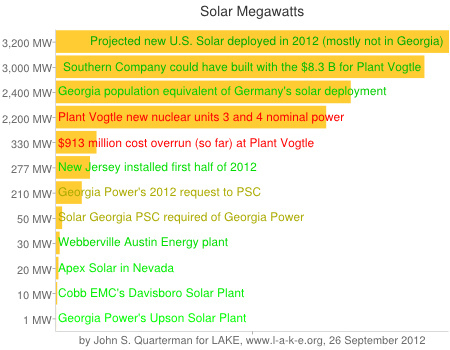
Well, maybe AP won't do it, but here it is already, Georgia Power deploys 1 MW solar; could have done 330 MW by now. Short version: for less than the amount of federal loan guarantees for Plant Vogtle, Southern Company could have built Georgia more solar energy production per capita than Germany, the world leader, has.

Why are we letting Georgia Power and the Southern Company pour our money down that pit near the Savannah River when they could be spending it to deploy solar and wind for more jobs, energy independence, and more profit for Georgia Power and SO? Oh, and clean air and plenty of clean water, too.

-jsq

Southern Co. nuclear cost overruns expected? Let’s build solar and wind on time and on budget!

So if Southern Company expected cost overruns at Plant Vogtle, why didn’t they make a better estimate in the first place? What incentive do they have not to continue running up the cost and delaying completion, since they get to keep charging Georgia Power customers for construction, including for cost overruns, while floating $8.3 billion in federally guaranteed loans? Where is the financial integrity in all that?

AP reported yesterday, and even Fox News carried it, Building costs increase at US nuclear sites. They’re not talking about housing prices near the sites, either.

America’s first new nuclear plants in more than a decade are costing billions more to build and sometimes taking longer to deliver than planned, problems that could chill the industry’s hopes for a jumpstart to the nation’s new nuclear age.

Licensing delay charges, soaring construction expenses and installation glitches as mundane as misshapen metal bars have driven up the costs of three plants in Georgia, Tennessee and South Carolina, from hundreds of millions to as much as $2 billion, according to an Associated Press analysis of public records and regulatory filings.

Those problems, along with jangled nerves from last year’s meltdown in Japan and the lure of cheap natural gas, could discourage utilities from sinking cash into new reactors, experts said. The building slowdown would be another blow to the so-called nuclear renaissance, a drive over the past decade to build 30 new reactors to meet the country’s growing power needs. Industry watchers now say that only a handful will be built this decade.

“People are looking at these things very carefully,” said Richard Lester, head of the department of nuclear science and engineering at the Massachusetts Institute of Technology. Inexpensive gas alone, he said, “is casting a pretty long shadow over the prospects” for construction of new nuclear plants.

AP continues with a list of late and over-budget nuke projects, including Southern Company’s Plant Vogtle $800 million over and seven months late, TVA’s Watts Bar plant $2 billion over and 3 years late, Duke’s Plant Summer SCANA and Santee Cooper’s Summer Station $670 million over and a year late.

Southern Co. and others in the nuclear business say cost overruns are expected in projects this complex…

So why are they wasting our money on nukes when they could be deploying a lot more solar and wind on time and on budget?

…and that they are balanced out by other savings over the life of the plant. Southern Co. expects Plant Vogtle will cost $2 billion less to operate over its 60-year lifetime than initially projected because of anticipated tax breaks and historically low interest rates.

Get that? “anticipated tax breaks” that leave we the taxpayers Continue reading