Category Archives: Transparency

December LAKE meeting: El búho al Cazador

The owl lights in Valdosta Tuesday evening.
El Cazador, 1600 North Ashley Street, Valdosta, Georgia What: Monthly LAKE Meeting
When: 5:30 PM, Tuesday 6 December 2011
Where: El Cazador
1600 North Ashley Street
Valdosta, GA 31602
(229) 333-0554
That’s the old Margarita’s at the corner of College Street. They’re open until 10PM.

If you follow the LAKE blog, On the LAKE Front, you know what we cover, from elections to gardening, connecting the dots. What else do you want to investigate?

If you’re on Facebook, please Like the LAKE facebook page. You can sign up for the facebook meeting event, Or just come as you are.

jsq

How to read Comprehensive Plan documents

I’m always getting a civics lesson, learning more and more about how our local and state governments work. Most recently, I had the opportunity to have explained two documents related to the Lowndes County Comprehensive Plan: the Short Term Work Projects (STWP) and the Report of Accomplishments (ROA). In the spirit of information exchange, I share what I learned with you.

The state of Georgia requires a Comprehensive Plan and collects and approves them through the Department of Community Affairs (DCA). The current plans for all of Georgia are available at the DCA Planning Site.

The current STWP documents that are being reviewed locally are the projects that the local governments and agencies expect to actively work on in the next five years. The ROA documents report on what was done in the past five years: what was completed, or will no longer be pursued. Many municipalities and counties file separate reports. Locally, because there is significant cooperation among the cities and Lowndes County there is one document with all the projects included and a place that indicates which agency is participating in the project. However, their input documents are filed separately, and LAKE has collected them on the LAKE web pages. Also, each local municipality holds its own public hearings.

Reading the STWP and ROA can be a bit tricky but once I understood the format, the process became much easier. The overall topics are prescribed by the state and are in general categories like “Population”, “Economic Development”, “Housing” and “Land Use”. There are sub-categories in each of the ten major categories, like “Secure High-Wage Jobs” and “Address Workforce Adequacy” in the “Economic Development” major category. Then, under each of these items are one or more specific projects that will be done in the next five years to help achieve each goal.

One reason the draft STWP is complex is that it redlines projects that were performed in the previous five years and are now being removed or modified for a variety of reasons. Many projects were completed, some moved from one stage (investigate) to another (implement or market), and still others simply lacked the staff or funding resources to continue being pursued.

The ROA document is in a similar format but the focus of it is to report the status of the STWP for the previous five years. An Explanation Column gives details on the status of each previous project. For example, it says that the “Feed the Elderly Senior Citizen Nutrition Program” has been discontinued because “Budgetary constraints have limited Lowndes County’s role in this supporting action.”.

The STWP and ROA documents are meant to be read as a pair, giving the reader an understanding of where we have been, where we are going and how we are going to get there as a community.

-gretchen

A renewable energy transparency law that enabled an industry

North Carolina passed a law in 2007 called the Renewable Energy and Energy Efficiency Portfolio Standard (REPS), which requires power utilities to get certain percentages of their energy from “renewable energy resources or energy efficiency measures.” To that NC added frequent, detailed, public reporting, and thus enabled a renewable energy industry.

Power utilities don’t like to reveal data about their energy sources or sales any more than Internet organizations like to reveal security problems. The key to REPS is the reporting it requires:

“Beginning in 2009, each power supplier is required to file a compliance report, detailing the actions it has taken to fulfill the requirements of the REPS.”
This is called the Renewable Energy Certificate (REC) Tracking System. It provides the data to see which utilities are providing how much of which kind of energy.

According to Ivan Urlaub of the North Carolina Sustainable Energy Association (NCSEA), REC reporting enabled the solar industry in North Carolina:

“The passage of the REPS law in 2007 and resulting success of the North Carolina’s clean energy market has created the rapid start-ups and expansions of clean energy businesses from installers to developers to manufacturers and the associated service sectors over the last few years.”
Not only is North Carolina now one of the national leaders in solar energy, but 91% of NC voters want more solar power, with wind second, and everything else far behind.

REC enabled not only a renewable energy industry, but also selection within that industry for what works.

How did this happen? Continue reading

Video playlist, GLPC 28 November 2011

Here’s a video playlist for the entire Greater Lowndes Planning Commission (GLPC) Regular Session of 28 November 2011. We’ve already blogged a couple of them separately: And we’ll probably blog more of these videos separately. But you don’t have to wait.

Here’s the playlist:


Video playlist, GLPC 28 November 2011
Comprehensive Plan,
Regular Session, Greater Lowndes Planning Commission (GLPC),
Valdosta, Lowndes County, Georgia, 28 November 2011.
Videos by Gretchen Quarterman for LAKE, the Lowndes Area Knowledge Exchange.

-jsq

ZBOA: Zoning Board of Appeals 6 December 2011

According to Valdosta City Planner Matt Martin today:
This is a reminder that your next meeting for the Zoning Board of Appeals (ZBOA) is this coming Tuesday, December 6, 2011 at 2:30pm. Attached is a copy of the meeting agenda and also the draft minutes from both the October and November meetings.

Just like the November meeting, there are again NO public hearing items for December. However, we still need to meet (& have a quorum) to approve the Minutes and also elect officers for 2012.

ZBOA does not explicitly post its agendas, but the above appears to be the entire agenda for next week’s meeting.

Here are backgrounders on Who is ZBOA? and On What Basis Does ZBOA Decide?

-jsq

You like blogs, facebook, twitter, etc.? Oppose the “PROTECT IP” Act

If you like facebook, twitter, eBay, blogs, other social media, or even Google or Yahoo, you won’t like the so-called “PROTECT IP” Act, which is coming up to a vote in the Senate any day now. It would let big corporate copyright holders impose monitoring, take down websites, and cut off funding, all without need for a court order. There’s still time to oppose it.

Parker Higgins wrote for EFF Monday, The PROTECT IP Act Is Very Real and Very Bad — Call Now to Block It

The PROTECT IP Act (PIPA) is the evil step-sister of the Stop Online Piracy Act (SOPA), the much-criticized Internet blacklist bill introduced in the House last month. They’ve got a lot in common — both bills would allow the government and private rightsholders to censor the Internet for Americans, and both bills have faced strong opposition from regular citizens, business leaders, and public interest groups.

In one way, though, PIPA is much worse: while SOPA is still in the House committee stage and has been the target of extraordinary public opposition, PIPA is already out of committee and poised for consideration of the full Senate. That means PIPA is a few dangerous steps further along in the process of becoming law. And with only a few weeks to go in this legislative session, the Senate may try to rush the bill through before the public has a chance to respond.

Here’s one way to contact your elected representatives. Or call them on the telephone. See also LAKE’s contact information for national elected officials.

-jsq

Don’t we still need farmers to feed us? —Gretchen Quarterman @ GLPC 28 November 2011

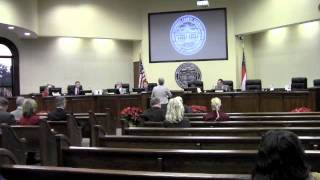
What was it that the Lowndes County government didn’t want its citizens to see in the draft it didn’t publish and didn’t provide in response to an open records request, and the hearing it didn’t hold about its updates to the Comprehensive Plan? Could it be the many items the county is deleting, having to do with feeding seniors, health care, transportation, work ethics and life skills, environmental impacts, agriculture, wells, wetlands, and many other topics, some of which Gretchen Quarterman detailed to the Greater Lowndes Planning Commission yesterday?

After Valdosta and Hahira City Planner Matt Martin explained how all the local city governments had or were going to have hearings about their Comprehensive Plan Short Term Work Program updates, the GLPC Chairman asked if any citizens wanted to speak on that topic. One citizen did, Gretchen Quarterman. She apologized for missing the September GLPC meeting because she would have raised some of these issues then.

I have an appointment with [Lowndes County Planner] Jason [Davenport] tomorrow to address some of my questions.

But I want to let you know that at the County Commission did not hold a public hearing after the changes. I was at the [Valdosta] City Council meeting, and the City Council did hold a public hearing, but the County Commission did not.

And I believe that is in violation of DCA’s guidelines. They sent a transmission letter that said they followed DCA’s guidelines. DCA’s guidelines say hold a public hearing. It was on the agenda, the public hearing, but no public hearing was held. So I didn’t have an opportunity to see the document, or to comment, before the county sent it.

She said she would provide written comments to Jason the next morning, and asked if GLPC would like to hear some of them. They said they would, so she read some of them. For example:
In Section 1.3 it was struck from the document:
Ensure supporting senior services such as health care,
Continue reading

Transparent government is totally what my heart is about. —Gretchen Quarterman

I repeatedly apologized to County Planner Jason Davenport about an earlier misunderstanding about the “public hearing” agenda item, which the Chairman stated was not really a public hearing and for which no citizens were allowed to speak:
7.b. Greater Lowndes 2030 Comprehensive Plan Updates – Lowndes County Report of Accomplishments (ROA) and Short Term Work Program (STWP)
Then I said:
Transparent government is totally what my heart is about. And I think that people trust the government more when we can see the business done in public. And I really appreciate when you do things in public and you ask questions in the work sessions so everybody can hear.
The VDT’s version was:
The lone citizen to be heard, Gretchen Quarterman, thanked commissioners for their observance of open government and apologized to County Planner Jason Davenport for things she said to him prior to the meeting, due to a “misunderstanding,” she said.

After the meeting adjourned, Chairman Ashley Paulk apologized to me in public Continue reading

This issue has a lot of peculiarities. —Barbara Stratton

Received today on Valdosta water project on county land, with no city or county approval. -jsq
This issue has a lot of peculiarities. The city engineer was quoted as saying he hoped Radney Plumbing, Inc. could be chosen for the project since the company had provided them a low price on similar work. Whatever happened to the bid procedure that is supposed to proceed any new construction activity regardless of personal preferences. Is this an impromptu public/private partnership where bidding gives way to cronyism? Oops, seems like I recently read that PPP’s were now being called beneficial corporations. Either way they are blatant fascism (mixing government & private business)& we don’t need them in Lowndes County. Under proper bidding procedures it would have been imposible for a contractor to have been given a go ahead by any mythical person. The project is expected to cost $132,000 of tax payer money & I think we deserve proper bid procedures to be certain we are getting maximum benefit from our expenditures.

I have no comment on the statement the pipe needed to be put in the ground so it would not go to waste other than I never new water/sewer pipe had a short expiraton date. Perhaps we should ask how so many feet of pipe were left over from another project since I’m sure 12″ pipe is not cheap. Does our project estimator need to sharpen his pencil?

It seems County Commission Chairman Paulk questions “the wisdom of spending that much taxpayer money without any prospect of income in the near future’. I’m glad someone is concerned about the taxpayers. Since it has been acknowledged we citizens have an interest in the obvious four way fiasco between city, county, private contractor & private landowners,I trust the VDT will continue to keep us informed of all the facts as they surface.

-Barbara Stratton

GLPC: Greater Lowndes Planning Commission, 28 November 2011

There’s a meeting of the Greater Lowndes Planning Commission tonight. They discuss rezoning requests relevant to the City of Valdosta, Lowndes County, Dasher, Hahira, and Lake Park. We don’t know which rezoning requests they will consider tonight, because they no longer post agendas.

The City of Valdosta’s writeup about GLPC still links to the Southern Georgia Regional Commission pages about GLPC, which is where GLPC agendas used to be, but no longer:

As of July 1, 2011 there will be no more updates to this site. For question contact:

Jason Davenport – Lowndes County
Alexandra Arzayus – City of Valdosta

The Lowndes County government’s website has nothing listed for GLPC, and when you search for it you get:

Search Results: planning commission
No Results Found

Sad, really, considering that GLPC used to be a good example of local government transparency.

Maybe they’ll have an agenda at the door tonight.

-jsq