Students, staff, faculty, and administration all say divest from fossil fuels. What will the VSU Foundation do now?
One year after
the committee was appointed 10 April 2014, it made a decision
8 April 2015:
S.A.V.E. applauds the decision by the President’s Special Committee
on Campus Sustainability to support fossil fuel divestment.
Leadership and stewardship are part and parcel to Valdosta State’s
role as an institution of higher education and we call on VSU to
honor these ethos by divesting from fossil fuels, ending its
profiteering from ecological harm, environmental destruction, and
human suffering.
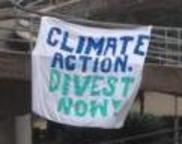
Benjamin Vieth, the representative of Students Against Violating the Environment (S.A.V.E.) on that Committee, sent the above announcement after approval by S.A.V.E.
Among
other organizations included on that committee,
following a November 2013 vote by the
Faculty Environmental Issues Committee (EIC),
the
Faculty Senate voted 21 November 2013 for divestment.
The Student Government Association (SGA)
voted 4 March 2014 for divestment.
EIC, SGA, and S.A.V.E. are on the President’s Special Committee.
I’m not sure about the positions of the other organizations,
which include
the Physical Plant, the Council on Staff Affairs, and the
Center for Business and Economic Research,
but it seems like at least one of them must have also voted for
divestment to reach a majority.
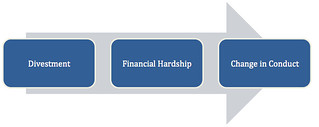
A year may seem like a long time, but fossil fuel divestment is still
faster than divestment from apartheid, tobacco, and armaments.
As
then-SAVE President Danielle Jordan said when VSU opened the
solar canopy at the Odum Library in October 2013,
We cannot address climate change without decreasing our dependency
on fossil fuels and solar is one way we could change that.
Let’s remember that
divestment is about undermining the political power
of the fossil fuel industry, as Tim DeChristopher said that same month in
response to Harvard President Drew Faust’s excuses for not divesting.
And that’s already happening, with the regulated-utility-campaign-funded
Georgia Public Service Commission
voting 11 July 2013 to make Georgia Power buy more
solar power,
and with
solar financing bill HB 57
unanimously passing both the Georgia House and Senate in March 2015, waiting
only on
fossil-fuel-campaign-funded Gov. Nathan Deal to sign it.
There’s even a band of fossil free foundations.
Even the Rockefeller Brothers Fund, heirs of John D. Rockefeller who started the fossil fuel industry,
are divesting from tar sands.
That leaves at VSU only the VSU Foundation, which actually controls
VSU’s investment fund.
They were last heard from officially
29 October 2013, writing in a letter to SAVE:
Compliance with your well-intentioned request is impractical for a
number of reasons and perhaps even a breach of the fiduciary
responsibility that all of our trustees take very seriously.
When even the Rockefeller Brothers Fund is divesting,
can anybody seriously believe that
ditching fossil fuels in favor of renewable energy stocks
would be a breach of fiduciary responsibility?
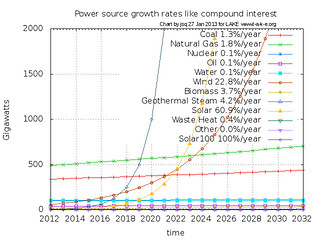
When the rosiest projections for shale gas are only for
56% increase in 28 years and
the
LNG export boom is going bust,
while
U.S. solar capacity is doubling every two years?
Fixing climate change is profitable.
Solar power
is going to win,
just like
the Internet did.
Fiduciary responsibility might have been
buying fossil fuel stocks might have been selling horse buggies
in 1915, but fiduciary responsibility in 2015 would be selling
fossil fuel stocks and buying renewable energy stocks.
And that’s not all stewardship is.
Let’s review the
VSU Trustee Handbook again:
- Stewardship
- To provide an attractive vehicle for donors to use to support the University.
- To maintain a relationship with the University which inspires the confidence of
faculty, staff, students, and administration.- To invest the endowments held in trust for the University to achieve returns
among the best in the country for endowments
of similar size.- To invest the Foundation’s resources in consultation with the University to take
advantage of unusual opportunities to advance the University when these
opportunities would not otherwise be available to the University.
Faculty, staff, students, and administration have all said what they want:
fossil fuel divestment.
The consultation has happened.
Stanford
listened to students, faculty, and staff and divested from coal.
Harvard continues to refuse to divest, and
just got written up
in Time Magazine by a former student saying
It turned me from a bystander into a protester.
Which do you want, VSU Foundation?
Will you join Harvard in stonewalling divestment and get nationwide
bad publicity?
Or will you join Stanford in beating Harvard, with good relations
with students, staff, faculty, and administration, and good publicity
to provide an attractive vehicle for donors to use to support the University?
-jsq
When you sell your stocks in an energy company all that means is that someone else bought them. The energy company is not harmed and you do not stop the investment in that company. In other words, you have salved your conscience, and nothing else. All we are talking here is moral narcissism. if you are the only person harmed, then please, knock yourself out; however, you are not the only person harmed in this decision.
Socially responsible funds make less money. That is why they have to be up front about it in their prospectus. They are consciously forgoing the chance to participate in a large part of the economy. The fiduciary duty of most funds is to maximize returns in the most prudent manner for their beneficiaries. The VSU Foundation would be exposing themselves to lawsuits if they decided, on purpose, to make less money. Any alumnus who contributed money to them could sue.
Finally, I detest the term “fossil fuels” as it is based on a completely false hypothesis. The dinosaurs did not all go to one place to die, just like there is no such thing as an elephant graveyard. A more scientifically correct term is carbon based fuel. A lack of scientific rigor is why most people make poor decisions in energy policy.
Nobody is recommending divesting from energy companies, i.e., utilities, because they can change what energy sources they use.
Fossil fuel companies (coal, oil, natural gas) are harming all of us in a number of ways.
Foundations that remain invested in fossil fuels harm their investors by not participating in the fastest-growing industry in the world: solar power.
But do tell us more about what dinosaurs have to do with fossil fuels.
-jsq