Tag Archives: Georgia Power

Burnt Church Road: 2 megaWatts solar in Lanier County

The answer is: Burnt Church Road is the location of the 2 MW Lakeland Solar Farm, conveniently next to what appears to be a Georgia Power substation. The landowner appears from the Lanier County tax assessor maps to be Patten Seed Company. Compare this map to the big image in the previous post and they clearly show the same location. Apparently nobody has satellite images of Lanier County new enough yet to show the solar panels. Continue reading

2 megaWatts solar in Lanier County

Somebody told me a few weeks ago there’s a big solar farm near Lakeland. He was not very specific about where, but it’s big: two megawatts, organized by a company out of Chicago. Can anybody point me to where it is so I can go take pictures?

Evergreen Solar Services says,

2.0 MW Lakeland, GA
Completed in 2014, 2 — 1.0 MW Georgia Power ASI projects. Fixed tilt PV with central inverters, medium voltage interconnected.

You can see by this Evergreen Solar Services picture that Continue reading

FPL already dirtying Georgia air at Plant Scherer: and a pipeline, too?

Georgia Power’s Plant Scherer is #1 among the U.S. dirtiest power plants. But FPL owns most of one of the four units there, dirtying Georgia’s air for Florida’s power. The same FPL that wants the fracked methane Sabal Trail pipeline through Georgia, destroying Georgia’s environment. It’s time for Georgia to say no to destroying Georgia’s environment for a company in another state.

Thomas Stackpole wrote for Mother Jones 11 September 2013, 1 Percent of America’s Power Plants Emit 33 Percent of Energy Industry’s Carbon, Continue reading

Renewables Report from Southern Company forthcoming

Nonprofit As You Sow got mighty Southern Company to agree to report on renewable energy, which is the first step towards widespread adoption of solar power. How about taking on FPL next, about that Sabal Trail methane pipeline? And that green bond idea, how about our Industrial Authority take that up?

Dave Williams wrote for the Atlanta Business Chronicle yesterday, Southern Co. to report renewable energy spending,

Atlanta-based Southern Co. has agreed to produce a comprehensive report on its current renewable energy projects and plans for future development of renewables, an environmental organization reported Thursday.

The company’s decision prompted Oakland, Calif.-based nonprofit As You Sow to withdraw a shareholder resolution asking Southern to consider President Barack Obama’s goal of reducing carbon emissions by 80 percent by 2050, the group said in a news release.

“To achieve that goal, utilities need to immediately shift Continue reading

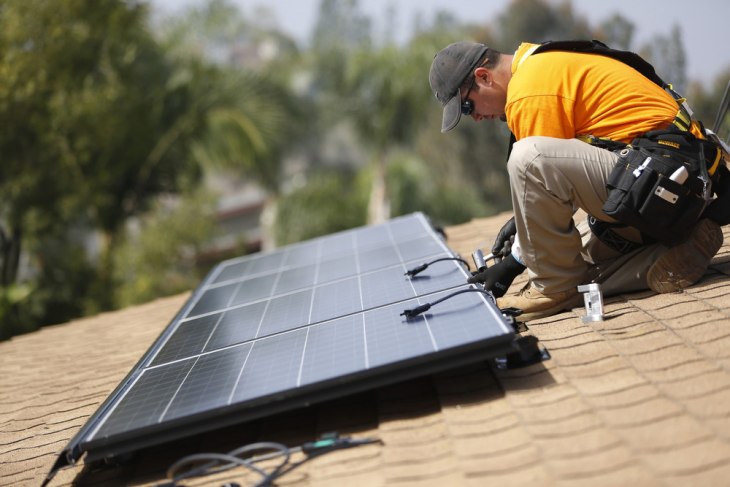
Utility-owned rooftop solar: Tom Fanning and Steven Chu agree

Tom Fanning is getting support for his idea of utility-owned rooftop solar. Can we see that tiger team report, Tom? And FPL, how about you get on with this, instead of trying to gouge an unneeded yard-wide methane pipeline through here? Sun, wind, and water can power each U.S. state, so how about FPL in the Sunshine State and Southern Company in the southeast get out in front and lead?

Jeff McMahon wrote for Forbes yesterday, Steven Chu Solves Utility Companies’ Death Spiral,

Utility companies have been looking for new regulations and higher connection charges to save them from a “death spiral” spurred by a surge in rooftop solar installations. Instead, says former Energy Secretary Steven Chu, they should get into the rooftop solar business.

Continue reading

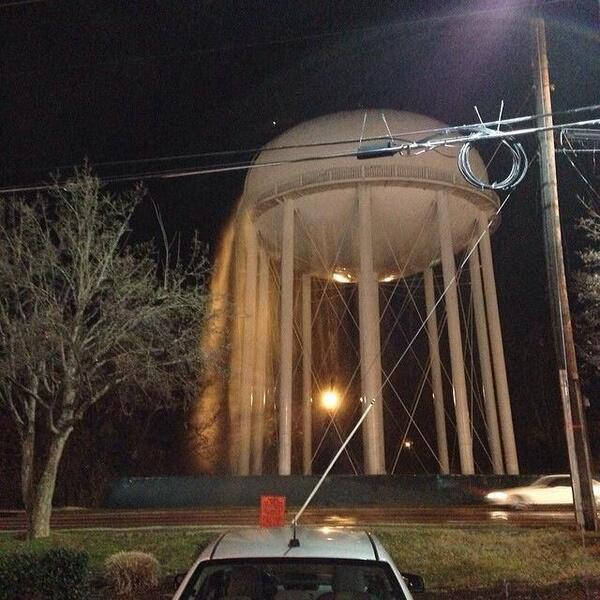
Earthquake busts Augusta water tower: what about Plant Vogtle?

Less than two years after Southern Company CEO Tom Fanning assured us

It is not in a seismic-sensitive area.

Fanning also claimed the technology was safe, before SO failed to get a reactor vessel from Savannah to the site, and before a renewed scandal revealed Korea’s document-forging Doosan supplies that “safe” nuclear technology. How safe will Plant Vogtle be in a bigger earthquake? How safe is it even without an earthquake? Not safe for the ratepayers or the taxpayers of Georgia or the U.S.

Mark Sandritter wrote for SBNation yesterday, Augusta National water tower leaking after Georgia earthquake, per report, Continue reading

All new U.S. energy was solar in October 2013

While ten nukes were shut down or cancelled in 2013, solar power continues its compound-interest-curve ever-faster deployment. Zero (0) new nukes were built in 2013 and in October all new U.S. utility-scale power was solar. Unfortunately, the biggest of those was Southern Company’s Campo Verde, which powers California, not Georgia or the southeast, but that is changing now.

Todd Woody wrote for The Atlantic 26 November 2013, Solar Energy Was America’s Sole New Power Source in October: Get ready for a photovoltaic building boom.

In October, power plants generating 530 megawatts of electricity came online in the United States. And every single electron put on the grid came from the sun, according to a report released today.

That’s apparently not even counting rooftop solar.

The report is Solar the sole capacity completed in October, at 530 MW, by Althena Enguerra for SNL 25 November 2013. Continue reading

Wind for 1/3 of Georgia electricity, plus solar

“Georgia has about 14.5 gigawatts of feasibly developed offshore wind energy potential–enough power to provide one-third of Georgia’s current electrical needs.”

And the wind blows at night when the sun doesn’t shine. Add solar for the peak power day, and there’s no excuse for coal, nuclear, or natural gas.


Georgia’s Offshore Wind Energy Potential Showcased at CoastFest, by Allie Brown for SACE 15 October 2013.

Georgia Power and Southern Company know this. When will they act on it?

PS: Owed to Danielle Jordan

-jsq

Utilities desperate to shade solar power

The same Edison Electric Institute that warned electric utilities that distributed solar is already eating their lunch has codified a net metering talking point that utilities are pushing to try to shade solar power. It’s not working.

Power play: Utilities want solar users to pay up Mark Koba wrote for CNBC yesterday, Power play: Utilities want solar users to pay up,

But some experts say the mere fact that utilities— which generate $360 billion a year in energy sales—are battling with solar indicates the threat it now poses to them.

“The success of solar power is forcing utilities to rethink their business model and push for the changes,” said Franc Del Fosse, an energy industry lawyer and partner at Snell & Wilmer. “If you have an individual putting solar panels on the roof, it’s easy to suggest that a utility is making less money.”

The effort for higher fees on solar panel users could backfire, Continue reading

Solar benefits outweigh costs in NC

And the same is true in Georgia, despite Georgia Power and Southern Company.

John Downey wrote for Charlotte Business Journal 23 October 2013, Study: Solar benefits outweigh costs in NC

An independent study published by a nationally known energy consultant asserts that adding 500 megawatts of solar generation in North Carolina would save utility ratepayers about $26 million annually.

It notes the gains from solar projects — such as lower transmission and distribution costs, avoided emissions, lower losses of electricity in transmission. The study calculates that such benefits outweigh the costs by 30 percent to 40 percent.

Update 2017-04-25: Energy NC seems to have removed or moved its copy of that report, but fortunately SEIA lists it on a backup website, and I’ve linked it into the quotation above, plus a copy on the LAKE website. SEIA also lists many other studies for other states, such as one for Virginia which is on the MDV-SEIA website, and now also has a copy on the LAKE website. For Georgia SEIA lists the testimony of GSEIA before the Georgia Public Service Commission in 2013. For Florida SEIA lists only a very old (2003) study with a broken link, which can be found as a google book, but now would mostly be worthwhile as a museum piece. Duke’s own actions in Florida in 2016 and 2017 indicate Duke Energy knows the sun is rising even on the Sunshine State.

The study considered two intertwined solar methods: Continue reading