Author Archives: admin

Nix on biomass plant in Traverse City, Michigan

Looking farther afield in Cadillac, Michigan than schools and realtors, there are some people who aren’t completely pleased with the local biomass plant:
Complaints are more frequent along Mary Street, a short stretch a few hundred yards south of the plant. Residents there deal with more intense noise and odors.

Craig Walworth’s home is among the closest to the plant. He walked up to his Jeep — a vehicle he cleaned the day before — and dragged his finger through a layer of film on the hood.

“Every morning, you have that to look forward to,” he said. “I clean my screens three times a year during the summer because they clog up.”

Nonetheless he didn’t say it affected his property values. However, that’s not the only issue.

Meanwhile, about an hour north on the edge of Lake Michigan, in Traverse City local activism caused cancellation of a proposed biomass plant: Continue reading

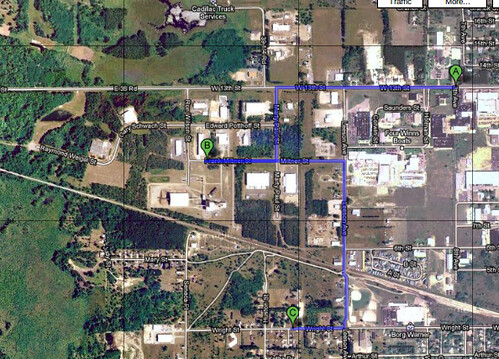
Cadillac, Michigan, biomass plant

Natasha Fast, Angela Manning, Allan Ricketts (Project Manager), Geraldine Fairell, Keisha Ferguson, Brad Lofton (Executive Director) In the VLCIA meeting with concerned citizens of 10 June 2010, one of the action items taken by the VLCIA was:
Obtain, if available, an analysis of the property value trends of residential/ commercial property adjacent to the Cadillac Michigan biomass electric generating plant.
Col. Ricketts has reported back on that action item.

Cadillac Renewable Energy LLC, Cadillac, Michigan

My transcription of what he said is rather long, so please follow the link.

Allan Ricketts’ summary: nobody could find a systematic analysis of property value trends. He did get various personal analyses (as above).

I agreed he’s made a good effort to find what he could find.

And that we would continue looking in other sources.

-jsq

Greyfield Villas

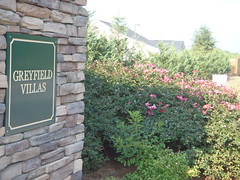
Entrance sign Previously discussing the Glen Laurel subdivision on Old Pine Road near Bemiss, several of the people speaking against at the County Commission meeting mentioned the Greyfield subdivision. That’s Greyfield Villas; see the entrance sign in the picture on the right. It’s in Lowndes County but not in Valdosta; somebody correct me if I’m wrong abo ut that. In that picture it’s hard to read the sign in the background on the north side of North Oak Street Extension. Here’s a closeup:

FOR RENT by Blake Taylor

For Rent. Just inside we see a dumpster with For Rent signs on the houses on either side: Continue reading

Whole trees as biomass?

Previously I promised to come back to the subject of whole trees. Allan Ricketts asserted in the VLCIA meeting with concerned citizens on 10 June 2010 that the biomass plant Wiregrass LLC proposed for Valdosta will never burn whole trees because it would be economically unfeasible for it to do so. While I have no doubt that Col. Ricketts is acting on the best information given to him, there are reasons to be sceptical about what will happen in the future. Continue reading

Highland Renewable Energy Strategy

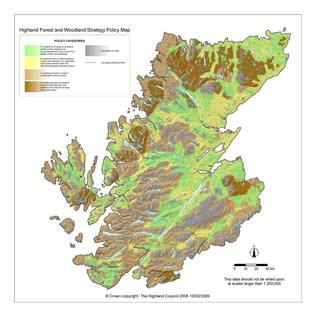
Previously writing about biomass and carbon dioxide I said I’d supply an example of the sort of thing I’m looking for as a regional analysis for renewable energy, including biomass, solar, wind, wave, tides, and others. Here it is: the Highland Renewable Energy Strategy approved by the Highland Council at its 4 May 2006 meeting. It’s a 58 page document about renewable energy strategy and planning guidelines, considering numerous types of renewable energy, pros and cons of each, power distribution, effects on environment, protected areas, etc., illustrated copiously with detailed maps. And updated: Continue reading

Biomass and Carbon Dioxide

Natasha Fast, Angela Manning, Allan Ricketts (Project Manager), Geraldine Fairell, Ken Klanicki, Brad Lofton (Executive Director)
Natasha Fast (SAVE), Pastor Angela Manning (New Life Ministries), Allan Ricketts (Project Manager), Geraldine Fairell, Ken Klanicki, Brad Lofton (Executive Director), picture by John S. Quarterman (LAKE)
Pictured is a group of concerned citizens meeting about the proposed biomass plant with Valdosta-Lowndes County Industrial Authority (VLCIA) Project Manager Allan Ricketts and Executive Director Brad Lofton. Ricketts and Lofton gave a two-hour presentation, took some action items, and have provided a schedule on which they will fulfill them. I thank them for that and look forward to the further materials.

Lying in the center of the table in the picture is this document:

Biomass carbon neutrality in the context of forest-based fuels and products
by Reid Miner, NCASI, Al Lucier, NCASI
The copy on the table is dated April 7, 2010; the online version is dated May 2010. It’s a powerpoint presentation that makes many good points, among them that coal doesn’t grow back, while trees do. So in theory it would be possible, by organizing harvesting of biomass over a region to make burning biomass for electricity carbon neutral.

The document comes right out and says:

At point of combustion, CO2 emissions per unit of energy produced are generally higher for biomass fuels than for fossil fuels.
Continue reading

Jailing Too Many People Costs Too Much

John Schmitt, Kris Warner, and Sarika Gupta write about The High Budgetary Cost of Incarceration:
The United States currently incarcerates a higher share of its population than any other country in the world. We calculate that a reduction in incarceration rates just to the level we had in 1993 (which was already high by historical standards) would lower correctional expenditures by $16.9 billion per year, with the large majority of these savings accruing to financially squeezed state and local governments. As a group, state governments could save $7.6 billion, while local governments could save $7.2 billion.

These cost savings could be realized through a reduction by one-half in the incarceration rate of exclusively non-violent offenders, who now make up over 60 percent of the prison and jail population.

A review of the extensive research on incarceration and crime suggests that these savings could be achieved without any appreciable deterioration in public safety.

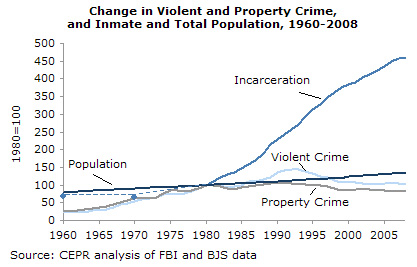
There’s a 19 page PDF report published by the Center for Economic and Policy Research, but that one graph pretty much spells it out: incarceration went up abruptly starting in the early 1980s and continued up, while crime did not. What we have here is a very expensive policy mistake.

And where does most of the cost come from? Continue reading

Glen Laurel and Comparable Subdivisions

An interesting series of exchanges here. First Coy Brightwell compared the proposed Glen Laurel subdivision (on Old Pine Road) to the existing Greyfield subdivision (off Oak Street Extension) with a number of specific points: run down quickly, rental property, etc.:

Then a Mr. Mulligan gets into an interesting discussion about code enforcement: Continue reading

Monday Commission Work Session Cancelled

I just got a call from the county saying Monday’s morning work session of the Lowndes County Board of Commissioners is cancelled due to lack of items. This happened a month ago, as well.

The regular public meeting is still on for Tuesday 22 June at 5:30 PM at 325 W. Savannah Ave. (under the water tower). The agenda does seem a mite slim: no rezoning cases, no ULDC changes. Still, there’s Citizens Wishing to be Heard. I’ll be there.

-jsq

Glen Laurel Rezoning

Coy Brightwell, 3937 Old Pine Rd The Glen Laurel Subdivision rezoning case that the Lowndes County Board of Commissioners decided on Tuesday June 8 (REZ-2010-06) raises all sorts of issues. Let’s start by hearing Coy Brightwell (he lives just across Old Pine Road from the proposed subdivision) summarize some points against the rezoning, saying going all the way from RA to PD is too far, and that the neighbors are asking for a compromise:

There’s a theme here: “we’re not against development”. We’ll come back to that.

-jsq