Tag Archives: Lowndes County

Prisoner call centers

Prisoners answering the telephone for your government? Yes, apparently.

M. Alex Johnson of msnbc.com and Bill Lambdin of WNYT-TV wrote yesterday for MSNBC, Inside the secret industry of inmate-staffed call centers,

When you call a company or government agency for help, there’s a good chance the person on the other end of the line is a prison inmate.

The federal government calls it “the best-kept secret in outsourcing” — providing inmates to staff call centers and other services in both the private and public sectors.

The U.S. government, through a 75-year-old program called Federal Prison Industries, makes about $750 million a year providing prison labor, federal records show. The great majority of those contracts are with other federal agencies for services as diverse as laundry, construction, data conversion and manufacture of emergency equipment.

We’ve heard of Prison Industries before. The Georgia prisoners who struck back in January 2011 work for Prison Industries, allegedly for no pay.
But the program also markets itself to businesses under a different name, Unicor, providing commercial market and product-related services. Unicor made about $10 million from “other agencies and customers” in the first six months of fiscal year 2011 (the most recent period for which official figures are available), according to an msnbc.com analysis of its sales records.

The Justice Department and the U.S. Bureau of Prisons don’t

Continue reading

No public hearing unless someone asks for it —Jane Osborn

Received yesterday on Public transportation and public records in Lowndes County,
Another issue here is that there will be no public hearing on this issue unless someone ASKS for it. Without a hearing, it just goes forward with no other public information about being presented. Anyone may ask for a hearing, but I would especially think that there are people who really need a functional system that is not just focused on people who have access to Medicaid as a payment source due to illness or disability. Requesting such a hearing before January 24 would give the opportunity to have all this information presented and for questions to be asked and answered.

-Jane Osborn

What is MIDS, anyway?

Here’s a bit from a VDT article about MIDS, by Malynda Fulton 11 July 2009, The bus stops here: Proposed plan will not affect county buses
Lowndes County officials assure citizens who use the county’s current transit program that they will not be affected if the proposed Valdosta-Lowndes County Transit Service Plan is implemented in the area.

The current Lowndes County 5311 Transit Program falls under the jurisdiction of the Georgia Department of Transportation. Ten percent of the program is subsidized by the state and 80 percent is subsidized by federal funds. Lowndes County provides 10 percent of the cost of each bus.

Lowndes County’s 5311 Transit Program was implemented in December 2001 with only three buses. The program now includes six buses that provide transportation throughout Lowndes County.

That may make MIDS the biggest bus system in the county. VSU may have more busses. Does Moody run busses?

More about MIDS: Continue reading

Public transportation and public records in Lowndes County

Jane Osborn asked me 6 Jan 2011:
Here are the notices about public transportation that was supposed to be done some time ago. I am trying to figure out how the county will compensate private providers for all this transportation.
Good question. I can’t answer it, but maybe I can point at some related information that might help.

She was referring to two public notices in the VDT of that same day, Exhibit 8B, which is about the MIDS service, which is one of the ones in the list in Exhibit 8A. If you call MIDS, a small van will pick you up and deliver you, all for a flat fee, if I understand it correctly. It’s the closest thing we have to a bus system around here.

It looks like MIDS comes up for renewal about every two years, according to the agendas: Continue reading

January 2012 LAKE meeting: Apple Valley Restaurant at Hahira truck stop

Flitting back to the NW corner of the county, the owl lights in Hahira tomorrow!
What: Monthly LAKE Meeting
When: 7 PM, Tuesday 10 January 2012
(or later if the Lowndes County Commission runs late)
Where: Apple Valley Restaurant
(at the Pilot Travel Center)
1311 Ga Highway 122 W
(Exit 29, I-75)
Hahira, GA 31632
(229) 794-2037

View Larger Map

If you follow the LAKE blog, On the LAKE Front, you know what we cover, from elections to gardening, connecting the dots. What else do you want to investigate?

If you’re on Facebook, please Like the LAKE facebook page. You can sign up for the meeting event there, Or just come as you are.

jsq

Ankle monitoring system budget adjustment: Lowndes County Commission 9-10 January 2012

Two more board appointments, several road and infrastructure items, and a budget adjustment to the ankle monitoring system, among many other items on the agenda for the Lowndes County Commission. The Commission will vote Tuesday on its meeting schedule and its budget calendar. This morning’s meeting is the Work Session; no voting during that, but maybe some information that won’t get mentioned Tuesday.

They can change their meeting schedule at any time. Did you know they had a special called meeting December 1st? They didn’t mention that during their 12-13 Dec meetings; there’s no agenda for it on their web pages; and this agenda doesn’t say what it was for.

Here’s the agenda.

LOWNDES COUNTY BOARD OF COMMISSIONERS
PROPOSED AGENDA
WORK SESSION, MONDAY, JANUARY 9, 2012, 8:30 a.m.
REGULAR SESSION, TUESDAY, JANUARY 10, 2012, 5:30 p.m.
327 N. Ashley Street – 2nd Floor
Continue reading

Map of prisons in Georgia

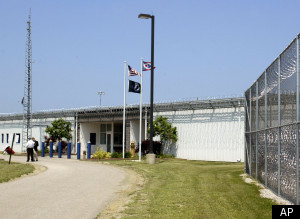
The Georgia Department of Corrections (GDOC) does not provide a map of prisons in Georgia; at least not that I’ve been able to find. CCA does not provide a map of its private prisons, either. This omission seems odd for an industry that brags about how good it is economically.

But someone has composed this google map that gives the big picture. I don’t know if this map is current or accurate, but the spot checks I’ve made show markers for real prisons. Did you know there were so many?

Apparently,

  • the reddish circles are county prisons;
  • the red arrows are state prisons for men like Valdosta State Prison;
  • the yellow arrows are state prisons for women (Pulaski) or juveniles (Arrendale), except Washington State Prison appears to be back to housing men;
  • the blue arrows are Regional Youth Detention Centers (RYDC);
  • and the green arrows are at least some of CCA’s private prisons,

Prisons are bad economics, producing no longterm improvement in employment, and risking closure, leaving communities with expensive white elephants. We don’t need a private prison in Lowndes County, Georgia. Spend those tax dollars on rehabilitation and education instead. Follow this link to petition the Valdosta-Lowndes County Industrial Authority.

-jsq

Rural prisons: economic bane or bust?

Some interesting points about prisons from a Georgia blogger.

Keith McCants posted Wednesday in Peanut Politics, Prisons as Economic Development: Boom or Bust for Rural Georgia? In Georgia today there are more prisoners than farmers. And while most prisoners in Georgia are from urban communities, most prisons are now in rural areas with high levels of poverty & a unskilled, uneducated workforce. During the last two decades, the large-scale use of incarceration to solve social problems has combined with the fall-out of globalization to produce an ominous trend: prisons have become a “growth industry” in rural Georgia, in fact Rural America.

Communities in isolated regions of the state began suffering from declines in farming, mining, timber-work and manufacturing are now begging for prisons to be built in their backyards. The economic restructuring that began in the troubled decade of the 1980s has had dramatic social and economic consequences for rural communities and small towns. Together the farm crises, factory closings, corporate downsizing, shift to service sector employment and the substitution of major regional and national chains for local, main-street businesses have triggered profound change in these areas. So, many rural areas have bought into prisons as a growth industry.

Some consequences are pretty obvious:

Many small rural towns have become dependent on an industry which itself is dependent on the continuation of crime-producing conditions.
Others may take more time to see: Continue reading

More injured and euthanized animals

Why does this sound familiar?
After a 2 1/2-hour closed-door board meeting Wednesday, SPCA of Niagara board president Bruno Scrufari III announced the request for the probe, in the wake of charges by board member Kathy Paradowski, former veterinary technician Kari E. McAlee-Miller and others that animals were unnecessarily euthanized and that injured animals brought to the shelter were left untreated.
There are a few differences from the local situation here.

Thomas J. Prohaska wrote yesterday for BuffaloNews.com, SPCA in Erie County to probe charges against Faso: Niagara board president announces request for investigation of claims,

Barbara Carr, executive director of the SPCA Serving Erie County, said her board of directors, which meets today, would have to approve the investigation, but she doesn’t expect any difficulty in winning approval.

There will be at least one key condition: “I wouldn’t do an investigation unless the document we produced was made public,” Carr said.

The relevant local authorities welcome an investigation and insist on making the results public. Imagine that!

And, according to Dave McKinley yesterday at wgrz.com, Niagara Co. SPCA Approves Outside Investigation Of Its Animal Shelter Continue reading

Bike News —Matt Portwood

Received Friday. -jsq In the Fall of 2010 the Valdosta-Lowndes County Parks and Recreation Authority cut a red ribbon at a ceremony dedicating Phase II of Freedom Park. The park’s new phase included a walking track, disc golf course, and a dog park. The addition of the small dog park to Freedom Park’s amenities was largely the result of a motivated group of citizens who urged the Authority to build the leash-free exercise and play space. 444 locals signed an online petition requesting that the VLPRA “create an off-leash dog park, accessible to all residents and visitors where pets can safely be taken for exercise and play.” As a result of this community involvement, park visitors now have a safe and shaded spot to enjoy a game of fetch with Fido.

The mission of the VLPRA is

“to provide quality Recreation and Parks, and to advance environmental conservation, which promotes the highest quality of life for the entire community.”
In the upcoming months, the VLPRA will begin revising its master plan. Continue reading