Category Archives: Georgia Power

Plant Vogtle is why Georgia is not a leader in solar power today

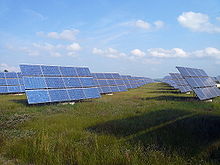
Could Georgia approach that German 20 gigawatt solar power figure? We’d already be there if we weren’t building Plant Vogtle.

Remember, John Hanger figures:

The Vogtle $913 million cost overrun by itself could have paid for approximately 1,000 megawatts of natural gas generation; 450 megawatts of wind power; and 330 megawatts of solar power.

That’s not 20 gigawatts. But the population of Germany is about 81 million, while the population of Georgia is about 9.8 million people, so the Georgia equivalent of 20 gigawatts would be about 2.4 gigawatts. The federal government has guaranteed about $8.3 billion in loans related to Plant Vogtle. That $8.3 billion would pay for about 3 gigawatts of solar power.

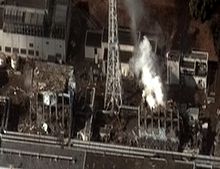
That big dish at Plant Vogtle? That’s not just a nuclear containment vessel, it’s a solar prevention wall. Preventing jobs, energy independence, and profit through solar power in Georgia.

Plant Vogtle is why Georgia is not a leader in solar power today.

-jsq

Germany solar equal to 20 nuclear plants

What's 20 times more powerful than a nuclear plant and didn't already run a billion dollars over budget? German solar plants!

Erik Kirschbaum wrote for Reuters 26 May 2012, Germany sets new solar power record, institute says,

German solar power plants produced a world record 22 gigawatts of electricity per hour—equal to 20 nuclear power stations at full capacity—through the midday hours on Friday and Saturday, the head of a renewable energy think tank said….

Norbert Allnoch, director of the Institute of the Renewable Energy Industry (IWR) in Muenster, said the 22 gigawatts of solar power per hour fed into the national grid on Saturday met nearly 50 percent of the nation's midday electricity needs….

The record-breaking amount of solar power shows one of the world's leading industrial nations was able to meet a third of its electricity needs on a work day, Friday, and nearly half on Saturday when factories and offices were closed.

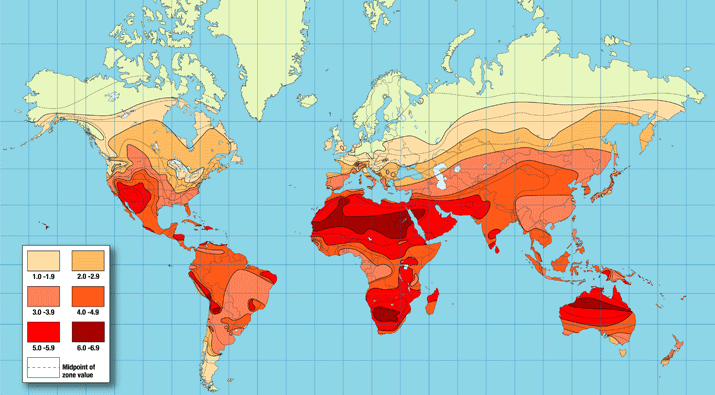
Berlin is at more than 52 degrees north latitude. Even southern German city Munich is at 48 degrees north. That's a thousand miles north of where we sit here in south Georgia at 31 degrees north.

Germany has sun like Alaska, while Georgia has sun like the south of Spain.

"Never before anywhere has a country produced as much photovoltaic electricity," Allnoch told Reuters. "Germany came close to the 20 gigawatt (GW) mark a few times in recent weeks. But this was the first time we made it over."

Maybe it's time for the Southern Company and Georgia Power to get out of the way and let the Georgia legislature change the Georgia Territorial Electric Service Act of 1973 so we can get on with solar power in Georgia. How about if Southern Company and Georgia Power also stop pouring money into the leaking nuclear bucket and buy solar power instead.

-jsq

ALEC loses 8 more, including Wal-Mart

Even Wal-Mart ditches ALEC! What about the Southern Company?

ALEC Exposed is keeping a list of Corporations Which Have Cut Ties to ALEC, and since the ten we last counted, eight more have jumped the sinking lobbying ship: Blue Cross Blue Shield, YUM! Brands, Procter & Gamble, Kaplan, Scantron, Amazon, Medtronic, and Wal-Mart. That’s right, even Wal-Mart. Jason Easley wrote for Politicus USA yesterday, Wal-Mart Dumps ALEC and Outs Them as Un-American,

In a statement, Wal-Mart representative Maggie Sans wrote, “Previously, we expressed our concerns about ALEC’s decision to weigh in on issues that stray from its core mission ‘to advance the Jeffersonian principles of free markets…We feel that the divide between these activities and our purpose as a business has become too wide. To that end, we are suspending our membership in ALEC.”

Wal-Mart claimed that ALEC was no longer as interested in Jeffersonian free market principles as they were other partisan political issues. Two of those unnamed political issues are most certainly voter ID and stand your ground laws.

When even Wal-Mart complains that ALEC isn’t “free market” enough, Wal-Mart, which Continue reading

Coal ash and political spending transparency shareholder resolutions defeated @ SO 2012-05-23

Defeated, but with increased shareholder support this year, two shareholder transparency resolutions have been introduced year after year at Southern Company (SO), one on coal ash and the other on political spending. Here’s video of the political spending resolution being presented at the meeting, and here’s the text of the resolution. This year as usual the SO board opposed both resolutions, and as you can hear SO CEO Thomas A. Fanning announce in this video, both were voted down, with these percentages:

The reasons the board gave for opposing the political spending transparency resolution include that SO claims it is already disclosing everything it needs to. Much of that disclosure started in 2006 due to shareholder and outside pressure to do so. Center for Political Accountability press release 5 April 2006,

McDonald’s (NYSE: MCD) and Southern Co. (NYSE:SO) agreed to disclose and have their directors oversee soft money political contributions made with corporate funds, shareholder activists announced today. The groups, Washington-based Center for Political Accountability (CPA), socially responsible investment firm Trillium Asset Management Corp., and the Central Laborers’ Pension Fund, are part of a nationwide campaign to bring transparency and accountability to company political spending.

In its own 2012 statement of opposition, the SO board noted shareholder pressure is having an effect on transparency:

Continue reading

For the 99% Chernobyl, water and Plant Vogtle –Stephanie Coffin @ SO 2012-05-23

What about renewable clean energy such as wind off the coast instead of a water-sucking nuclear plant? Stephanie Coffin for the 99% asked Southern Company (SO) CEO Thomas A. Fanning. She also mentioned Chernobyl, and said more than once that he hadn’t addressed these questions either in the Q&A section or in his earlier performance.

CEO Fanning once again didn’t address those questions, instead enumarating the points he’d told me (scale, financial track record, and operational credibility). He did refer to SO’s Chief Environmental Officer, Chris Hobson.

But he liked the water point:

I think frankly water, more than air, is the issue of the future.

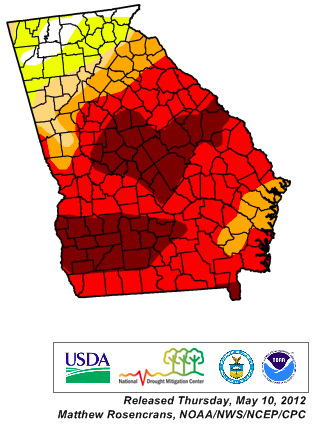
Here in the south Georgia protracted extreme drought with groundwater at historically low levels, water is the issue not just of the future, but already for years now.

He continued:

One of the things we should be very proud about Southern Company is that we are a company that is engaged in offering solutions, not just rhetoric. We remain the only company engaged in proprietary research and development. We’re the only company in America today that has a 1600 person engineering and construction service. So we have the credibility to do whatever our words say.

He also talked about carbon capture research (for DoE, in Alabama), about gassifying coal to “strip out 65% of the CO2” to make it comparable to natural gas (which is what SO mostly uses now to generate energy), and about using the CO2 in oil recovery.

He finally got around to water:

Continue reading

Supplier diversity outreach –David ? @ SO 2012-05-23

What about supplier diversity outreach efforts at Southern Company (SO), asked David (didn’t get his last name; sorry). SO CEO Thomas A. Fanning responded that those efforts were critically important, and part of how they got paid. CEO Fanning added:

When you think about building a nuclear plant, you’re procuring great big huge scale equipment. The minority suppliers really don’t lend themselves to say a gigantic steam turbine or a reactor vessel. But where we can use diverse suppliers in our supply chain efforts, we absolutely do undertake to make sure that they have an opportunity to compete for the business, and we can coach them along to make sure that they are ultimately successful.

Perhaps this monoculture of suppliers for huge equipment is yet another flaw in building mainframes in a networked-tablet world. They could get a lot more diversity by deploying solar power plants throughout sunny south Georgia, especially if they included financing housetop and business roof solar.

Earlier CEO Fanning had gone on at some length about diversity on SO’s all-white board, saying that SO didn’t measure diversity by such metrics as race or ethnicity or gender. Some people wonder if they measure it by different majors at Auburn or Georgia Tech. Not to be ungenerous, I do applaud SO for their diversity outreach efforts.

Here’s the video:

Supplier diversity outreach –David ?
Shareholder Meeting, Southern Company (SO),
Callaway Gardens, Pine Mountain, Georgia, 23 May 2012.
Video by John S. Quarterman for Lowndes Area Knowledge Exchange (LAKE).

-jsq

What about EMP? –Thomas Griffin @ SO 2012-05-23

Thomas Griffin asked Southern Company (SO) CEO Thomas A. Fanning what SO has done to deal with EMP:

If a foreign entity were to detonate a nuclear device above 25 miles above the United States it would cause an electro-magnetic pulse, which would in fact take out not only the electric grid, but trains, all cars with computers, all radios and TV stations, the telephone company, and we would really be in bad shape, because everything that runs on electricity, which is virtually all businesses would be down.

And my question to you is does Southern Company have backup, shielded, hardware and software to bring a control station back up, shielded from this, so that they could replace it, and bring the grid back on line.

CEO Fanning said he couldn’t talk about specifics, pleading national security. He added:

Rest assured that we pay a lot of attention to preserving the sanctity of the electric networks in the southeast, including things like EMF.

Interesting wording, “sanctity”. I didn’t know electrical production was a religious matter. Probably just a misphrasing.

But the other thing I think you should recognize is that if somebody is detonating a nuclear bomb that is emits an EMF force above the United States we’re in deeper problems already.

CEO Fanning has a point.

Here’s the video:

What about EMP? –Thomas Griffin
Shareholder Meeting, Southern Company (SO),
Callaway Gardens, Pine Mountain, Georgia, 23 May 2012.
Video by John S. Quarterman for Lowndes Area Knowledge Exchange (LAKE).

-jsq


Big bet on solar power? –Sam Booher; Shale and Australia! SO CEO Thomas A. Fanning @ SO 2012-05-23

According to memory, Sam Booher congratulated Southern Company (SO) CEO Thomas A. Fanning on moving away from coal, and recommended big bold bets in solar power. Camera operator error prevented recording what Booher said. I did get video of CEO Fanning’s response, about shale and natural gas, plus Australia.

…the most reliable forms of energy. Today, with the revolution we have seen in the shale gas industry, that tends to be natural gas. And so what we are doing is we are transitioning away from coal towards natural gas. Combined with new environmental regulations that we will comply with.

Those would be the new environmental regulations about which SO Chief Operating Officer Anthony Topazi said last December:

“It’s physically impossible to build the controls, the generation, the transmission and the pipelines needed in three years.”

COO Topazi also projected:

“We will experience rolling blackouts or rationing power if we don’t have simply the time to comply.”

Since SO CEO Fanning didn’t say anything about rolling blackouts or rationing power, I guess SO managed to find a way to comply, just as other power companies said they could at the time. Maybe we shouldn’t pay too much attention to predictions of flickering power from SO.

Back to CEO Fanning:

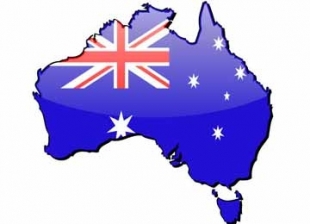
From an energy standpoint, Southern Company is a little bit smaller, but similar to, the energy production profile of the nation of Australia. We are a great, big company from an energy production standpoint.

According to Forbes 18 March 2012, SO is the largest electric utility in the U.S. by retail sales and number 6 in the world. Back in 2006, Forbes ranked Germany’s E.ON number one in the world, and Japan’s TEPCO as number 6. What happened to E.ON and TEPCO? Continue reading

Exit strategy for when this big nuclear bet goes bad? –John S. Quarterman @ SO 2012-05-23

At Southern Company’s (SO) shareholder meeting, I enumerated some examples in the U.S., Japan, and Germany of nuclear gone bad, and pointed out Japan, Germany, and even Bulgaria had already or were getting out of nuclear, while Southern Company and Georgia continued to bet the farm on nuclear, and I asked what was SO’s exit strategy for when that bad bet goes bad? SO CEO Thomas A. Fanning said they had learned everything there was to learn from Fukushima, and besides Plant Vogtle is 100 miles inland where there are no earthquakes. He didn’t mention the same description applies to Chernobyl. He did say SO planned to make the U.S. nuclear industry the best in the world.

You kept using big bets and then bet the farm. Very interesting terminology.

Um, the title of SO’s corporate biography that SO was giving out in the lobby in paper, video, and audiobook formats is Big Bets: Decisions and Leaders That Shaped Southern Company. And ‘nuclear’s “bet-the-farm” risk’ is, as I mentioned, bond-rater Moody’s phrase.

He said the new Plant Vogtle units were planned for $14 billion and 10 years to build, and

…it is a big investment.

He said a company to do such a thing needed scale, financial integrity, and existing credibility of operations.

Scale seems to me a problem, since SO seems deadset on building mainframes in a networked-tablet world.

SO’s nuclear financial track record is that four nuclear plants were originally planend for Plant Vogtle at a cost of $660 million and only two were built at a cost of $8.87 billion. The new units at Plant Vogtle are already overbudget by almost a billion dollars. The Georgia Power bonds that SO CEO Fanning mentioned: aren’t they guaranteed by the $8.33 billion federal loan guarantee?

Regarding operations credibility, a year ago Vogtle Unit 1 shut down 2 days after the NRC gave Vogtle a clean bill of health. But the SO CEO says it’s all better now.

Here’s the video, followed by links to sources for the points I made:

Exit strategy for when this big nuclear bet goes bad? –John S. Quarterman
Shareholder Meeting, Southern Company (SO),
Callaway Gardens, Pine Mountain, Georgia, 23 May 2012.
Video by John S. Quarterman for Lowndes Area Knowledge Exchange (LAKE).

Here are the main points I was reading from, with links:

Continue reading

Salute for less coal; how about third-party solar? –Mark Woodall @ SO 2012-05-23

After saluting Southern Company (SO) for burning less coal, Mark Woodall said he was very disappointed to see Georgia Power fight so hard to prevent homeowners from using their own private property to generate and sell solar energy. He quoted SO CEO Thomas A. Fanning’s oft-repeated remark that Fanning is “bullish on solar”. Fanning proceeded to define “bullish” as pie in the sky bye and bye.

We remain very bullish on solar. When we think about renewables, I think renewables are exceedingly important to this nation’s future. My sense is until we see significant technology innovation, my sense is that that will probably very late in this decade or beyond that, we still are gonna get by far the lion’s share of electricity from central stations.

Then he said he was bullish on thin-film solar. Some time in the future or “one day” when Continue reading