Category Archives: Georgia Power

Vogtle circular firing squad delaying opening

Southern Company and the other owners of Plant Vogtle are blaming the contractors (who are suing them) for further delays in construction. How much money will they waste before they never open?

Kristi E. Swartz wrote for the AJC yesterday, Disputed costs at Vogtle rise,

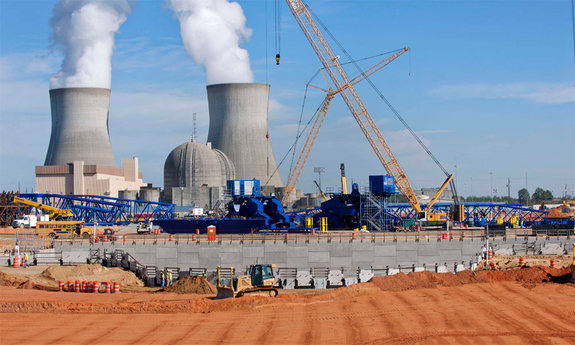
Georgia Power and a group of municipal and cooperative electric companies are building twin 1,100-megawatt reactors, the first in the United States to win permits in 30 years. The total expected cost of the project is $14 billion, but potential cost overruns at Vogtle, located in Waynesboro in east Georgia, continue to grow, according to the recent Southern Co. regulatory filing.

Delays in getting federal licensing approvals for the new reactor design and then for the entire project have been cited as the chief culprit.

Because of the dispute with contractors over the additional costs, “the owners are evaluating whether maintaining the currently scheduled commercial operation dates of 2016 and 2017 remains in the best interest of their customers,” the filing said. The total amount of the cost overruns could be well over $900 million; Georgia Power owns 45.7 percent of the project, so its share is $425 million, the latest filing said. Originally the overrun was projected at $400 million when the issue was first made public in April.

Up another $25 million since April? How long until it gets into billions of cost overruns? Which will be paid by whom?

Continue reading

More concerned about feeding cars than the hungry? —Michael G. Noll

Received Tuesday on Georgia EPD to suspend consideration of some new farm water permit applications 07/30/2012. -jsq

And Southern Company/Georgia Power are still pushing for power plants that waste hundreds of thousands of gallons of water daily (nuclear, biomass)? Water for cooling purposes instead of agriculture? That's about as insane as corn for the production of ethanol instead of feeding people. And how much water do wind mills or solar panels need once they have been installed? About as much as they create problems with air pollution and radioactive waste: zero!

Please note a recent article by George Monbiot on a global crisis caused by investments made in biofuels (e.g. ethanol from corn). To quote from the article (13 August 2012, Hunger Games):

"Already, 40% of US corn (maize) production is used to feed cars(6). The proportion will rise this year as a result of the smaller harvest. Though the market for biodiesel is largely confined to the European Union, it has already captured seven per cent of the world's output of vegetable oil(7). The European Commission admits that its target (10% of transport fuels by 2020) will raise world cereal prices by between 3 and 6%(8). Oxfam estimates that with every 1% increase in the price of food, another 16 million people go hungry."

Where does this leave our "Christian" values as we are obviously more concerned about feeding cars than the hungry?

-Michael G. Noll

-jsq

Toxic air in Georgia —NRDC

Georgia's air: not quite as bad as Florida's.

WTXL wrote Thursday, Florida and Georgia ranked high for toxicity exposure,

According to an analysis released by the Natural Resources Defense Council (NRDC), Florida is the 6th worst state in the nation when it comes to exposing residents to toxic air pollution from coal-fired power plants.

Florida's air would rate even worse if Florida Power and Light had to burn coal in Florida instead of at Plant Scherer near Macon to generate power for Florida. Instead, FPL dirties Georgia's air for Florida's benefit.

Georgia is ninth worst on the NRDC's Toxic 20 list, in “Toxic Power: How Power Plants Contaminate Our Air and States”. Here's NRDC's press release.

-jsq

The reality of the solar industry —Michael Noll

Received Friday on Plant Vogtle water use. -jsq

Please note a recent article in the New York Times about the best alternative to nuclear power in Georgia: The Secret to Solar Power By Jeff Himmelman, 9 August 2012.

To quote from the article:

“… the reality of the [solar] industry — as evidenced by the enormous investments that companies like Google and Bank of America are making in residential solar power — is that it has rapidly become a smart, practical and profitable investment.”
Michael G. Noll, President
Wiregrass Activists for Clean Energy (WACE)

When will Southern Company & Georgia Power finally wake up? —Michael G. Noll

Received today on Plant Vogtle water use. -jsq

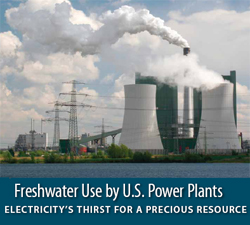
Energy projects such as biomass plants, coal firing plants, and nuclear power plants waste enormous amounts of water. The once proposed 40MW biomass plant in Valdosta would have consumed 800,000 gallons of water DAILY. Considering that for years now we are experiencing record drought conditions and heat waves in the US, this should make everyone’s hair stand up on the back of their necks. (For more information see “Electricity’s Thirst on a Precious Resource”.)

Add to this scenario a recent decision by the US Nuclear Regulatory Continue reading

Plant Vogtle water use

Apparently the nuclear reactors at Plant Vogtle will use more water than the City of Savannah, and more than agricultural uses for the middle Savannah River watershed. Much of the water (3/4?) is evaporated, leaving less for drinking, farming, and everything else. What goes back in the river is rest warmer than it came out, affecting everything that lives in the river. Remind me: why are we building those nukes instead of solar and wind generators, which use no water while producing power?

Plant Vogtle currently uses 43.2 million gallons of water a day, and with all 4 units, is planned to use 86.4 million gallons of water a day, or 2% of the *average* flow of the Savannah River, according to UNC’s Powering A Nation journalism team, 9 June 2010.

That’s more than the City of Savannah, according to the City of Savannah.

Continue reading

Wind for Georgia jobs and electricity?

Georgia is already benefiting by jobs from wind manufacturing. What if we increased that, and generated wind energy, too?

Kristi E. Swartz wrote for the AJC 2 June 2012, Ga. blown away by wind’s potential,

The state already is home to more than a dozen companies that make components that either go into wind turbines or that assist in building them. Such development has been a way for Georgia and the Southeast to capitalize on the wind energy industry even though the state lacks a steady wind needed for the giant turbines to spin constantly and create electricity.

“It’s … to have some visibility in the industry and to let those industry players know that this is an industry that’s important to Georgia, that it is on our radar screen, and it’s one of our targeted industries,” said Tom Croteau, director of the Economic Development Department’s food, energy, logistics and agribusiness projects division.

That’s good, let’s do more of it. Except that part about “lacks a steady wind”: we know Georgia does have wind offshore.

Here’s why we’re not generating wind electricity in Georgia. Hint: the answer is Continue reading

Incumbents won Snapping Shoals EMC board election

Insurgents lost an EMC board election, but made their point anyway. Following up on the three locals running for the board of Snapping Shoals EMC, they lost, but remember Snapping Shoals EMC quit coal-pushing Power4Georgians when they announced they were running.

Crystal Tatum wrote for the Henry Daily Herald 26 July 2012, Morris, Snapping Shoals EMC incumbents win by landslide,

CONYERS — Members of the Snapping Shoals Electric Membership Corporation (EMC) have returned to office three incumbents in a rare contested election to the agency’s 11-member board of directors.

EMC board members set policies and oversee the finances and administration of Snapping Shoals. They serve staggered, three-year terms. The non-profit EMC is a consumer-owned cooperative in Covington, providing service to about 95,000 consumers in an eight-county area, including Henry County.

Gene Morris of Henry County, Walter Johnson of DeKalb County, and Anthony Norton of Rockdale, were being challenged because of their support to build the coal-fire power Plant Washington. Kaye Shipley, also of Henry County, Albert Roesel of Newton County, and Cheryl Mathis of DeKalb County form the group challenging the three. Voting took place at the cooperative’s annual meeting Thursday in Georgia International Horse Park in Conyers.

In the District 2 Rockdale post, 2,400 ballots were cast, with Norton beating Roesel 2,157 to 224. Nineteen ballots were voided. In the District 3 DeKalb County Post, Johnson garnered 2,099 votes to Cheryl Moore-Mathis’ 280. Twenty-one votes were voided. In the District 4 Henry County race, 2,392 ballots were cast, with Morris getting 2,082 votes to Shipley’s 300. Ten were voided. Newton County District 1 representative Pete Knox ran unopposed.

Amusingly, incumbent Gene Morris termed it a David and Goliath struggle with the incumbents as David. I’m not sure most people think of the power company as the little guy….

The story mentioned a post-election press release by the challengers, but didn’t link to it. No problem; Continue reading

ALEC responds to Sierra Club report

Received yesterday on Sierra Club reports on big fossil fuel’s coordinated attack on clean energy. My comments below. -jsq

Although the Sierra Club was notified of the errors in their report, they have yet to address them. In addition, neither fact checking nor communication was attempted by the Sierra Club on claims made in this report.

In response to this error-filled report , here is a short statement and brief fact check.

http://www.alec.org/fact-setting-response-to-sierra-club-report/

-Todd Wynn

And if you follow that link you find these things:

The American Legislative Exchange Council is not against renewable energy in any form….

ALEC believes that free markets in energy produce more options, more energy, lower prices and less economic disruptions. Also, ALEC believes that mandates to transform the energy sector and use renewable energy sources place the government in the unfair position of choosing winners and losers, keeping alive industries that are dependent on special interest lobbying. ALEC opposes mandates and therefore opposes infighting among fuel sources. ALEC also believes that government programs designed to encourage and advance energy technologies should not reduce energy choices or supply. They should not limit the production of electricity, for example, to only politically preferable technologies.

Translation: ALEC opposes renewable energy portfolio (REP) standards, which is one of the main points of the Sierra Club report. So ALEC’s rebuttal actually supports that point.

The rest of ALEC’s response is fiddling around the edges about Continue reading

CWIP for SO’s Kemper Coal Plant in Mississippi

Southern Company (SO) is playing the CWIP game of charging customers for electricity they won’t for years with coal in Kemper, Mississippi, not just with nuclear at Plant Vogtle in Georgia. Maybe we should elect some new Georgia Public Service Commissioners so we won’t see the kind of behavior Mississippi’s PSC has turned to.

Cassandra Sweet wrote for Dow Jones and WSJ 25 July 2012, 2nd UPDATE: Southern Co. Second-Quarter Profit Up as Economy Improves,

The company is proceeding with construction of a $2.88 billion advanced-coal plant in Mississippi, despite a decision last month by state regulators to deny a $55 million rate increase the company requested while a related court case is pending. The company’s Mississippi Power unit has filed an appeal of that decision with the state Supreme Court, and argues that without the rate increase it won’t be able to cover certain project expenses that could boost its customers’ future costs.

Mississippi’s Public Service Commission actually denied that rate increase, partly due to opposition from AARP, Sierr Club, and other concerned organizations and citizens. Imagine Georgia’s captive PSC doing that! Mississippi Power took it all the way to the MS Supreme Court, challenged by MS Sierra Club, and that Supreme Court also denied the rate increase. According to MS Sierra Club:

Continue reading