Category Archives: Economy

Local Thanksgiving

Here in Lowndes County and the surrounding area we have plenty of things to be thankful for:
  • A growing local food community, anchored by Jason DeLoach’s F.M. Guess Pecan Company of Valdosta, the Packhouse Market of Hahira, and of course Jim Fiveash’s Food Store of Hahira. Let’s not forget the Valdosta Farmer’s Market (1500 South Patterson Street) and Farmer Brown’s Produce. There’s even at least one local CSA (Community Supported Agriculture) starting up.
  • Long distance transportation: Interstate 75 near I-10, numerous state highways, and an airport.
  • Delta Airlines (I never thought I’d be writing this) for competitive airfares (except during holidays). And landing on one of the longest runways in the state.
  • Railroads going in every direction carrying freight, which can also carry passengers whenever state and local people and governments get organized to do it.
  • Businesses moving in to take advantage of the transportation; working towards enough good jobs that young people don’t have to move away to find one.
  • County and city governments that are at least a little bit sceptical about exactly which businesses they encourage to move in.
  • Moody Air Force Base, by far the biggest employer, bringing diversity to the community both in serving personnel and in later retirees.
  • Two hospitals: South Georgia Medical Center and Smith Northview Hospital.
  • There’s even a Valdosta Metropolitan Statistical Area (MSA) including the counties of Lowndes, Brooks, Lanier, and Echols, with a combined population of about 130,000. This is enough people to try things without waiting for Atlanta or Washington to tell us what to do.
  • Valdosta State University, one of two large regional campuses of the University of Georgia System, and one so active politically that it got its own voting precinct this year, the only college precinct in the state.
  • Live election results during each election, on the Lowndes County website. It’s the only county in the state that does this!
  • Georgia Military College, a liberal arts junior college.
  • Valdosta Technical College, or whatever it’s being called since the state reorganized it.
  • Thriving downtowns in Valdosta and Hahira. First Friday, Winterfest, Honeybee Festival: those are doing more to attract attractive businesses than any number of road projects.
  • Grand Bay Wildlife Management Area, preserving a little bit of the original ecosystem of the area; you know, pine trees, live oaks, wiregrass, pitcher plants, cypress swamps, alligators, great blue herons, and bobcats. Maybe you don’t. Go and see!
  • Trees, for forestry, and for themselves. See Patterson Street (a little planning kept it from looking like Ashley Street), and the oldest longleaf pines in the county are on the VSU campus; older than Valdosta. There are even a few left elsewhere in the county. Protecting forests is not just the right thing to do, it’s good business.
  • Rain, so trees and crops will grow.
  • Sunshine, much more than Germany, for example, so we can do solar if we want to.
  • Winning sports teams in Lowndes County and Valdosta high schools and VSU caused ESPN to name Valdosta TitleTown. Maybe that winning attitude can carry over to improving academics.
  • Theatre at the Dosta, VSU, and the high schools. If theatre was a sport, we’d be winning that, too!
    Dites-moi
    Pourquoi
    La vie est belle,
    Dies-moi
    Pourquoi
    La vie est gai?
        Tell me why
    The sky
    is filled with music,
    Tell me why
    We fly
    on clouds above?
We live in an area with many advantages. You can probably list more of them.

Why stop with what we’ve got? Why not play up our advantages of transportation, natural environment, local culture, etc., and attract jobs for young people and make the place even better for everybody?

Economic benefits of protecting natural ecosystems

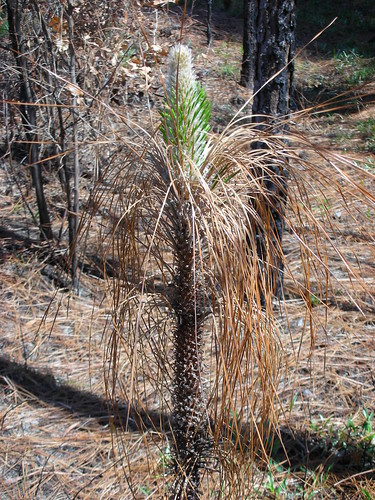
A longleaf pine on Quarterman Road. Protecting forests is not just the right thing to do, it’s good business, says Mike De Souza, Canwest News Service, November 14, 2009, about a recent UN report:
Protecting natural ecosystems and biodiversity is worth trillions of dollars in annual economic benefits around the planet, says a new report released on Friday by the United Nations.
The actual report is TEEB for Policy Makers Report released 13 Nov 2009. The article continues, quoting one of the lead authors of the report:
“The technology of planting trees or replanting forests is thankfully free, and it has no side-effects,” said Sukhdev, who also leads the UN Environment Program’s Green Economy Initiative. “It’s powerful, it’s effective and it’s time tested. We just have to get people’s mindsets changed to start using these natural technologies that are available.”
Or just don’t cut down trees when paving roads.

RSVP Today for Federal Grants Workshop in Savannah, Oct 26th

Federal Grants Workshop Flyer, Savannah, 2009 Both Georgia Senators are holding a workshop in Savannah Monday October 26th about federal grants. To attend, you must register today, October 22nd. I called Isakson’s office, and the woman who answered the phone said they hold one of these a year. Last year it was in Atlanta, next year she thinks probably Macon. So this year this is the only one.

Hm, I wonder how much of this is stimulus money that these two senators voted against?

Anyway, here’s the text of the press release of 7 October:

Isakson, Chambliss to Host Federal Grants Workshop on October 26 in Savannah

Continue reading

No New Coal Needed in Southeast: GaTech Study

The southeast doesn't need new coal plants for additional energy, because we can increase energy efficiency instead:
An aggressive strategy to replace aging equipment with more energy efficient products throughout the South would reduce the need to build more coal-fired power plants in the region through 2020, according to a Georgia Tech study released Monday. Advocates are taking the study, funded by the Energy Foundation and the Turner Foundation, to state legislators and regulatory agencies hoping it will bolster their calls for more incentives for energy efficient products as an alternative to new power plants.

“We’re not saying that new plants aren’t needed, because new plants can replace old clunkers that need to be replaced,” said Marilyn Brown, a Georgia Tech professor who co-authored the report. “But we don’t need to build for an expanded demand if the Southern states would begin to launch energy efficient programs.”

This isn't enough to decommission the existing coal plants; for that we'll need other sources of energy. But it's a step in the right direction.

What’s a Green Job?

Green money is pouring into Austin, Texas, which now has to decide how to spend it. Sandra Zaragoza, writing in Portfolio.com, looks into what to do with it:
Last week, American Youthworks, a nonprofit aimed at at-risk youth, received $1.4 million in federal funds to build a green charter high school that will prepare students for jobs in solar-panel installation, green facilities management, and other jobs.

In the last few years, Austin Community College received $99,031 from Workforce Solutions for solar and weatherization training and, more recently, $59,800 from the Department of Labor to increase the number of women in green job training programs.

And ACC is hoping to bring more funding to Central Texas in federal grants. ACC is part of a group of Texas community colleges that have applied for $3.5 million in funding to build solar-energy training programs.

Education, solar, weatherization; who could argue with those things?

But do those functions create new jobs? Continue reading